
Bawumia Pushes for Long-Term National Plans That No Government Can Abandon
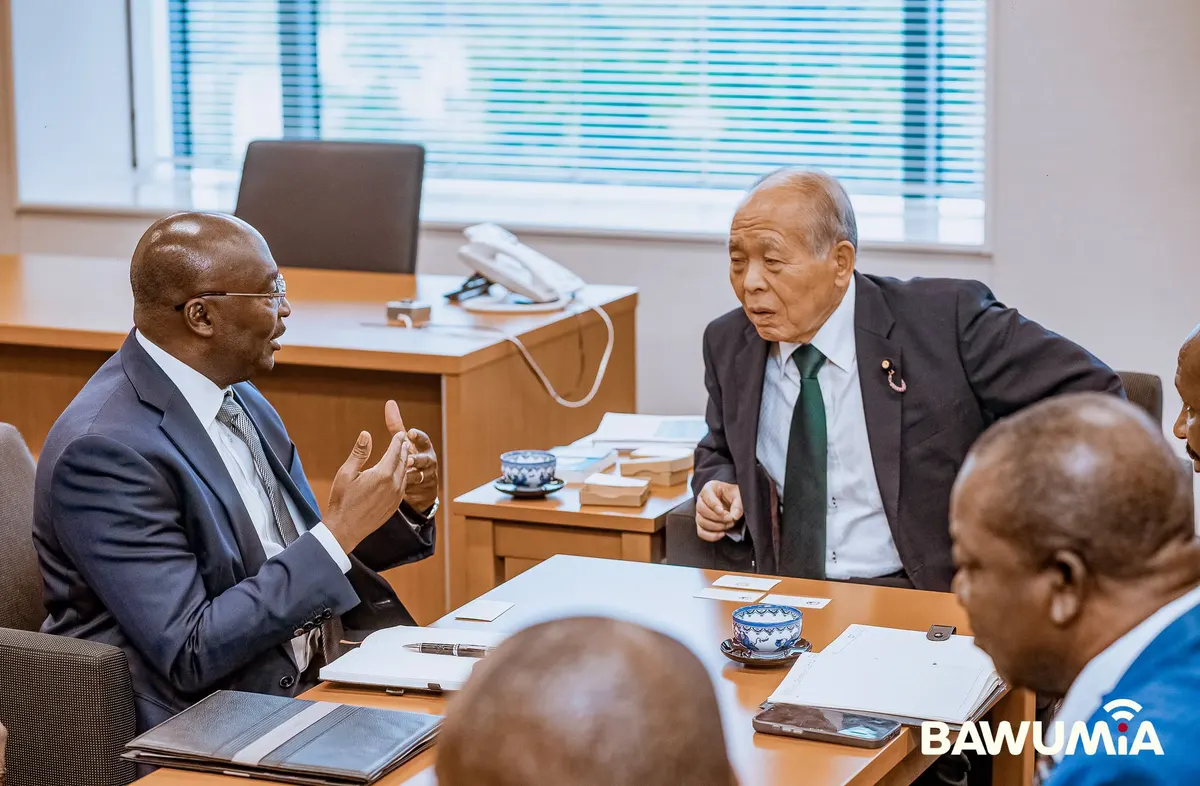

Dr Mahamudu Bawumia has made a fresh appeal for Ghana's political parties to move beyond short-term, election-cycle thinking and sign onto long-term national masterplans that would remain binding on whichever government is in power. The call came following discussions the NPP flagbearer held in Japan, where he urged a cross-party consensus on strategic plans covering coastal protection, flood management and transport development.
What Bawumia is proposing
At the heart of Bawumia's argument is a frustration familiar to many Ghanaians: that major infrastructure and development projects are routinely abandoned, reversed or rebranded whenever a new administration takes office. His proposal would see political parties formally commit to multi-decade frameworks in critical sectors, ensuring continuity regardless of who wins any given election.
The three areas he specifically highlighted — coastal protection, flood control and transport — are not accidental choices. Ghana's coastline is under severe erosion pressure, with communities in places such as Keta and Anomabo facing existential threats from rising seas. Meanwhile, annual flooding in Accra and other urban centres causes deaths, displaces families and destroys livelihoods with depressing regularity. On transport, successive governments have launched and stalled major road and rail projects, leaving connectivity gaps that hamper economic growth.
Binding masterplans, Bawumia argued, would give engineers, investors and local communities the certainty they need to plan effectively over the long term, rather than waiting to see which party's colour dominates Parliament after every four years.
Why it matters for Ghana
Ghana's development has long been hampered by what analysts call the "four-year horizon" problem — policies designed primarily to win the next election rather than to solve structural challenges. The result is a graveyard of half-built infrastructure and discontinued social programmes scattered across the country.
The idea of binding cross-party agreements is not new globally. Several countries, including Japan — where Bawumia held his discussions — operate on long-range national development blueprints that survive changes in government. Japan's post-war infrastructure transformation, built over decades with consistent policy direction, is widely cited as a model for developing economies seeking rapid, sustained growth.
For Ghana, the stakes are particularly high on the coastal and flooding fronts. Climate scientists have warned that West Africa's coastline is among the most vulnerable in the world to sea-level rise, and Ghana has already lost significant land area to ocean encroachment. Without a coherent, funded and politically insulated long-term response, the losses — in land, livelihoods and cultural heritage — will only accelerate.
On flooding, the problem is as much about urban planning discipline as it is about drainage infrastructure. A masterplan approach could, in theory, lock in building regulations, wetland preservation and drainage investment in ways that individual administrations cannot quietly unpick for political convenience.
The political challenge ahead
Whether Bawumia's call gains traction will depend heavily on the willingness of the NDC and other parties to participate. Historically, Ghana's two dominant parties have been reluctant to give credit to — or build on — each other's initiatives, making genuine bipartisan long-term planning politically awkward.
Civil society groups and urban planners have long advocated for exactly this kind of structural reform, arguing that Ghana's development institutions need insulation from political interference. If Bawumia's proposal sparks a genuine national conversation about how to design durable policy frameworks, it could prove one of the more consequential ideas to emerge from the current election season — whatever the outcome at the polls.
- The proposal follows Bawumia's engagements in Japan, where long-range planning is a national tradition.
- Coastal erosion and annual flooding remain two of Ghana's most damaging and persistent development problems.
- Cross-party buy-in would be essential but historically difficult to achieve in Ghana's polarised political environment.
Source: 3News


Comments (0)
Be the first to comment.