
Bawumia charts NPP's 2028 comeback blueprint with policy overhaul and leadership restructuring
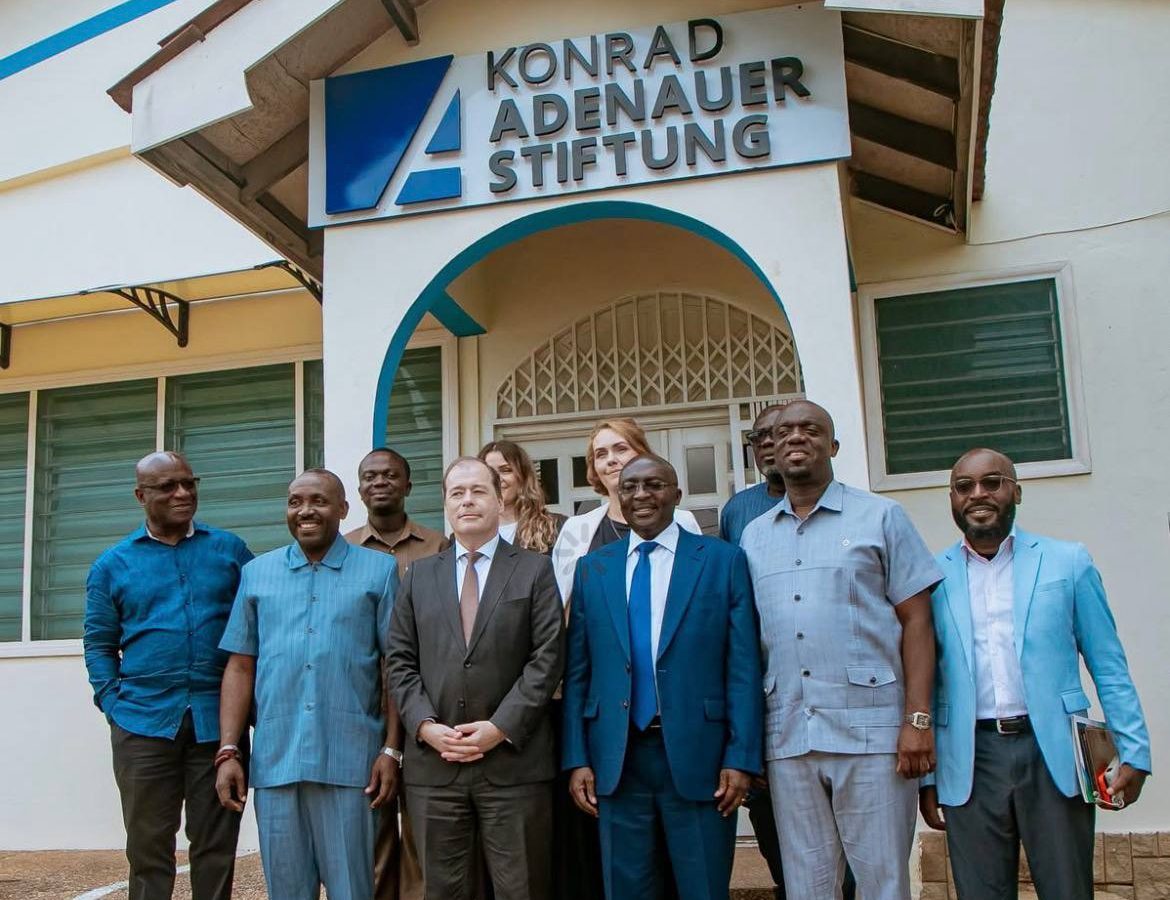

Dr Mahamudu Bawumia, the New Patriotic Party's designated 2028 presidential candidate, has laid out an ambitious roadmap to revitalise the party after its electoral losses, focusing on institutional strengthening and evidence-based policymaking. The announcement came following a strategic meeting with Dr Mark Speich, Secretary-General of the Konrad-Adenauer-Stiftung (KAS), at the German political foundation's Accra office on Thursday, October 29, 2026.
The proposed reforms reflect the NPP's recognition that organisational restructuring and policy innovation will be central to its campaign strategy as Ghana heads towards the 2028 general elections. Bawumia identified two cornerstone initiatives in the party's renewal effort: the Patriotic Institute and the NPP Policy Unit, both designed to systematise how the party develops leaders and crafts solutions to national challenges.
The reform agenda
Under the NPP's new framework, policy development will prioritise empirical research and evidence over rhetoric. Bawumia emphasised that future party policies must be grounded in facts, fiscally realistic for implementation, and demonstrably effective at delivering intended outcomes. This signals a shift towards more rigorous policy vetting—a potential acknowledgment of criticisms the party faced regarding policy messaging and execution during recent governance.
The Patriotic Institute will serve as a dedicated training ground for emerging NPP leaders and cadres, with a specific mandate to mobilise young people into party politics. Leadership development programmes have become increasingly important for political parties across West Africa, particularly as generational shifts reshape voter demographics and expectations.
Bawumia also stressed the party's commitment to strengthening internal structures and broadening grassroots participation, framing these reforms as essential to building an NPP that competes on substantive ideas rather than personality or incumbency alone.
The KAS connection and international dimension
The timing of Bawumia's meeting with KAS is strategically significant. The Konrad-Adenauer-Stiftung, a German political foundation linked to Germany's Christian Democratic Union, has maintained a long-standing partnership with the NPP and brings institutional expertise in party building, democratic strengthening and policy development. By deepening ties with KAS, the NPP gains access to international best practices in party reorganisation—a resource that opposition parties often leverage to rebuild after electoral defeat.
Bawumia's engagement with KAS also signals the NPP's intention to position itself as a professionalised, internationally-connected political force rather than one in disarray following electoral setback.
Why it matters for Ghana
Ghana's democratic health depends partly on the quality of opposition politics. A reinvigorated, more policy-focused NPP could sharpen public discourse and push whichever administration governs to defend its record rigorously. Conversely, if the NPP's reforms fail to resonate with voters or if internal divisions persist, it could entrench one-party dominance, which carries risks for democratic accountability.
The 2028 election will be the first presidential race without Nana Addo Dankwa Akufo-Addo or John Dramani Mahama as candidates—signalling a genuinely new political cycle. How well the NPP executes its reorganisation, and whether it can offer Ghanaians a compelling alternative vision on economy, healthcare and infrastructure, will significantly influence the campaign dynamics.
For ordinary Ghanaians, these structural reforms matter to the extent they translate into better-articulated policy proposals addressing cost-of-living pressures, job creation, and service delivery—concerns that have dominated recent electoral conversations.
Source: The Ghana Report


Comments (0)
Be the first to comment.