
Asiedu Nketiah Tells Moscow Forum: Africa Must Convert Reparations Talk Into Binding Action
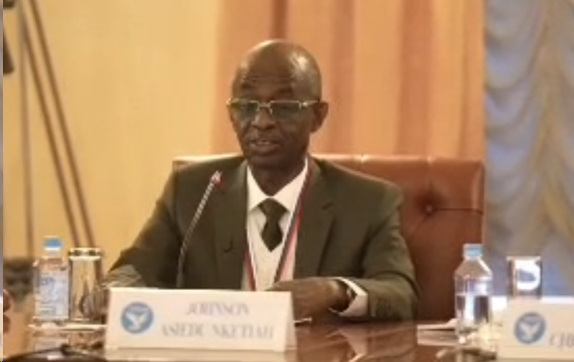

National Democratic Congress Chairman Johnson Asiedu Nketiah has delivered a pointed message to African and global political leaders: the time for declarations on reparative justice has passed, and the continent must now channel its diplomatic momentum into practical, enforceable remedies for the historical crimes of slavery and colonialism.
Speaking at the Movement for Freedom of Nations Assembly in Moscow on 16 November 2026, Asiedu Nketiah acknowledged that Africa had made genuine institutional progress on the reparations agenda but warned that political statements alone would never deliver justice. Parliaments must pass legislation, governments must define and honour obligations, and affected communities must have a direct voice in designing any reparative agreements, he insisted.
Key milestones and institutional groundwork
Asiedu Nketiah pointed to a cluster of recent developments that have elevated reparations from a long-standing moral argument to an active item on the international political calendar. He highlighted the Accra Reparations Conference of 2023 as a turning point that helped crystallise a common African position. That was followed by the African Union designating 2025 as the Year of Justice for Africans and People of African Descent Through Reparations, and subsequently declaring the period from 2026 to 2035 the Decade of Justice and Reparations.
He also drew attention to United Nations General Assembly Resolution 80/250, adopted on 25 March 2026, which received 123 votes in favour — a figure he described as significant international recognition of the gravity of the transatlantic slave trade and the enslavement of Africans. The African Union's Committee of Experts on Reparations, together with its Reference Group of Legal Experts, has been examining the legal, economic, cultural and institutional dimensions of potential remedies, and Asiedu Nketiah commended that work as a credible foundation on which to build.
He also praised President John Dramani Mahama's leadership, noting Ghana's prominent role in the continental campaign and President Mahama's designation as the African Union Champion on Reparations.
Why it matters for Ghana
Ghana occupies a uniquely symbolic position in the global reparations debate. As the site of major slave-trading fortresses along its coast — now UNESCO World Heritage Sites — and as the country that hosted the landmark 2023 Accra Reparations Conference, Ghana has positioned itself at the heart of efforts to coordinate African and Caribbean voices into a unified negotiating bloc.
The partnership between the African Union and the Caribbean Community (CARICOM) that Asiedu Nketiah referenced is particularly important for Ghana, whose diaspora connections to the Caribbean run deep. He stressed, however, that while the two blocs should coordinate closely, the specific historical experiences and the remedies appropriate for different communities may not be identical, and those distinctions must be respected in any framework that emerges.
For ordinary Ghanaians, the reparations debate touches on questions of cultural restitution — including the return of artefacts held in European museums — as well as potential financial compensation, access to historical archives and educational reform. Asiedu Nketiah explicitly warned against governments dressing up routine development aid or infrastructure projects as reparations without demonstrating a clear link to the historical wrongs being addressed, a caution aimed at ensuring that any eventual settlement delivers genuine redress rather than cosmetic gestures.
What must happen next
Asiedu Nketiah reserved some of his sharpest remarks for the gap between rhetoric and reality. He urged the Movement for Freedom of Nations to play a supporting rather than duplicating role — helping facilitate access to historical archives, encouraging dialogue with museums and cultural institutions, and using its relationships with parliaments to push existing expert bodies forward.
He was equally clear that pursuing reparations could not become an excuse for poor governance at home. Contemporary African governments, he said, remain fully responsible for managing public resources effectively and creating opportunities for their citizens. At the same time, domestic governance failures should never be used to dismiss or invalidate legitimate historical claims.
- Asiedu Nketiah addressed the Movement for Freedom of Nations Assembly in Moscow on 16 November 2026.
- UN General Assembly Resolution 80/250 on reparations passed with 123 votes in favour in March 2026.
- President Mahama serves as the African Union's designated Champion on Reparations.
Source: MyJoyOnline


Comments (0)
Be the first to comment.