
Agya Koo: Twi, Ga and Ewe Films Can Conquer Netflix — Ghana Must Stop Chasing Foreign Accents


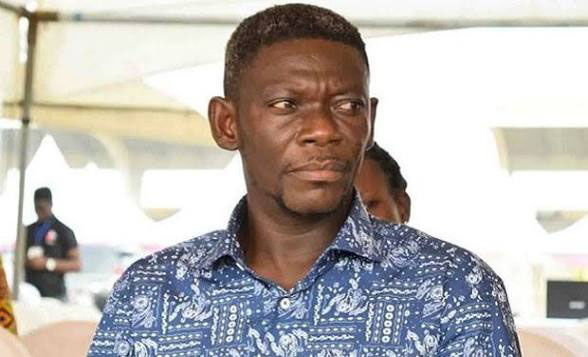
One of Ghana's most beloved comic actors, Agya Koo, has thrown his weight behind a cultural push that could reshape the future of the Ghanaian film industry. Speaking in an interview with the Daily Graphic, the veteran actor made a passionate case for filmmakers to stop abandoning local languages in pursuit of international appeal — arguing instead that Twi, Ga, Ewe and Dagbani are precisely the tools that can unlock doors on platforms like Netflix.
His message is simple but pointed: Ghana does not need to sound foreign to succeed globally. Subtitles exist. Authentic stories travel. And the evidence, he says, is already in front of us.
From Kumasi to Côte d'Ivoire — the proof is in the viewership
Agya Koo did not come to this argument theoretically. He pointed to his own experience as evidence that language need not be a wall between Ghanaian content and international audiences. His Twi-language films have found devoted viewers in Côte d'Ivoire — a predominantly Francophone country — where audiences watch his movies subtitled in French or simply follow along with the visual storytelling.
"Whenever I travel outside Ghana, people flock to me because they have watched my films," he said, adding that his popularity in Côte d'Ivoire, alongside fellow actor Wayoosi, proved that Ghanaian stories in local languages could earn genuine international recognition.
This is not an isolated phenomenon. The global success of non-English productions — from South Korea's Squid Game to Nigeria's Lionheart (before its controversial disqualification from Oscar consideration) — has demonstrated repeatedly that streaming audiences worldwide are willing to read subtitles for compelling, culturally rooted content. Netflix itself has actively invested in African-language content, and Ghana has so far not capitalised on that opening at scale.
Why it matters for Ghana
The Ghanaian film industry, commonly known as Ghallywood or the Kumawood sector, has produced a rich body of work in local languages over the decades. Yet the industry has long grappled with a tension: the desire to appeal to diaspora and international audiences often pushes producers towards English-language or heavily code-switched productions, sometimes at the expense of cultural authenticity.
Agya Koo's intervention highlights the risk of that trade-off. When filmmakers dilute local identity to chase foreign markets, they may end up with content that neither satisfies Ghanaian audiences nor stands out enough internationally to compete with established productions from Nigeria, South Africa or beyond.
By contrast, a well-produced, distinctly Ghanaian story — rooted in Ashanti folklore, Accra street life, Northern traditions or Volta Region narratives — offers something that no Hollywood or Nollywood production can replicate. That uniqueness is a commercial asset, not a liability.
Beyond creative considerations, there are economic stakes. The global streaming market continues to grow, and platforms are increasingly commissioning or acquiring content from underrepresented regions. A coordinated push by Ghanaian producers to develop high-quality, locally-rooted content with professional subtitling could generate revenue, create jobs and elevate the country's cultural profile abroad.
A call for standards — not just stories
Agya Koo's vision extends beyond language. He also called for a formal code of practice to regulate film production in Ghana, arguing that professional standards must be enforced across the industry. In his view, it should not be possible for anyone to simply pick up equipment and shoot a film without adhering to minimum quality and ethical guidelines.
He also used the opportunity to pay tribute to the generation of actors — including Nana Ama McBrown, Afranie, Wayoosi and Akrobeto — whose dedication helped build the industry's foundation. He noted that newly established television stations continue to broadcast their old films to attract viewers, a testament to the enduring quality of that era's work.
- Agya Koo says Twi-language films already attract audiences in Côte d'Ivoire through subtitling.
- He wants Ghanaian filmmakers to prioritise local languages like Twi, Ga, Ewe and Dagbani.
- The actor is also calling for a professional code of practice to regulate Ghana's film industry.
Source: The Ghana Report

Comments (0)
Be the first to comment.