Afenyo-Markin claims Chief Justice Baffoe-Bonnie plotted against predecessor Torkornoo
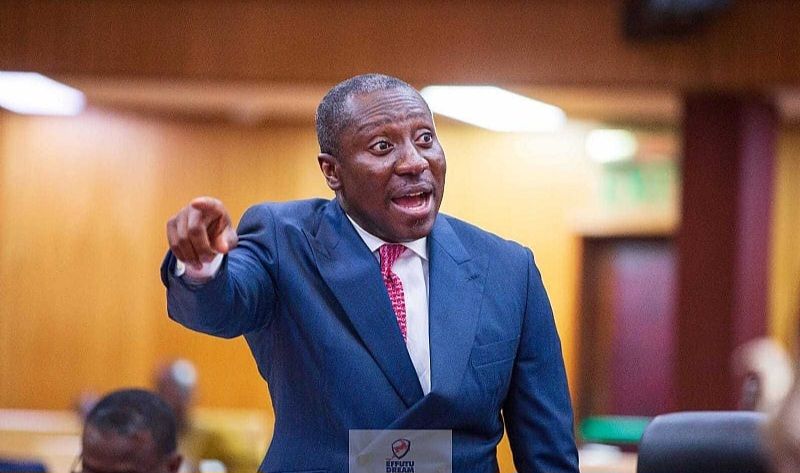
Minority Leader Alexander Afenyo-Markin has levelled a serious allegation against Chief Justice Gertrude Torkornoo Baffoe-Bonnie, claiming she was instrumental in orchestrating the removal of her predecessor, Justice Anin Yeboah's successor, from office. The accusation adds another layer to ongoing tensions surrounding Ghana's judicial leadership and represents a significant escalation in political rhetoric surrounding the judiciary.
Speaking in his capacity as a leading opposition voice, Afenyo-Markin described the alleged actions as part of a "grand conspiracy" against former Chief Justice Torkornoo. He further pledged that should the New Patriotic Party (NPP) return to power, efforts would be made to reinstate Torkornoo to her former position, signalling the opposition's commitment to reversing what they characterise as an unjust removal.
The broader context of judicial disputes
Ghana's judiciary has faced mounting scrutiny in recent years over questions of institutional integrity and political influence. The transition between Chief Justices has historically been a sensitive period, with various stakeholders scrutinising the circumstances surrounding appointments and departures from the country's highest judicial office. Allegations of backroom dealings and conspiracies have occasionally surfaced, though substantiating such claims has proven challenging.
The current allegation reflects deeper fault lines within Ghana's political establishment regarding oversight of the judiciary. Afenyo-Markin's statement suggests the NPP views the removal of Torkornoo as a politically motivated action rather than a standard administrative matter. This framing is significant as it attempts to consolidate opposition support around the idea that the judiciary itself has become compromised by partisan interests.
Why it matters for Ghana
These allegations carry substantial implications for public confidence in Ghana's judicial system. When senior political figures publicly accuse the Chief Justice of orchestrating the removal of predecessors, it undermines the independence and impartiality that the judiciary depends upon to function effectively. Citizens and international observers alike scrutinise such claims as indicators of whether the judiciary operates as an autonomous institution or as an extension of political power.
The pledge to reinstate a former Chief Justice also raises constitutional questions about the appropriate procedures for removing and appointing judicial leaders. If an NPP government were to attempt reversing a predecessor administration's judicial appointments, it would set a concerning precedent for politicising the highest court, potentially creating cycles of institutional instability.
For Ghanaians invested in democratic governance and rule of law, these developments are troubling signals. The judiciary's credibility depends on appearing above partisan competition. When opposition and ruling parties weaponise accusations against Chief Justices, public trust erodes regardless of whether allegations are substantiated.
Moreover, Ghana's international standing as a beacon of democratic stability in West Africa is partly anchored to perceptions of a functioning, independent judiciary. Allegations of conspiracies at this level invite external scrutiny and potentially damage Ghana's reputation with international partners and investors who value judicial independence as a marker of stable governance.
The government's response to these allegations will be closely watched, as will any evidence either side presents to support or refute the claims. Until such details emerge, the accusation remains a political statement with uncertain factual foundation—but one that reflects genuine tensions around judicial autonomy in contemporary Ghana.
Source: 3News



Comments (0)
Be the first to comment.