
150 Years On: How Mfantsipim and Ghana's Supreme Court Grew Up Together


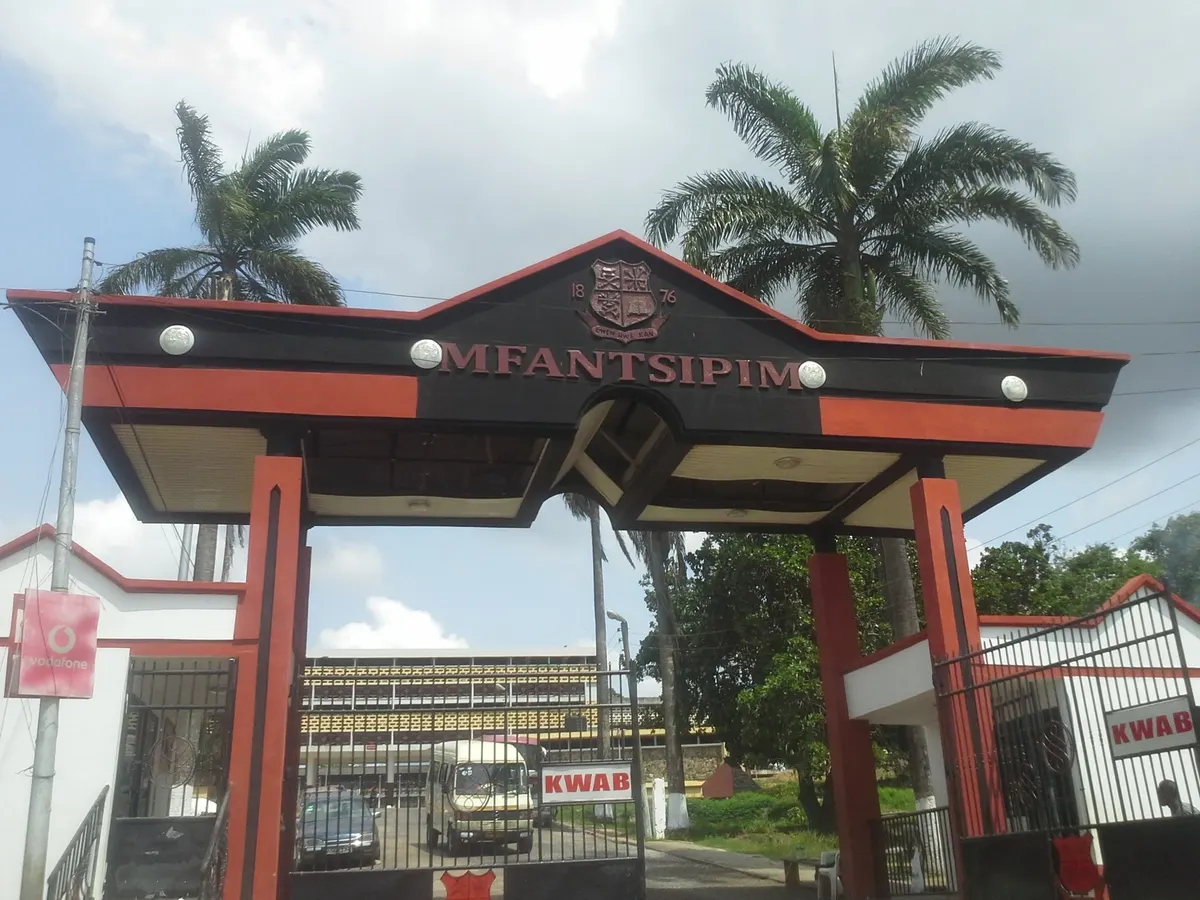
In the final days of March 1876, two institutions came into being on the Gold Coast within three days of each other — one designed to dispense justice, the other to cultivate minds. The Supreme Court Ordinance of 31 March established a superior court for the entire colony, while on 3 April, the Wesleyan High School — later to become Mfantsipim — opened its doors in Cape Coast under an 18-year-old principal, the Reverend James Picot. One hundred and fifty years later, Ghana's story cannot be properly told without both of them.
A milestone marked in fitting style
The anniversary has been marked by a moment that feels almost scripted. In September 2026, two old boys of Mfantsipim — Edward Amoako Asante and Anthony Forson Jnr — were sworn in as Justices of the Supreme Court on the same day. It is not the first time the school has contributed to the nation's highest bench, but the timing — coinciding with the 150th year of both institutions — lends the occasion a particular resonance.
Justice Asante is no stranger to distinguished judicial service. He served three terms as President of the ECOWAS Court of Justice and steered that body through the disruptions of the COVID-19 pandemic, moving proceedings online when courtrooms across the region were forced to close. Justice Forson, for his part, was part of the 1992 Consultative Assembly that drafted Ghana's current Constitution and later served as President of the Ghana Bar Association. Both men bring records that stand on their own merits, well beyond any school affiliation.
The school's contribution to Ghana's legal life runs deep. Among its old boys are Sir Samuel Quashie-Idun, who served as Chief Justice of Western Nigeria and became the first African President of the Court of Appeal for Eastern Africa; Edmund Bannerman, Ghana's fourth Chief Justice; and Isaac Abban, formerly Chief Justice of Seychelles and later Ghana's ninth Chief Justice. Justices W B Van Lare, W S Bruce-Lyle, G E K Aikins, I N K Wuaku, I K Amuah, T K Adzoe and B T Aryeetey have also served on the Supreme Court, while four Mfantsipim old boys — Aikins, E G Tanoh, Paapa Owusu-Ankomah and Joe Ghartey — have held the office of Attorney-General.
What this means: a legacy built through turbulence
Neither institution has enjoyed a smooth passage through history, and that is precisely what makes their survival meaningful. Mfantsipim endured name changes, mergers and moments of near-collapse. Its most celebrated low point came in 1907 when staff and most students departed, leaving just eight boys behind — the so-called Faithful Eight of school legend — who kept the institution alive through sheer determination. The school later adopted its current motto, Dwen Hwɛ Kan — Think and Look Ahead — along with its distinctive black and red colours, chosen to represent African skin and blood. In the decades after independence, three headmasters were removed in succession by different governments, a reminder that no institution, however storied, is immune to political pressure.
The Supreme Court's experience was, if anything, more turbulent still. Though the Constitutions of 1957 and 1960 granted judges security of tenure, that protection proved fragile in practice. In 1963, following the acquittal of the accused in the Adamafio treason trial, President Nkrumah removed Chief Justice Arku Korsah from office. Justice Van Lare — an Mfantsipim old boy — resigned in protest, while Justice Akufo-Addo refused to go, prompting Nkrumah to amend the Constitution to allow the President to remove judges at will, before promptly removing him. The Court itself was abolished in 1966, restored in 1969, and abolished again in 1972. Chief Justices, including Bannerman, were removed without due process. Only in 1979 was the Court fully restored, and it now operates under the protections of the 1992 Constitution.
What both histories demonstrate is that institutions can be bent, interrupted and even temporarily destroyed — and still return, often stronger in purpose if not in size.
The challenge ahead for Ghana's judiciary
History, however, guarantees nothing. The Supreme Court enters its 150th year at a moment when public confidence in Ghana's judiciary is under genuine strain. Citizens and legal practitioners alike have raised concerns about the perception that judicial decisions can be influenced by factors other than law and evidence. The answer to that challenge is not public relations or ceremonial anniversaries — it is a consistent, visible commitment to deciding cases on their merits, writing clear and reasoned judgements, and maintaining independence from political pressure regardless of which party holds power.
Similarly, Mfantsipim cannot sustain its reputation on the achievements of Kofi Annan or any other alumnus from decades past. Each generation of students, teachers and administrators must earn afresh the trust the school's name carries.
- Founded in 1876: Both the Supreme Court and Mfantsipim mark 150 years of continuous, if interrupted, service to Ghana.
- Shared milestone: Two Mfantsipim old boys were sworn onto the Supreme Court on the same day in September 2026.
- Turbulent past: The Supreme Court was abolished twice and Chief Justices removed by force before the 1992 Constitution restored its independence.
A legacy, as one reflection on this anniversary puts it, is a debt to be honoured — not an inheritance to be spent. For both institutions, the next 150 years must be earned, one judgement and one lesson at a time.
Source: MyJoyOnline


Comments (0)
Be the first to comment.