Why Ghana's School Placement System Fails Good Students—And How to Fix It
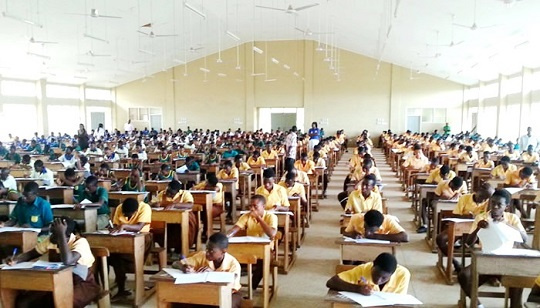
Ghana's Computerised School Placement System (CSSPS) has become an annual source of heartbreak for thousands of families. This year alone, distraught parents gathered at GNAT Hall seeking to change their children's placements—not because the students failed, but because the system itself lacks transparency, leaving room for misunderstanding, resentment, and alleged exploitation.
The problem runs deeper than simple disappointment. A father recently told television cameras that his daughter, despite performing well, cried daily about her assigned school. Elsewhere, mothers questioned why siblings with identical grades landed at different institutions. These are not isolated complaints; they reflect a system operating in darkness, where parents lack basic understanding of how the computer ranks students.
The Hidden Rule: Not All Grade 1s Are Equal
Few parents grasp a critical truth that determines their child's fate: a student scoring 75 per cent in the Basic Education Certificate Examination receives Grade 1, as does a student with 80 per cent or 90 per cent. All three appear identically as Aggregate 6 on the result slip. However, when competing for places at prestigious Category A schools like PRESEC or Mawuli, the computer ranks them by raw score—the 90-per-cent student comes first, then 80 per cent, then 75 per cent.
Many parents never receive this explanation. Some who do listen balance their choices strategically across Category A, B, and C schools. Others, driven by prestige, insist exclusively on top-tier Category A institutions. The result is predictable: rejected applications or assignments to schools families consider beneath their child's standing.
This confusion, however, creates opportunity for exploitation.
Corruption Thrives Where Systems Hide
In the shadows of the CSSPS, alleged corruption has flourished. Teachers have reportedly collected money from ignorant parents with promises like, "Pay, and I will ensure your child gets PRESEC." Parents pay, children receive "not placed" letters, and the teachers vanish. In other cases, unproven but persistent allegations suggest money changes hands to have deserving students rejected, creating spaces for protocol candidates.
When the system operates without explanation or accountability, parents naturally assume the computer is rigged. Trust evaporates. Yet the Ghana Education Service has failed to counter this narrative through sustained public education—particularly in local languages.
Why It Matters for Ghana: The Language and Trust Crisis
Here lies the systemic failure: Ghana's education authority conducts all placement education in English on national platforms, yet expects a farmer in Kpedze who cannot read English to understand why his son with Aggregate 16 did not secure Mawuli. It is, as critics point out, impossible. The Electoral Commission successfully educates voters in Ewe, Twi, Dagbani, and Ga about voting procedures. Why cannot the Ghana Education Service apply the same strategy to school placement?
This gap between communication and comprehension fuels three problems simultaneously: parents make poor choices; fraudsters exploit their ignorance; and confidence in the entire system collapses. For a nation that promised Free Senior High School as a pathway to equal access, the CSSPS currently delivers neither fairness nor public trust.
Solutions Within Reach
Fixing this does not require scrapping the system. Instead, three interventions could restore integrity:
- Public education in local languages: Starting March each year, the Ghana Education Service must broadcast radio jingles and hold community durbars in Ewe, Twi, Dagbani, Ga, and other languages. The message: "Grade 1 no be Grade 1. Computer dey look your raw score." Simple. Repeated. Accessible.
- Enforce balanced selection: The CSSPS portal must reject applications with six Category A choices. Candidates must select at least two Category B and one Category C school. The system should warn parents when their score has low chances at a particular school, encouraging realistic alternatives.
- Criminalise corruption and publish protocol: Anyone collecting money to ensure placement must face sanctions. If protocol placements exist (for children of government officials or military personnel), they must be published—slot numbers per school and authorising officials named. Secrecy breeds corruption; transparency kills it.
Ghana's computerised placement system is not inherently unfair. The computer does its job. What remains is for Ghana's education authorities to do theirs: communicate clearly, close corruption's hiding places, and restore the trust that Free SHS promised but the CSSPS has undermined.
Source: The Ghana Report




Comments (0)
Be the first to comment.