
University of Ghana Professor Links Student Academic Freedom to Africa's Democratic Future
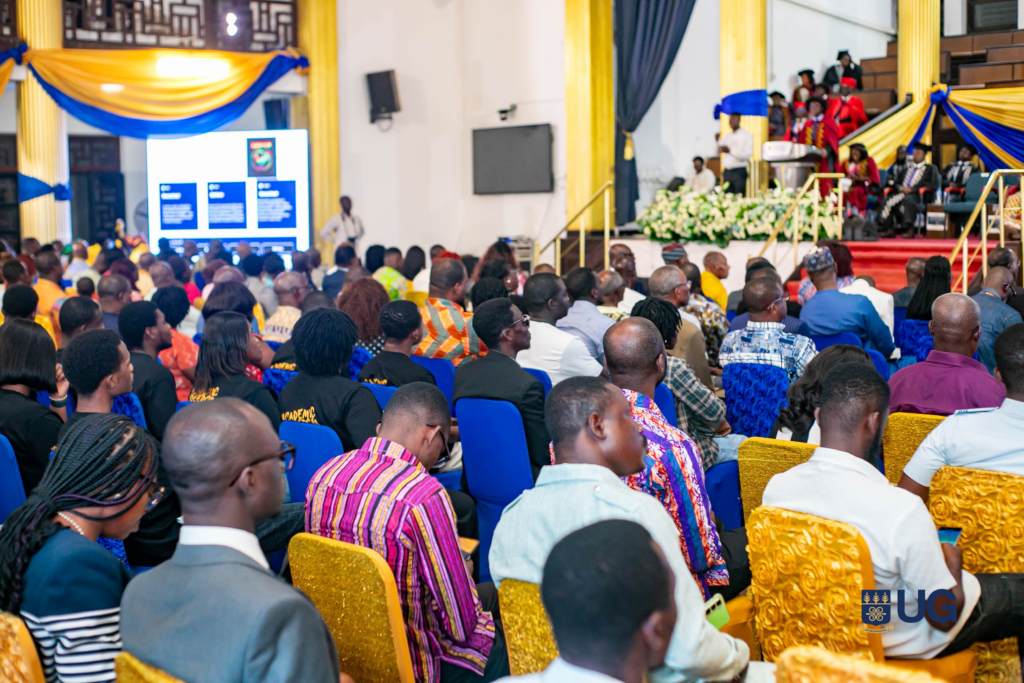

A senior academic at the University of Ghana has made a compelling case that student academic freedom extends far beyond campus walls, playing a crucial role in shaping democratic governance across Africa. Professor Kwadwo Appiagyei-Atua, who holds the Chair of International Law and Human Rights at the University of Ghana School of Law, delivered this argument during the university's ninth Inaugural Lecture for the 2025/2026 academic year, emphasising that students' experiences of participation and accountability within universities directly influence their engagement with democratic institutions in wider society.
The lecture, presented at the Great Hall and titled "The Student Question: Reclaiming Academic Freedom for Democratic Renewal in Africa," examined how academic freedom intersects with Africa's intellectual heritage, colonial legacy, university governance structures and the continent's democratic development. Prof Appiagyei-Atua's analysis challenged the conventional understanding that governments represent the primary threat to academic freedom, instead directing attention towards internal university structures that often marginalise student voices despite their status as key stakeholders.
Beyond State Control: Internal University Barriers
A central theme of Prof Appiagyei-Atua's lecture was the recognition that academic freedom can be undermined not only by state intervention but also by university management, academic staff and institutional hierarchies. He highlighted how vertically structured university systems often relegate students to subordinate positions, creating formal academic freedom whilst restricting substantive freedom through unequal power relations.
Drawing on the 1990 Dar es Salaam Declaration, Prof Appiagyei-Atua emphasised that students possess fundamental rights including freedom of study, freedom to dissent, participation in academic programmes and involvement in university governance. He argued that meaningful academic freedom requires students to have genuine voice in decisions affecting their education and their institutions, rather than token consultation. The professor identified partisan political involvement in student leadership as a particular concern, noting that when political parties influence student representation, it weakens independent activism and undermines confidence in student bodies.
Why It Matters for Ghana
For Ghana specifically, this lecture addresses longstanding tensions between university authorities and student bodies. Ghana's universities have periodically experienced disruptions stemming from student grievances regarding governance, representation and institutional decision-making. Prof Appiagyei-Atua's framework suggests that strengthening legitimate student participation and democratising classroom practices could reduce such conflicts whilst simultaneously building democratic habits among future citizens.
The professor's proposed solutions include transparent student campaigns, non-partisan student leadership structures and stronger collaboration between student bodies and civil society organisations. He also advocated for democratisation of classroom teaching methods and university governance, arguing that universities should transition from viewing students merely as knowledge recipients towards models emphasising dialogue, critical thinking and co-creation of knowledge with academic staff.
At a broader level, Prof Appiagyei-Atua presented a collaborative governance model involving distributed authority, horizontal consultation and mutual accountability among the state, universities, faculty, students and civil society. This framework recognises the distinct yet interconnected roles each stakeholder plays in sustaining both academic integrity and democratic values.
Building Democratic Foundations
The underlying thesis of the lecture—that university experiences shape how citizens engage with democratic institutions later—has significant implications for Ghana's democratic trajectory. If students develop habits of meaningful participation, representation and accountability whilst at university, they are more likely to demand and support these values in broader society. Conversely, if universities remain hierarchical spaces where student voices are marginalised, this may reinforce antidemocratic habits.
University of Ghana Vice-Chancellor Prof Nana Aba Appiah Amfo, who chaired the occasion, praised the lecture as intriguing and thought-provoking, whilst acknowledging the genuine challenges surrounding academic freedom and student participation in Ghanaian universities. She emphasised the need to cultivate environments where all university community members can contribute meaningfully.
Prof Appiagyei-Atua's inaugural lecture thus positions student academic freedom not as a narrow institutional concern but as fundamental to Africa's democratic future—a message with particular resonance for Ghana as it continues navigating democratic consolidation and institutional reform.
Source: MyJoyOnline



Comments (0)
Be the first to comment.