Teacher training is key to unlocking Ghana's digital learning potential, says UNIWIZ Foundation
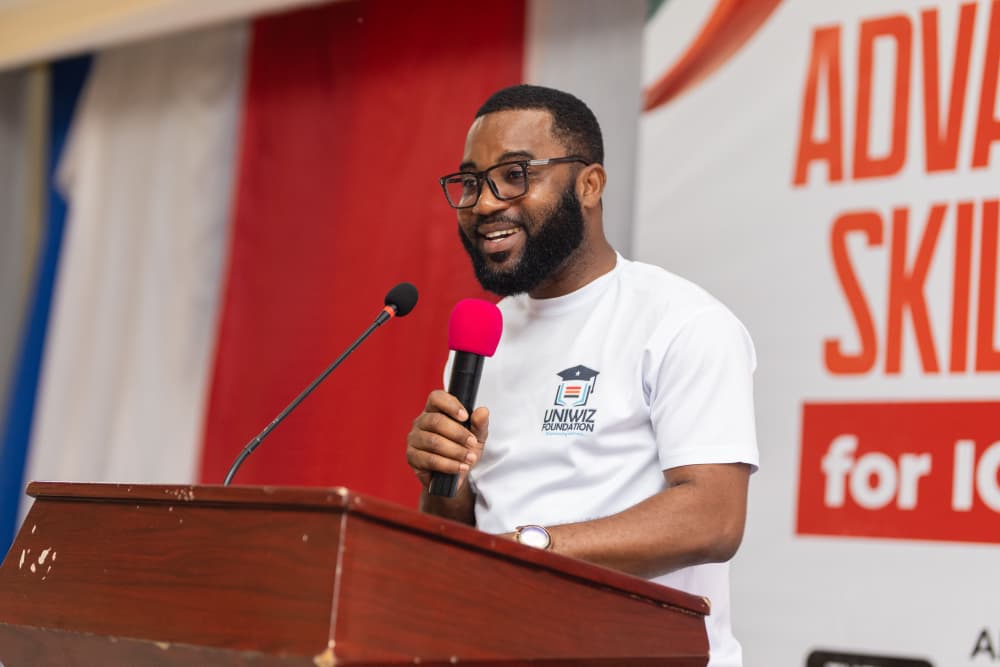
The UNIWIZ Foundation has issued a critical reminder to Ghana's education sector: building ICT centres in schools without equipping teachers to use them effectively will fall short of transforming digital learning in classrooms. Founder and CEO Wisdom Larry Quarme-Doe made this point whilst launching an Advanced Digital Skills Training programme for Ghana Education Service ICT coordinators in the Greater Accra Region, signalling a strategic shift in how the foundation approaches closing Ghana's digital divide in schools.
The intervention reflects a growing recognition that infrastructure alone does not guarantee educational outcomes. While the UNIWIZ Foundation has been constructing ICT centres across Ghana's schools, Quarme-Doe stressed that these facilities are only as effective as the educators who teach pupils to use them. The training programme, held at Methodist University in early August with support from the Swiss Embassy, aims to equip ICT coordinators with advanced skills to deliver better classroom instruction in digital literacy.
Why it matters for Ghana
Ghana's education system has long battled unequal access to technology and digital skills. Many schools, particularly in rural areas, lack both ICT infrastructure and teachers trained to teach it. The UNIWIZ Foundation's approach—combining physical infrastructure with educator capacity-building—addresses both barriers simultaneously, which is essential for the country's digital transformation agenda.
As Ghana seeks to position itself as a technology hub in West Africa and prepare students for a digital-first economy, the skills gap among teachers cannot be ignored. Without proper training, donated or newly-built ICT centres risk becoming underutilised resources. The foundation's programme acknowledges that the teacher, not the machine, remains central to learning outcomes.
The initiative also carries broader implications for how Ghana's education sector views professional development. By investing in ICT coordinators—often overlooked roles in schools—the foundation highlights the need for targeted, specialised training beyond generic teacher development programmes. This targeted approach could serve as a model for GES and other stakeholders.
Expanding beyond Greater Accra
The Greater Accra training represents the second edition of the programme, following an earlier session in March. Quarme-Doe indicated that UNIWIZ plans to roll out the initiative to the Ashanti Region, Eastern Region and beyond, working with GES to ensure nationwide coverage. This phased expansion is pragmatic, allowing the foundation to refine the curriculum and training methods before scaling.
The foundation's advantage lies in its existing reach through the National Juniors Challenge, the popular quiz competition for junior high schools. This nationwide platform has given UNIWIZ visibility across hundreds of schools and helped identify where ICT infrastructure gaps exist. Many schools lack functioning ICT centres altogether, creating both a challenge and an opportunity for targeted intervention.
The broader digital education strategy
Quarme-Doe emphasised that digital education is no longer optional. Technology now permeates nearly every sector, and schools that fail to equip pupils with basic ICT competencies risk leaving them unprepared for higher education and employment. ICT is itself a subject in Ghana's curriculum, and the National Juniors Challenge includes it as a competitive category, making access to practical training facilities essential.
The partnership with the Swiss Embassy demonstrates international recognition of Ghana's digital learning needs and willingness to support homegrown solutions. Such collaborations could unlock additional resources and expertise for scaling the programme across all sixteen regions.
For Ghana's education system, the UNIWIZ Foundation's message is clear: infrastructure investments must walk hand-in-hand with human capital development. Without trained, confident ICT coordinators and teachers, even the best-equipped centres will underperform. As the foundation expands its training initiative, its success could influence how other stakeholders—government, donors, and the private sector—approach digital learning investments in Ghanaian schools.
Source: MyJoyOnline




Comments (0)
Be the first to comment.