
Speaker Bagbin flags massive financial leaks as AG report exposes GH¢5.2bn in irregularities


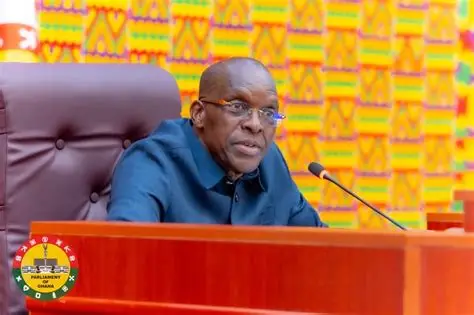
Speaker of Parliament Alban Bagbin has publicly expressed serious concern over substantial financial irregularities totalling GH¢5.2 billion uncovered in the latest Auditor-General's report, signalling growing tensions around the management of Ghana's public resources. The flagging of these discrepancies underscores deepening worries among key parliamentary figures about oversight failures and the need for tighter control over how state institutions handle taxpayer money.
Among the irregularities identified, approximately GH¢4.8 billion relates to tax-related matters, a finding that has prompted immediate scrutiny of revenue collection and reporting systems across government departments and agencies. The scale of these figures has sparked urgent questions about whether existing accountability mechanisms are sufficiently robust to catch and prevent such lapses.
The scope of the problem
The Auditor-General's report, which forms the basis of Speaker Bagbin's concerns, represents a comprehensive audit of public sector financial management. The identification of irregularities across multiple areas—particularly the dominance of tax-related anomalies—suggests systemic weaknesses rather than isolated incidents. This pattern indicates that revenue leakage and recording errors may be widespread across Ghana's tax administration and related financial systems.
Such large-scale irregularities typically encompass issues such as:
- Unaccounted funds and incomplete documentation
- Misclassification of revenue and expenditure
- Delays in fund transfers and reconciliation failures
- Weak internal controls in collection and reporting processes
Why it matters for Ghana
The discovery of GH¢5.2 billion in financial irregularities carries serious implications for Ghana's economy and public trust. For a nation managing competing demands for healthcare, education, infrastructure and social services, every cedi lost to poor accounting or mismanagement represents resources unavailable for citizens' needs. This particularly affects poor and vulnerable Ghanaians who depend most heavily on public sector provision.
Speaker Bagbin's intervention signals that Parliament intends to take these findings seriously, though it also reflects frustration that such large irregularities are being discovered after the fact rather than prevented through stronger preventive controls. The emphasis on strengthening accountability in public institutions suggests Parliament may push for legislative or procedural reforms to tighten oversight of spending agencies and revenue bodies.
The prominence of tax-related irregularities is especially concerning, as it raises questions about the integrity of Ghana's tax administration system—critical infrastructure for funding government operations and economic development. When GH¢4.8 billion cannot be properly accounted for within tax systems, it undermines confidence in the fairness and effectiveness of tax collection and creates opportunities for evasion or inefficiency.
What happens next
Speaker Bagbin's public statement is typically the prelude to parliamentary action. Parliament's Public Accounts Committee, which scrutinises Auditor-General reports, will likely demand explanations from affected ministries and agencies. Individual departments may be required to account for their irregularities and propose corrective measures.
The Speaker's focus on the need to strengthen accountability suggests Parliament may also consider broader reforms—such as enhanced internal audit functions, improved financial information systems, or tighter approval processes for large transactions. Whether these concerns translate into concrete legislative action will depend on political will and the capacity of parliamentary committees to follow through on investigations.
Source: 3News


Comments (0)
Be the first to comment.