
Skip the startup capital: How Ghanaian youth can build agribusiness empires through networking

Aspiring young entrepreneurs in Ghana don't need to wait for a windfall of cash before diving into agribusiness. Instead, they should focus on building relationships and identifying genuine market problems, according to agricultural development expert Engr Mahmud Mohammed-Nurudeen, who has guided nearly 300 people into the sector during 2026 alone.
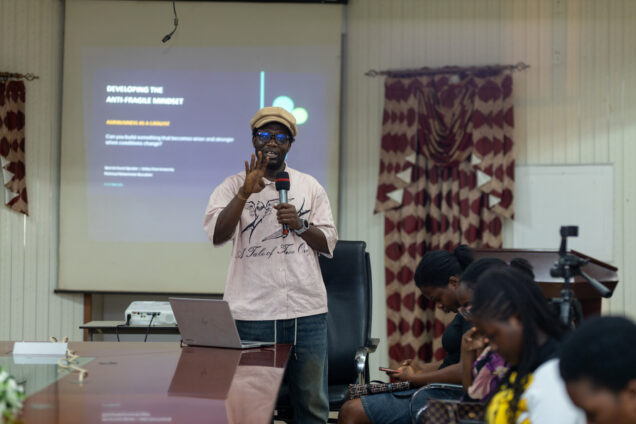
Speaking at an Agribusiness Incubation Workshop at Valley View University's Oyibi campus on 23 October, Mohammed-Nurudeen—Executive Director of the Centre for Climate Change & Food Security and Director of WAJESHA—challenged the common assumption that entrepreneurship requires substantial start-up capital. "Sometimes, you don't need money at the first point; you need people," he told participants exploring how to approach agriculture as a viable business.
Start with the problem, not the profit
The expert's core message centred on problem identification as the foundation for sustainable agribusiness ventures. Rather than chasing immediate returns, young entrepreneurs should first ask themselves: what genuine need exists in their community that they can address?
Mohammed-Nurudeen illustrated this principle through real-world examples. He described a woman whose business collapsed during the COVID-19 pandemic but who recovered by identifying a market gap: people needed access to locally produced rice. She connected rice producers with customers willing to pay a premium for convenience, turning a crisis into opportunity without requiring significant capital injection.
Similarly, he recounted advising a struggling vegetable farmer to shift from passive selling to active promotion. By preparing flyers and distributing samples at government offices—where workers have limited time for market visits—the farmer transformed his customer base within weeks. "When he did that, the first week, second week, they started calling him for orders," Mohammed-Nurudeen explained.
The lesson cuts deeper than sales tactics: successful agribusiness requires understanding what customers actually want, then meeting that need more effectively than competitors.
Build your network before you build your business
Perhaps counterintuitively, Mohammed-Nurudeen emphasized that relationships often matter more than capital in determining business survival. He drew on two decades of experience travelling to nearly 2,500 communities across Ghana's 16 regions, maintaining friendships in districts nationwide that continue to provide access to advice, partnerships and opportunities.
He warned young people—particularly those under 25—that even a well-capitalised business will collapse without a strong network. Professional relationships have opened doors to international collaborations on climate change and health projects for him; similar networks can provide Ghanaian entrepreneurs with mentorship, market intelligence and critical partnerships.
"You might even have the money and you might even establish your business, but the business will collapse because you don't have that strong network system," he cautioned. He urged young people to begin cultivating relationships immediately, without measuring every interaction by immediate financial return. "There are things you need to do for free and these things can bring a lot of benefits to you."
Why it matters for Ghana
Ghana's agricultural sector remains central to rural livelihoods and food security, yet youth participation has declined as young people migrate to cities seeking non-farm employment. Agribusiness presents a pathway to reverse this trend—but only if young Ghanaians understand that entry doesn't require inherited wealth or formal bank loans.
Mohammed-Nurudeen's approach reframes agribusiness as accessible to ordinary Ghanaians with time, creativity and relationship-building skills. It also addresses a critical insight: the value chain extends far beyond farming. Young people can enter through processing (transforming cassava to gari, for example), packaging, marketing, distribution or logistics—roles that require less land and capital than crop cultivation.
As Ghana grapples with youth unemployment and agricultural stagnation, this message offers practical hope. The barrier to entry is not money; it is mindset. By identifying unmet needs, building relationships with customers and suppliers, and innovating within value chains, Ghanaian youth can create sustainable livelihoods whilst strengthening local food systems.
Source: The Ghana Report



Comments (0)
Be the first to comment.