Open party primaries impractical, says former NPP boss Freddie Blay
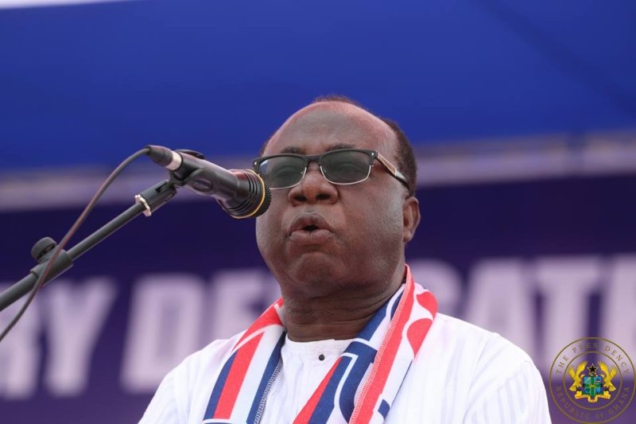
Former National Patriotic Party (NPP) National Chairman Freddie Blay has raised serious concerns about implementing open primary elections across Ghana's political parties, arguing that allowing all card-bearing members to vote in presidential and parliamentary selections would prove unworkable in practice.
Blay's intervention comes after Ghana's Supreme Court ruled the delegate system unconstitutional and mandated that political parties adopt more inclusive electoral processes for choosing candidates. The government has also signalled support for the reform as part of the wider constitutional review process. However, Blay contends that those pushing the idea lack genuine understanding of how party organisations function on the ground.
The practical obstacles
In an interview on Channel One TV, Blay highlighted the enormous logistical and financial burden that nationwide open primaries would place on political parties. Organising members across all constituencies, printing ballot materials, and coordinating voting would require substantial resources that parties may struggle to mobilise. He warned that the scale of such exercises would stretch party infrastructure to breaking point, particularly in rural areas where party membership is dispersed.
Beyond logistics, Blay disputed the assumption that broadening participation would automatically curb corruption or undue influence in internal elections. He pointed to reforms previously undertaken by the National Democratic Congress (NDC) as evidence that expanding the voting pool does not eliminate allegations of vote-buying, manipulation, or other malpractices. "If there is corruption, or if you call it influence, nothing has changed that much," he remarked, suggesting that the fundamental problem lies not with the size of the electorate but with the integrity of the process itself.
Security and infiltration risks
A further concern Blay raised is the vulnerability of open primaries to infiltration by rival political parties. When internal elections expand to include all registered members, the difficulty in verifying voter eligibility and preventing cross-voting increases significantly. This could potentially allow operatives from competing parties to manipulate outcomes or distort the selection process in favour of weaker candidates, undermining the legitimacy of chosen nominees.
Why it matters for Ghana
This debate reflects a fundamental tension in Ghana's democratic development. The Supreme Court's ruling responds to legitimate concerns about transparency and inclusion in candidate selection. However, Blay's pushback highlights the gap between constitutional ideals and operational reality. Political parties are voluntary associations with their own governance needs, and imposing electoral systems without regard for their capacity to implement them risks creating chaos rather than democracy.
For Ghanaian voters, the stakes are significant. Robust internal party democracy can improve the quality of candidates who reach general elections, potentially strengthening parliamentary and presidential contests. Conversely, poorly designed or unmanageable primary systems could produce candidates selected through chaos rather than merit, weakening overall democratic quality. The government and political parties must therefore engage in serious dialogue about reforms that are both constitutionally sound and practically achievable, rather than forcing changes that parties cannot effectively implement.
Source: MyJoyOnline


Comments (0)
Be the first to comment.