
One Fallen Tree, A Nation's Grid: What the Aboadze-Anwomaso Outage Reveals About Ghana's Transmission Corridor Problem
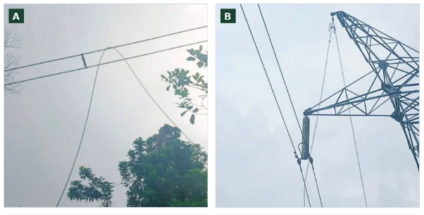

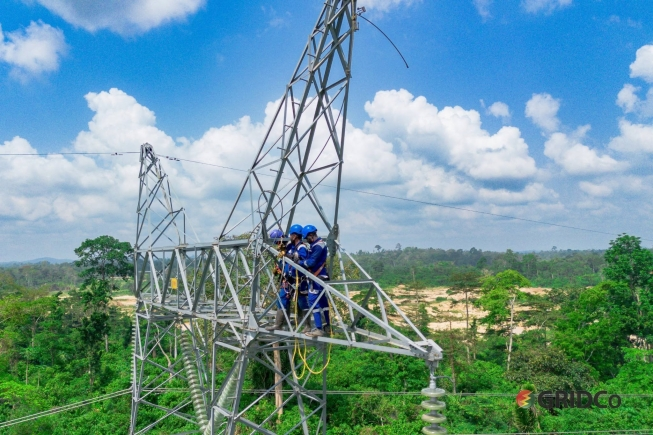
On 25 November 2026, a fallen hardwood tree struck the Aboadze to Anwomaso 330kV transmission line between Tower 268 and Tower 269, forcing system operators to shed load across parts of Kumasi and the Western Region. GRIDCo's field engineers moved quickly into thick forest terrain to locate the fault and carry out emergency repairs — dangerous, skilled work that deserves genuine recognition. But the incident raises questions that go well beyond the immediate cause, questions about whether Ghana's current approach to managing its transmission corridors can truly protect a grid that millions of people and businesses depend on every day.
A legal right-of-way that may no longer be enough
Ghana's transmission corridors are governed by the Transmission Line Protection Regulations, 1967 (L.I. 542), as amended by L.I. 1737 of 2004. The law grants GRIDCo a 40-metre Right-of-Way — 20 metres either side of the centreline — for every 330kV line. On paper, that sounds generous. In practice, it shrinks considerably once you account for the wide steel cross-arms that push outer phase conductors several metres away from the tower spine, leaving roughly 12 to 15 metres between live high-voltage conductors and the legal boundary.
Now consider the forest that surrounds the Aboadze to Anwomaso corridor through Ghana's Western, Central, and Ashanti high-forest belt. Mature tropical hardwoods — species such as Wawa, Odum, and Onyina — regularly grow to heights of 30 to 50 metres. A tree of that stature standing just outside the 20-metre mark does not need to trespass into the corridor to bring down a conductor. It simply needs to fall sideways. That is precisely the scenario the November incident illustrates. GRIDCo's own photographs from the site show a felled log resting inside the corridor while tall green canopies crowd the boundary edge — a vivid demonstration that the legal fence and the physical hazard are not always the same thing.
GRIDCo has pointed at illegal chainsaw operators near the corridor, and criminal logging close to national energy infrastructure is a serious matter that warrants firm law enforcement. Yet even if no illegal actor had been present that morning, a rotten root system or a tropical squall could have produced the same outcome. The corridor management challenge is therefore broader than policing alone.
Why it matters for Ghana
The Aboadze to Anwomaso line is not a minor feeder. It is part of the backbone transmission infrastructure linking thermal generation capacity in the Western Region to load centres including Kumasi, Ghana's second-largest city. Outages on this corridor affect households, hospitals, factories, and commercial operations across multiple regions simultaneously. The Ghana Electricity Transmission Rules, 2008 (L.I. 1934) and the National Electricity Grid Code already bind GRIDCo to strict asset reliability standards. A single tree event that darkens a major city tests how well those obligations are being met in practice.
Periodic manual slashing of vegetation, while necessary, cannot keep pace with tropical regrowth. Woody bush cut by hand can sucker back within months, and dense undergrowth along corridor edges also gives illegal loggers convenient cover. Meanwhile, conductors are not static. Under peak afternoon heat, live metal expands and sags. Under storm gusts, it swings toward the treeline. A clearance that appears adequate on a calm morning can close dangerously during a squall.
Grid operators in other countries that run high-voltage lines through forested terrain have responded to exactly these challenges by moving beyond reactive maintenance. North America's NERC FAC-003-5 standard, for instance, requires full annual inspections of transmission corridors at 200kV and above, with engineers modelling clearances against worst-case thermal sag and wind sway. Critically, modern practice does not stop at the legal boundary. Utilities now run proactive off-corridor hazard tree programmes, mapping every tall or unstable tree outside the easement that could strike a conductor if it falls. Some operators have also introduced drone and airborne LiDAR surveys to build three-dimensional clearance maps and flag leaning crowns before a storm arrives.
What needs to happen next
GRIDCo's crews restored the line, and that is to be acknowledged. The harder conversation is about what happens between faults. Ghana's 1967 right-of-way standard was written for a different era and a grid of far smaller scale and consequence. Updating corridor management to reflect the height and reach of mature tropical forest species, adopting structured off-corridor hazard tree assessments, and deploying technology to supplement foot patrols on critical trunk lines are not luxury investments — they are the logical next step for a utility bound by law to maintain network security.
The tree that brought down part of the grid did not need to cross the fence. That single fact is the most important lesson from Towers 268 and 269, and it deserves a serious engineering response.
Source: The Ghana Report



Comments (0)
Be the first to comment.