
NDC's Fifi Kwetey Calls Out Political Mercenaries Within His Own Party — And Ghana's Broader Political Culture
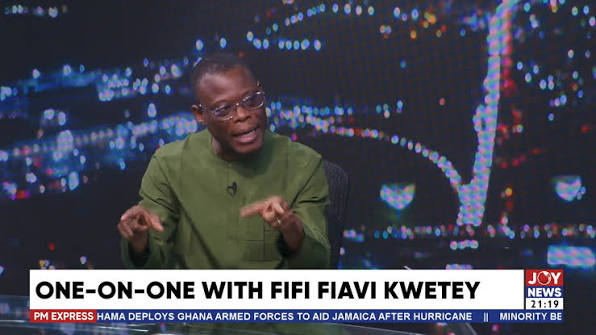

NDC General Secretary Fifi Kwetey has made a candid and striking admission: political mercenaries are alive and well within Ghana's political parties, including the National Democratic Congress itself. Speaking on JoyNews' PM Express, Kwetey warned that allowing self-serving individuals to thrive inside political organisations poses a serious threat not only to party discipline but to the broader project of national development.
His remarks are significant precisely because they come from within — a senior party official calling out a culture that political leaders rarely acknowledge so plainly in public.
What Kwetey actually said
The NDC General Secretary defined a political mercenary in blunt terms: someone who joins a party purely for personal benefit, with no genuine commitment to its values or the country's progress. "A mercenary is somebody who is literally in it just for himself. If he gets his benefit, he can motivate everybody because all he wants is himself. And that is not what it is that we should have," he said.
Kwetey argued that political parties should instead attract people who genuinely believe the organisation can improve the lives of Ghanaians — members motivated by a shared national purpose rather than expectations of appointments, contracts or other personal rewards.
He placed some of the blame squarely on the parties themselves, saying that political organisations have historically allowed this transactional culture to flourish, effectively normalising it. "Many people join parties fundamentally because of what they can get. And that sadly has been the reality. And because the political parties have allowed it. But that should not be," he said.
He stressed that the collective good of the party — and by extension the country — must always take precedence over individual ambitions.
Why it matters for Ghana
Kwetey's admission taps into one of the most deeply entrenched problems in Ghanaian democratic politics: the phenomenon of money politics and patronage that runs through both major parties — the NDC and the New Patriotic Party (NPP). General elections and internal party contests alike have repeatedly been marred by allegations of vote-buying, the distribution of cash and gifts, and promises of government positions in exchange for loyalty.
The NDC itself has not been immune to such criticism. The party has faced allegations of financial inducements during its own internal elections, raising uncomfortable questions about whether its leadership contests genuinely reflect the will of committed members or the purchasing power of well-resourced candidates.
When the most senior official of a party openly acknowledges the problem, it suggests the issue has reached a point where it can no longer be quietly managed or denied. It also sets a public benchmark — Kwetey's words can now be held against the NDC's actions as the governing party moves forward with its internal processes and governance agenda.
More broadly, the culture of political mercenaryism contributes directly to governance failures. When individuals secure government appointments or party positions through financial muscle rather than merit or ideological alignment, the result is often poor service delivery, corruption and a lack of accountability to ordinary citizens.
Can the NDC — or any party — actually fix this?
Kwetey indicated that the NDC is actively working to build a party culture where collective interests outweigh individual ones — where members are bound together by shared values rather than transactional arrangements. It is a worthy aspiration, but one that will require structural changes, not just public statements.
- Reforming internal election processes to reduce the influence of money would be a critical first step.
- Establishing clear codes of conduct with real consequences for patronage-driven behaviour would give the commitment substance.
- Building platforms for younger, ideologically motivated members — who may lack financial resources — to rise within the party structure would also help shift the culture over time.
Ghana's democracy is now over three decades old. Its continued maturation depends in large part on whether its political parties can evolve from patronage networks into genuine vehicles of national development. Kwetey's remarks suggest at least some within the NDC recognise the urgency of that challenge — whether the party acts on it remains to be seen.
Source: MyJoyOnline



Comments (0)
Be the first to comment.