
NDC Chairmanship Hopeful Vanderpuye Vows Pension Fund for Grassroots Party Workers
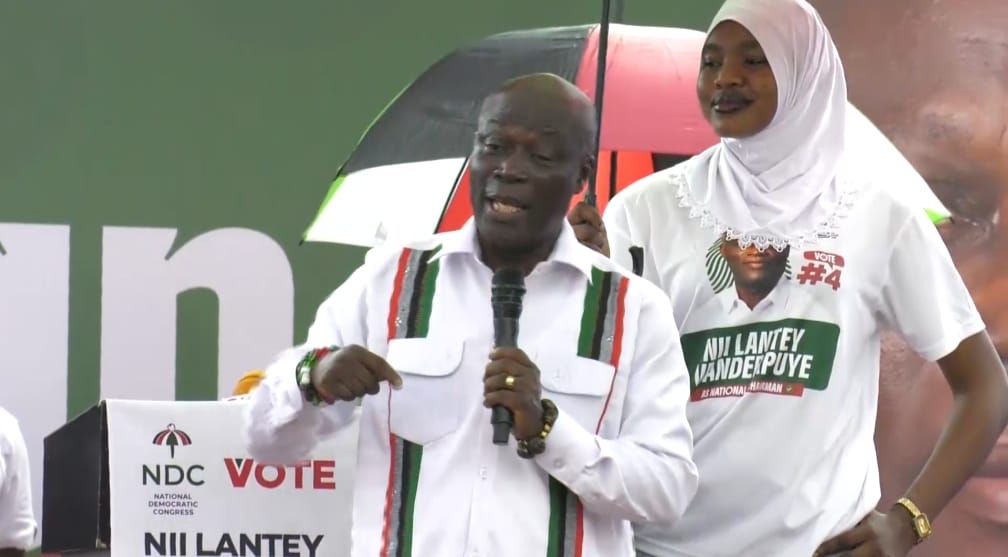

NDC National Chairmanship aspirant Edwin Nii Lante Vanderpuye has unveiled one of his most ambitious campaign pledges yet — a structured pension scheme for party workers spanning from the branch level all the way up to the national secretariat. The proposal, which Vanderpuye says would be financed through mandatory contributions from government appointees, is designed to offer long-serving grassroots loyalists some financial security in their old age.
How the proposed scheme would work
At the heart of Vanderpuye's plan is a one per cent deduction from the monthly salaries of all political appointees serving under an NDC government. Speaking on the campaign trail, he explained that he would negotiate directly with the President and the Chief of Staff to formalise these contributions and channel them into a dedicated fund.
"Through negotiation with the President and the Chief of Staff, every appointee of our government that we the party brought into power will pay 1% of his salary into the fund. That fund will be invested and from that fund we shall start a pension scheme," he said.
The accumulated fund would then be invested to generate returns, with the proceeds forming the basis of monthly payments to qualifying party workers. Vanderpuye was particularly emphatic about the need to support women who dedicate years to door-to-door campaigning in villages and farming communities, often sacrificing time with their own families to do so.
"That woman that leaves her family and every day goes round the villages, the farmlands, working for the party — when she becomes old, she can have something every month to buy her medication and take care of herself," he said.
Why it matters for Ghana
The proposal touches on a longstanding and largely unaddressed tension within Ghanaian political parties — the gap between those who wield political power and those who do the grunt work that delivers electoral victories. Grassroots party activists, often referred to as foot soldiers, have repeatedly complained across both the NDC and the NPP that they are sidelined once their party wins power, receiving little in return for years of service.
In the NDC's case, this grievance has periodically boiled over into public protests, with foot soldiers demanding jobs, contracts or at the very least recognition from the governments their campaigning helped create. A formal pension mechanism, if ever implemented, would represent a structural rather than ad hoc response to this frustration.
However, the proposal also raises practical questions. Deducting from appointees' salaries requires legal and administrative frameworks that go beyond a chairman's direct authority. Critics may argue that a party chairman cannot unilaterally compel government appointees — who are ultimately servants of the state — to redirect portions of their public-sector salaries to a party fund. The legality and ethics of such an arrangement are likely to attract scrutiny, particularly from political opponents and civil society groups.
Vanderpuye appeared aware of these complexities, framing his approach as one of negotiation and persuasion rather than compulsion. Whether that is a workable model remains to be seen.
The race for NDC National Chairman
Vanderpuye is one of four aspirants currently vying for the NDC National Chairmanship, a position that sits at the apex of the party's administrative structure and plays a central role in shaping its direction between election cycles. The NDC is scheduled to elect its next National Chairman at a National Congress on 19 December 2026, giving all aspirants considerable time to canvass delegates and refine their platforms.
The chairmanship contest is unfolding at a moment when the NDC is back in government following the 2024 general election, making internal party cohesion and organisation particularly important. Whoever emerges as chairman will need to manage the relationship between the party machinery and the executive branch — a balancing act that Vanderpuye's pension proposal, for all its ambition, neatly illustrates.
As the December 2026 congress approaches, expect the candidates to sharpen their policy offerings in a bid to win over the delegates who will ultimately decide the party's next leader.
Source: MyJoyOnline



Comments (0)
Be the first to comment.