NDC chairmanship hopeful unveils '3Vs' plan to empower grassroots members beyond elections

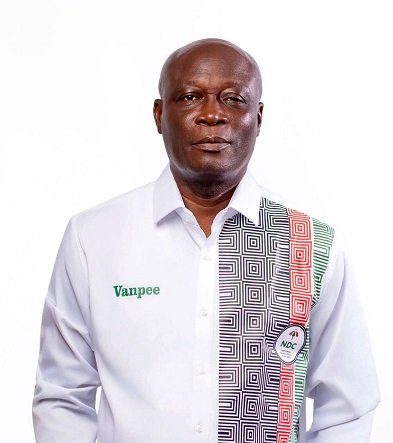
A contender for the National Democratic Congress (NDC) national chairmanship has put forward an ambitious framework designed to reshape how the party engages with and supports its grassroots membership between elections and beyond campaign cycles. Akwasi Opong-Fosu's proposal, centred on three pillars he terms the "3Vs"—Votes, Voice and Viability—attempts to address a persistent challenge in Ghanaian political party structures: the concentration of resources and attention around election periods, leaving constituency and branch members economically vulnerable in non-election years.
The framework was presented to NDC branch members on 24 September 2026, and represents a strategic pitch in Opong-Fosu's bid for the party's top organisational position. The proposal explicitly acknowledges that grassroots party work has historically been undervalued and under-resourced outside electoral cycles, potentially weakening both member morale and party organisational capacity.
Understanding the three components
The Votes component recognises and rewards the mobilisation efforts of branch and constituency members whose ground-level work translates into electoral performance. Rather than viewing grassroots activism as a voluntary duty with delayed or absent recognition, this pillar seeks to institutionalise acknowledgment of grassroots contribution to party electoral strength.
The Voice component addresses a longstanding frustration in party structures across Ghana: the limited formal mechanisms through which ordinary members can influence party direction. Opong-Fosu proposes establishing clearer channels for branch and constituency-level proposals to reach regional and national leadership, with guaranteed responses. This attempt to strengthen bottom-up communication within party hierarchies could prove particularly significant if implemented, as most Ghanaian parties operate with relatively vertical command structures.
Viability, the third pillar, tackles the economic sustainability challenge directly. The proposal envisions helping constituencies identify locally appropriate business opportunities, then supporting interested members with skills training, apprenticeships, mentorship and market access. Importantly, the framework includes support for member-owned cooperatives and businesses with clear ownership structures and financial accountability—measures intended to prevent the exploitation or misappropriation of party-linked economic initiatives.
Why it matters for Ghana
This proposal carries implications beyond internal NDC management. Ghana's political parties remain the primary vehicles for political mobilisation and civic engagement at grassroots level, particularly in rural and semi-urban areas. Yet the financial vulnerability of ordinary party members between elections has historically driven two problematic outcomes: the desertion of party structures by members seeking income elsewhere, and the susceptibility of impoverished members to unethical incentive schemes during campaign periods.
If the NDC or any major party successfully implemented a genuine year-round economic empowerment programme for grassroots members, it could strengthen party organisational depth while reducing dependence on irregular, election-timed financial inducements. The proposed Business Development Directorate would require substantial institutional capacity and financial resources, raising questions about funding mechanisms and sustainability.
The framework also reflects broader conversations within Ghanaian opposition and governing parties about internal democracy and member agency. The emphasis on Voice—giving members a genuine role in decision-making—aligns with demands from civil society organisations for more transparent, member-responsive party governance.
Implementation and next steps
Opong-Fosu has indicated the framework is designed for immediate, nationwide implementation rather than piloting in select constituencies. This approach, whilst ambitious, carries higher risk if coordination and financial resources prove inadequate. The success of this proposal—or similar frameworks adopted by other parties—will depend heavily on the party's willingness to allocate sustained funding, establish credible oversight mechanisms and genuinely devolve decision-making authority to grassroots structures.
The proposal anchors itself to the NDC's stated theme of "Restoration, Renewal and Resetting", framing grassroots empowerment as central to rebuilding trust in party leadership, improving members' economic prospects and fundamentally reshaping how the party operates between elections.
Source: MyJoyOnline


Comments (0)
Be the first to comment.