
NAIMOS Cannot Win the Galamsey War Alone — Senyo Hosi Demands a Total Rethink
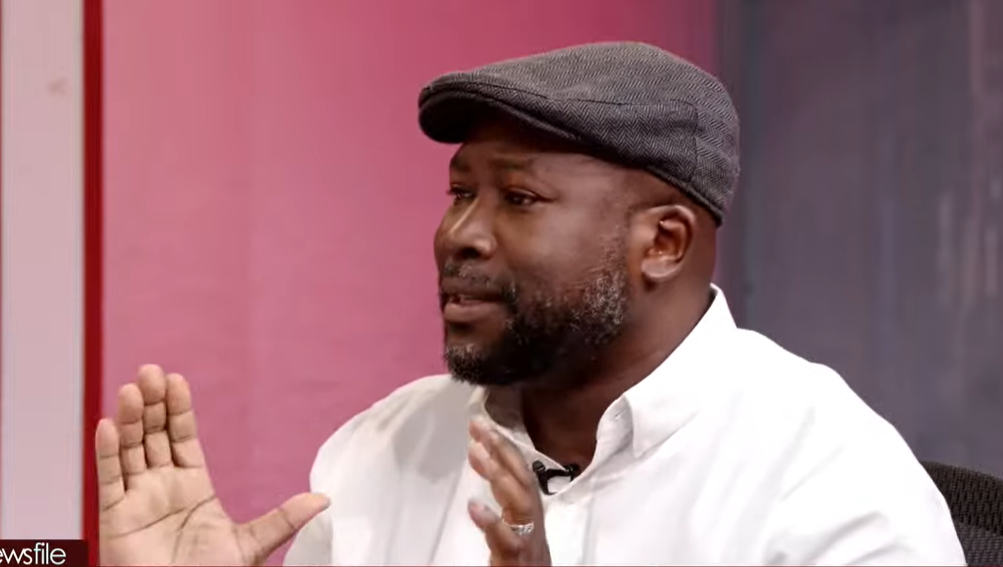

Ghana's battle against illegal small-scale mining — commonly known as galamsey — is failing because the country is placing too much faith in a single institution while ignoring the deep economic roots of the problem. That is the blunt assessment of Senyo Hosi, Convener of the OneGhana Movement and a finance and economic policy analyst, who has called for a fundamental overhaul of the nation's approach to tackling one of its most damaging environmental crises.
Speaking on JoyNews' Newsfile, Mr Hosi directed sharp criticism at the current over-dependence on the National Anti-Illegal Mining Operations Secretariat (NAIMOS), warning that no task force — however well-resourced — can defeat an activity that has become woven into the economic survival of entire communities across the country.
Local authorities must step up
A central thread in Mr Hosi's argument was that Metropolitan, Municipal and District Chief Executives (MMDCEs) have largely abandoned their responsibility to enforce mining laws at the grassroots level. He argued that because illegal mining takes root locally, the response must also be local — not dependent on a national secretariat conducting sweeping operations from one community to the next.
"We cannot rely on NAIMOS alone to win a war which has taken seed at the local level. MMDCEs, who control security at the local level, continue to fail to enforce the laws," he stated.
He also questioned the value of operations that do not produce lasting results. Pointing specifically to interventions at Osino in the Eastern Region, he noted that illegal miners returned to work almost immediately after security personnel departed — raising uncomfortable questions about what such operations actually achieve. "You went to Osino. You left the place. The people went back in. What did you achieve?" he asked.
Mr Hosi also revived longstanding concerns about extortion allegedly associated with anti-galamsey operations, recalling similar accusations that plagued earlier interventions such as Operation Vanguard. These allegations, he suggested, undermine public trust and reduce the moral authority of enforcement efforts.
Why it matters for Ghana
Ghana has been grappling with the galamsey menace for well over a decade. The activity has devastated river bodies — including portions of the Pra, Ankobra and Offin — contaminated drinking water sources, and scarred forest reserves across the country. Successive governments have launched task forces, deployed military personnel and seized equipment, yet the problem persists and in many areas has worsened.
Mr Hosi's critique cuts to the heart of why enforcement alone has consistently fallen short. He estimates that between one million and three million people are directly or indirectly involved in the illegal mining economy — a figure that makes purely coercive strategies not only impractical but potentially destabilising. "You are dealing with a trade that has about a million to three million people involved, a whole community. You can't just shut them down when that is actually their livelihood," he said.
His argument echoes a view held by many development economists: that poverty-driven illegal activity cannot be policed away without simultaneously creating credible economic alternatives. Communities where galamsey has replaced subsistence farming or formal employment will not abandon it simply because soldiers arrive — they will wait for them to leave.
"The communities have this intertwined with their culture, their economic survival. You can't shoot poverty away. That is the reality of this," Mr Hosi said.
Defining what victory looks like
On the question of whether a state of emergency remains necessary, Mr Hosi took a nuanced position. He acknowledged that such a measure could be justified in the most severely affected areas, but cautioned that it would only work if backed by genuine political will — something he believes has been missing across administrations. Ghana's military, he noted, numbers between 28,000 and 30,000 personnel, a force that is simply not equipped to police millions of people spread across remote mining communities indefinitely.
Rather than chasing an all-encompassing victory, Mr Hosi urged the government to identify clear, measurable goals — with the restoration and protection of water bodies and forest reserves as the most urgent priorities. He argued that a focused, well-resourced campaign with realistic targets would deliver more lasting results than broad operations that dissipate energy without producing sustainable change.
"We just have to be clear and select our victories, our winnable tasks. We have to define what victory looks like at first," he said. "We can't keep wanting to do things the same way. There's a need for a total rethinking of this."
As Ghana's new administration settles into office, Mr Hosi's warning serves as a timely reminder that the galamsey crisis demands political courage, economic imagination and genuine community engagement — not just more boots on the ground.
Source: MyJoyOnline


-800x455.webp)

Comments (0)
Be the first to comment.