
Kufuor: Today's Youth Need Fast-Track Mentorship, Not Long Apprenticeship Like Mine
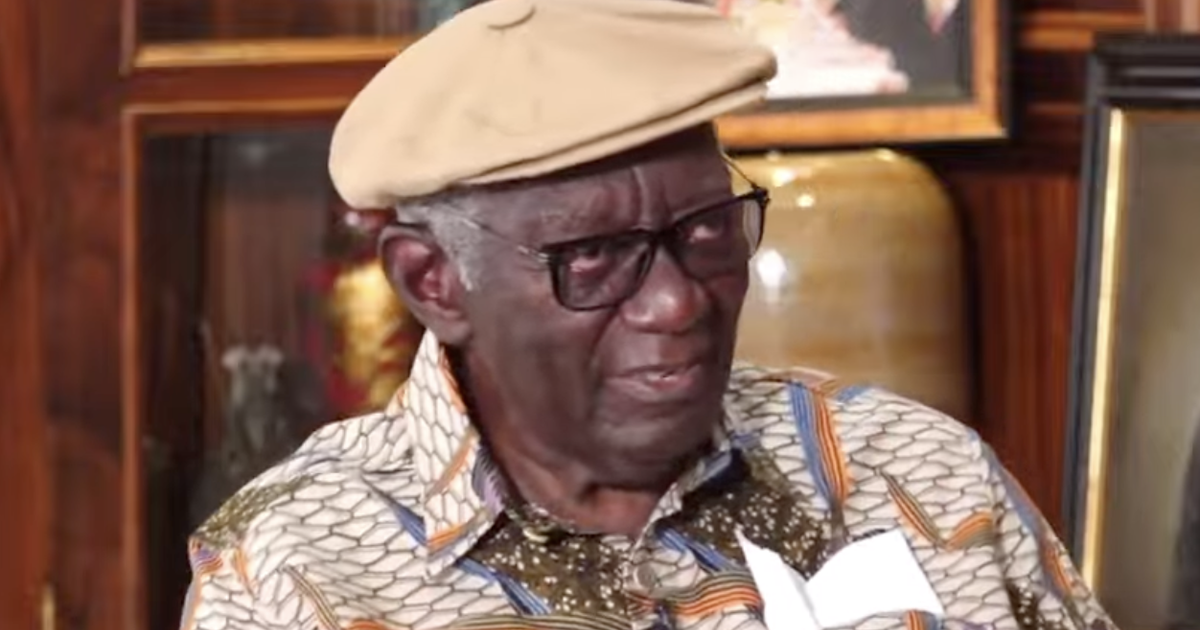

Former President John Agyekum Kufuor has called on Ghana's older generation to urgently package and transfer their accumulated experience to young people, arguing that the pace of modern life—especially technological change—no longer permits the lengthy apprenticeships that shaped his own rise to power.
Speaking on Joy News' PM Express this week, Kufuor reflected on his own developmental journey through law studies, legal practice and city administration, stages that unfolded over many years in a slower-moving world. He stressed that today's youth face fundamentally different constraints and opportunities, and cannot afford to follow the same prolonged pathway.
"I say I came to what I eventually ended in through long apprenticeship. They may not be privileged to undergo such an apprenticeship with time," Kufuor said, highlighting how artificial intelligence and digital technologies are reshaping the speed at which knowledge must be acquired and applied.
The Case for Compressed Leadership Training
Rather than lamenting this shift, Kufuor framed it as a generational responsibility. Older leaders, he argued, must distil decades of lived experience into lessons that young people can absorb and implement far more quickly than previous cohorts could.
Kufuor pointed to his John A. Kufuor Foundation as a practical model for this compressed transfer of wisdom. The foundation's Kufuor Scholars Program selects university students for intensive three-year leadership development combining mentorship, coaching, skills training and real-world activities. The scheme explicitly aims to develop patriotic, ethically grounded leaders capable of creative problem-solving and meaningful contribution to Ghana's development.
"My generation should feel a responsibility to sort of package the experiences we had to go through to get to where we are, because I believe in the intergenerational evolution of society," he explained.
Why This Matters for Ghana
Ghana's leadership pipeline faces genuine pressure. As technology accelerates decision-making cycles and reshapes labour markets, the nation's young professionals must rapidly master both technical competencies and the soft skills—judgment, integrity, strategic thinking—that cannot be downloaded. Yet formal education systems often lag behind industry needs, and informal mentorship structures have weakened as urbanisation and globalisation fragment traditional apprenticeship networks.
Kufuor's intervention is timely because it bridges a real gap. Young Ghanaians are, by his own observation, better educated in science and technology than his generation and have unprecedented access to information via mobile devices. However, they often lack practical guidance on how to navigate institutional complexity, build networks and exercise power responsibly—lessons that require mentorship from those who have done it.
The challenge for Ghana is scaling such initiatives. The Kufuor Scholars Program, whilst valuable, reaches only a limited cohort of university students. If the nation is to equip its youth for accelerated leadership roles—whether in government, business, civil society or the professions—structured mentorship and experience-sharing must become far more widespread.
Building on Existing Strengths
Kufuor's optimism about the current generation's potential is noteworthy. Rather than viewing technological disruption as a threat to leadership formation, he sees it as an asset to be combined with inherited wisdom. His contrasts between Kumasi in the 1950s–60s—when telephones were rare—and today's smartphone-enabled reality underscore how information access has democratised, at least in theory.
The task ahead is to ensure that Ghana's institutional and informal mentorship systems keep pace with this change. Whether through foundations, corporate programmes, government initiatives or community networks, the deliberate packaging and transmission of ethical leadership, institutional knowledge and strategic thinking to young Ghanaians will be crucial to the nation's development in an accelerating world.
Source: MyJoyOnline



Comments (0)
Be the first to comment.