
KNUST Swimming Pool Closed After Level 300 Student Drowns; Nine-Member Committee Begins Probe
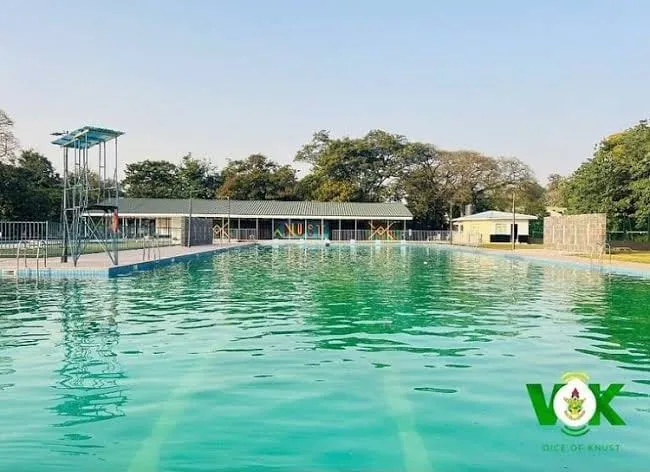

The Kwame Nkrumah University of Science and Technology (KNUST) has temporarily closed its on-campus swimming pool and constituted a nine-member investigative committee following the tragic death of a Level 300 student who drowned over the weekend. The incident has sent shockwaves through the university community and reignited urgent questions about safety protocols at campus recreational facilities across Ghana.
What happened
The deceased, a third-year Chemical Engineering student, lost his life on Saturday, 7th November 2026, after entering the water from one of the upper diving boards at the university's swimming pool. According to accounts of the incident, the student failed to resurface after diving in, and efforts to rescue him were ultimately unsuccessful. The circumstances surrounding exactly what caused him to go under — whether a physical condition, an injury upon entry, or another factor — are yet to be officially determined, and that is precisely what the newly formed committee is mandated to establish.
University authorities moved swiftly in the immediate aftermath, shutting down the swimming facility to allow for a thorough investigation and to prevent any further incidents while the probe is ongoing. The closure will remain in effect until the committee concludes its work and management is satisfied that the facility meets all required safety standards.
University responds with formal probe
KNUST management confirmed the formation of a nine-member committee tasked with investigating the full circumstances of the student's death. The committee is expected to examine the state of the pool facility, the safety measures in place at the time of the incident, whether lifeguards were present and adequately positioned, and whether the diving boards in use meet acceptable safety specifications.
Investigations of this nature at Ghanaian universities are not uncommon following critical incidents, though the outcomes and subsequent reforms have historically varied. The university community — students, faculty, and alumni — will be watching closely to see whether the committee's findings lead to concrete, lasting changes rather than a temporary response that fades once public attention moves on.
The loss has deeply affected the student body at KNUST, with many taking to social media to mourn a colleague described as bright and full of promise. The Chemical Engineering department, in particular, has been left grieving one of its own.
Why it matters for Ghana
This tragedy raises broader concerns about the state of recreational and sports infrastructure at Ghanaian universities and the adequacy of supervision at such facilities. Swimming pools, diving boards, and other amenity spaces at tertiary institutions require consistent maintenance, trained lifeguard personnel, and clearly enforced user regulations — standards that must be regularly audited rather than assumed.
Ghana has seen periodic drowning incidents at both public and institutional water facilities, yet systemic reforms to water safety culture remain slow. Unlike some countries where swimming is introduced as a core life skill from primary school, a significant proportion of Ghanaians are not strong swimmers, making proper supervision at any aquatic facility especially critical.
Beyond KNUST, university authorities nationwide may need to conduct urgent internal reviews of their own aquatic and recreational facilities. The incident also brings into focus the importance of visible emergency response capacity — including trained lifeguards, accessible rescue equipment, and clear emergency procedures — at every campus pool in the country.
The family of the deceased has been informed, and the university is expected to provide support during this period of grief. As Ghana's premier science and technology university mourns, the hope is that this committee's work will produce recommendations strong enough to prevent another family from suffering the same loss.
Source: 3News





Comments (0)
Be the first to comment.