Kenneth Gilbert Adjei Takes Office as Ghana's New Defence Minister
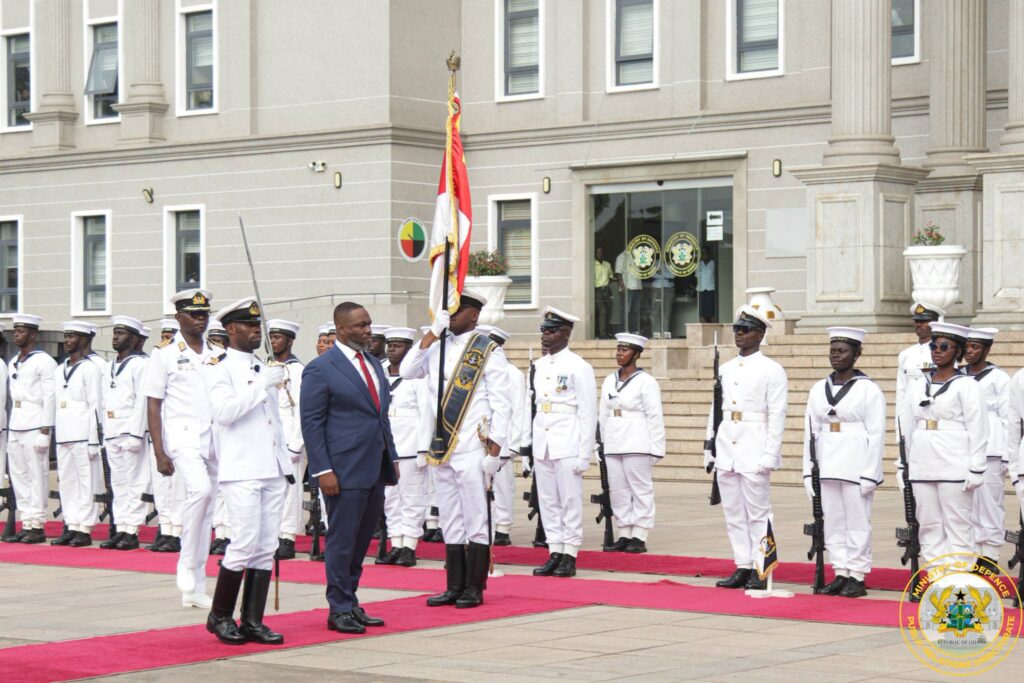
Ghana's Defence Ministry has officially welcomed Kenneth Gilbert Adjei as the country's new Defence Minister, marking the beginning of his tenure with a formal ceremony at the ministry headquarters. The reception underscores the institutional transition and the ministry's commitment to ensuring a smooth handover of defence leadership responsibilities.
The ceremonial Guard of Honour was mounted on Monday, the minister's first official day, as part of the formal protocols accompanying the assumption of high-level government office. The event brought together the ministry's top military and civilian leadership, signalling the institutional readiness to support the incoming minister as he settles into one of Ghana's most critical security portfolios.
Meeting the Defence Leadership Team
During his first day interactions, Adjei met with key figures steering Ghana's defence establishment. These included Chief Director Emmanuel Kartey, who heads the ministry's civilian administration; Chief of the Defence Staff Lieutenant General William Agyapong, who commands Ghana's armed forces; and the various Service Chiefs representing the Ghana Army, Navy, and Air Force.
These initial engagements are standard practice for incoming defence ministers, allowing them to establish working relationships with permanent officials and military commanders who will be crucial partners in implementing defence policy. Such meetings also provide the new minister with an opportunity to understand current operational priorities, ongoing projects, and strategic challenges facing the military institutions under the ministry's oversight.
Why It Matters for Ghana
The Defence Minister position ranks among Ghana's most sensitive governmental roles, with responsibility for national security, military operations, defence budgeting, and coordination between civilian government and the armed forces. Smooth transitions in this office are critical for maintaining institutional stability and operational continuity within the military.
Ghana's defence sector faces ongoing demands including border security management, counterterrorism operations in northern regions, maritime security in the Gulf of Guinea, and participation in regional peacekeeping missions across West Africa. The formal reception and introductions signal that the ministry is structured to brief the new minister on these priorities and ensure he can hit the ground running.
The explicit mention of strengthening collaboration between civilian and military leadership reflects broader governance concerns in Ghana about maintaining healthy civil-military relations. Such formal ceremonies and structured handovers help reinforce professional institutional norms and reduce the risk of miscommunication or power struggles that can undermine defence operations.
Institutional Continuity
The ministry's statement emphasising its readiness to support Adjei's work suggests a professional transition focused on continuity rather than disruption. Career officials like the Chief Director and Service Chiefs remain in post to provide institutional memory and expertise, ensuring that defence operations continue uninterrupted during leadership changes.
Ghana's defence establishment has historically benefited from relatively stable civil-military relations compared to some neighbouring countries, and formal, orderly transitions like this one reinforce that stability. The involvement of all major security branches in welcoming the new minister signals unified support for the government's defence leadership.
Source: MyJoyOnline


Comments (0)
Be the first to comment.