Justice Ministry calls on Ghana Bar Association to guard independence from political interference

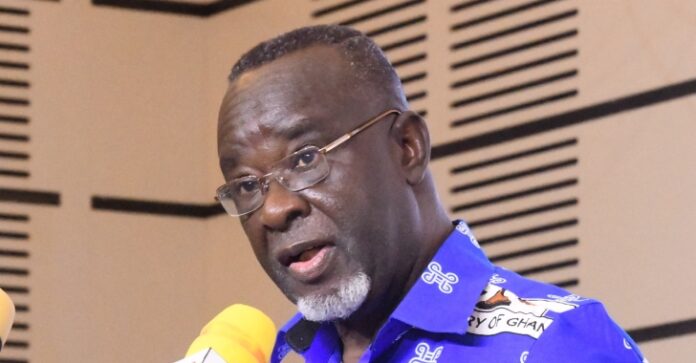
Ghana's Deputy Attorney-General and Minister for Justice, Dr Justice Srem-Sai, has issued a call for the Ghana Bar Association to reinforce its institutional independence and resist pressures from political parties and government corridors. Speaking on the matter, Srem-Sai emphasised that the legal profession must remain steadfastly committed to serving the public interest rather than becoming tools of political convenience.
The minister's statement comes at a time when Ghana's legal and judicial institutions face ongoing scrutiny regarding their autonomy and impartiality. The intervention reflects growing concerns about maintaining the separation of powers and ensuring that professional bodies can operate free from partisan influence.
Why it matters for Ghana
Ghana's constitutional framework depends critically on an independent judiciary and a Bar Association that can hold government accountable. When lawyers and legal institutions become entangled with political interests, the entire justice system is compromised. Citizens lose confidence in the courts, and the rule of law—a cornerstone of Ghana's democratic institutions—weakens significantly.
The Bar Association serves as a critical check on executive and legislative power. Its ability to provide impartial legal counsel, defend accused persons regardless of their political affiliation, and challenge unconstitutional actions depends entirely on its freedom from political pressure. When the profession becomes politicised, vulnerable citizens lose access to genuine legal representation.
Srem-Sai's call is particularly significant coming from the Justice Ministry itself, suggesting awareness within government circles that institutional independence must be protected, even—and especially—from government influence.
The challenge ahead
Maintaining independence in a politically charged environment presents genuine practical challenges for the Bar Association. Members face pressure from clients, the government, and political parties. Individual lawyers depend on government contracts and patronage, creating inherent tensions between financial interests and professional principles.
The legal profession's ability to navigate these pressures will determine whether Ghana's judicial system remains a functioning pillar of democracy or becomes compromised by partisan interests. Professional bodies like the GBA must actively cultivate a culture where defending the rule of law supersedes all other considerations.
For ordinary Ghanaians, this matters directly. When lawyers prioritise political convenience over professional duty, access to justice becomes a privilege reserved for the politically connected rather than a right available to all citizens.
Source: 3News



Comments (0)
Be the first to comment.