How Norway Built a Football Powerhouse: Lessons Ghana Could Learn from Artificial Pitches to Youth Development
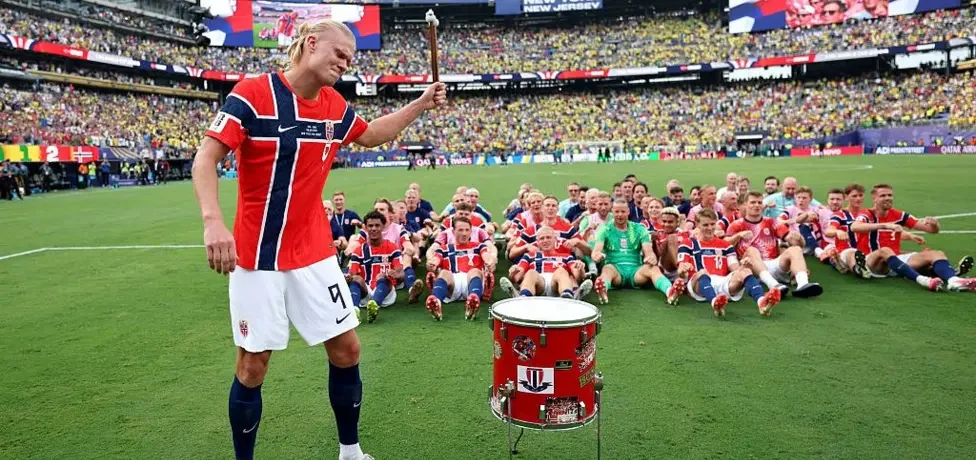
Norway's emergence as a football powerhouse at the World Cup has surprised many, but the transformation was no accident. With a population comparable to Scotland's, Norway has built a system that has placed 17 of its 26-man squad in Europe's top four leagues, a striking contrast to many nations with far larger populations. The Nordic country's success offers valuable lessons that could reshape how Ghana and other African nations approach football development.
The Norwegian Football Federation's journey began with recognition of a fundamental problem: a country long synonymous with winter sports lacked the infrastructure to develop year-round football. Between 2000 and 2025, Norway invested heavily in artificial pitches across the nation. Between 2016 and 2025 alone, 539 artificial pitches were constructed, with a further 586 renovated. This infrastructure revolution transformed football from a seasonal summer sport into a year-round activity, enabling consistent player development regardless of weather conditions.
The Youth Development Revolution
Beyond pitches, Norway's real breakthrough came through systematic youth development. After failing to qualify for Euro 2012, the Norwegian Football Federation established the National Team School (NTS) in 2013, creating what officials describe as a national development structure rather than a centralised academy. The key distinction matters: the NTS connects grassroots clubs, districts, elite teams, and the federation in a unified ecosystem.
The results speak clearly. Of the 15 players who scored in Norway's 2-1 victory over Brazil, 14 had represented the national team at youth level, and 11 progressed through the NTS pathway from under-15 or under-16 level. This systematic approach ensures that talent identification and development happen early and consistently across the entire country, not just within elite academies.
Notably, Norwegian children remain with grassroots clubs until age 12, contrasting sharply with England's model where Premier League academies select players as young as eight. This extended grassroots period builds stronger foundations whilst keeping football developmental rather than immediately competitive.
Why It Matters for Ghana
Ghana's football tradition is strong, but inconsistent infrastructure and fragmented youth development systems have limited the nation's ability to compete consistently at the highest levels. While Ghana lacks Norway's oil wealth, the principles underlying Norway's success transcend economics.
Norway's approach prioritises accessibility and grassroots participation over early elite selection. Ghana's investment in artificial or improved natural pitches in key regions could extend playing seasons and improve technique development. More importantly, establishing a coordinated national youth development framework—similar to the NTS model—could transform how talent flows from communities through regional academies to the national team.
The Norwegian model also emphasises collaboration rather than competition between levels. Ghana's top clubs, regional football associations, and the Ghana Football Association working in unified fashion toward youth development, rather than competing for the same talent, could yield significant improvements in player quality and consistency.
For African nations generally, Norway demonstrates that population size need not determine football success. Strategic infrastructure investment, systematic youth development, and coordination between grassroots and elite levels can produce competitive national teams. Ghana, with its football passion and established professional league, possesses the foundation to implement similar reforms and potentially challenge consistently at African and global level.
Source: The Ghana Report


Comments (0)
Be the first to comment.