
How a Ghanaian Film Helped Ignite Nigeria's Nollywood Revolution, According to Bob Smith Jr
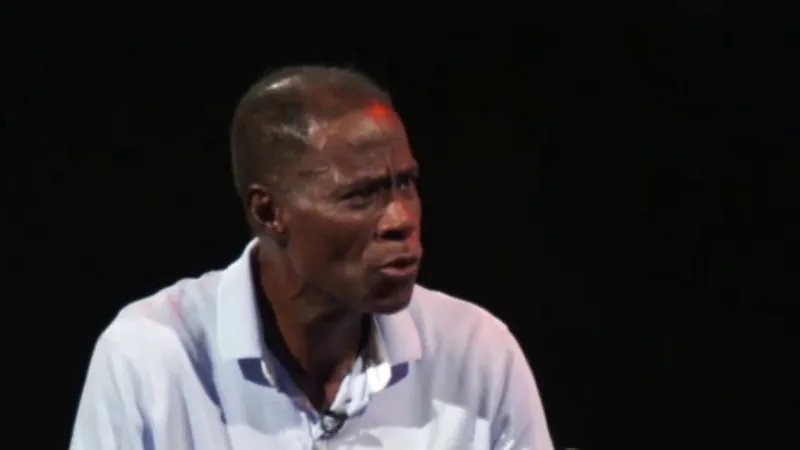

Veteran Ghanaian actor Bob Smith Jr has made a remarkable claim about the origins of Nigeria's booming film industry — asserting that pirated copies of the Ghanaian movie Diabolo were taken across the border into Nigeria, where their widespread duplication helped trigger what would eventually become one of the largest film industries in the world, known globally as Nollywood.
Speaking about the film's unexpected legacy, Bob Smith Jr — one of Ghana's most recognisable screen personalities — suggested that the unauthorised copying and distribution of Diabolo gave Nigerians an early glimpse of what was possible with video-film production, planting seeds that would grow into a multi-billion dollar creative economy.
The story behind Diabolo
Diabolo was among a generation of Ghanaian films produced during a pivotal era for West African cinema, when video-format filmmaking began to replace the expensive celluloid productions that had long dominated the continent's screens. Ghana, in many respects, was ahead of the curve in embracing this more affordable and accessible format, producing a wave of locally driven stories that resonated deeply with ordinary audiences.
The film, which featured Bob Smith Jr, was notable for its dramatic storytelling and its appeal to everyday viewers across the region. According to the actor, it was precisely this mass appeal that made it a target for pirates — individuals who saw commercial opportunity in duplicating and distributing the film without authorisation. While piracy is rightly regarded as damaging to creators and the industry, Smith Jr's account raises thought-provoking questions about how informal distribution networks sometimes carry culture across borders in ways that official channels never anticipated.
What this means for Ghana's place in film history
Bob Smith Jr's claim, if widely accepted, would significantly reframe the narrative around Nollywood's origins — a narrative that has historically centred almost entirely on Nigeria. For years, the story of how Nigeria's video-film industry began has largely been told through Nigerian landmarks, most famously the 1992 film Living in Bondage, which is widely credited as the catalyst for the Nollywood explosion.
However, the suggestion that Ghanaian content — specifically Diabolo — may have provided an earlier visual and commercial inspiration adds an important West African, pan-regional dimension to that history. It points to a shared creative ecosystem across Ghana and Nigeria, two countries with deep cultural ties, overlapping audiences, and a long history of artistic exchange.
For Ghana's film industry, often overshadowed by its larger neighbour, this account serves as a reminder that Ghanaian filmmakers were innovating and reaching audiences long before Nollywood became a global buzzword. It is a source of pride — and also a cautionary tale about how the absence of proper intellectual property protections meant Ghanaian creators did not financially benefit from the influence their work had beyond their borders.
Piracy and the price of influence
The irony at the heart of this story is sharp: the very piracy that robbed Ghanaian filmmakers of revenue may have simultaneously exported their creativity and helped build an industry next door that now generates far greater commercial returns. Nollywood today is valued at billions of dollars and produces thousands of films annually, making it the second-largest film industry in the world by volume.
Ghana's own film industry — sometimes called Ghallywood or Kumawood — has never reached equivalent scale, partly due to persistent challenges around funding, distribution, and intellectual property enforcement. Bob Smith Jr's recollection is therefore not merely a piece of historical trivia; it is a prompt for reflection on what stronger regional copyright frameworks and formal distribution agreements might have meant for Ghanaian filmmakers over the decades.
As West Africa's creative industries continue to grow and attract international investment, conversations like these are increasingly relevant — reminding policymakers, producers, and audiences alike that the roots of the region's storytelling power run deep, and that Ghana's contribution to that story deserves full recognition.
Source: 3News





Comments (0)
Be the first to comment.