Ghana's Youth Demand Real Action on Agriculture Investment—Not Just Policy Promises
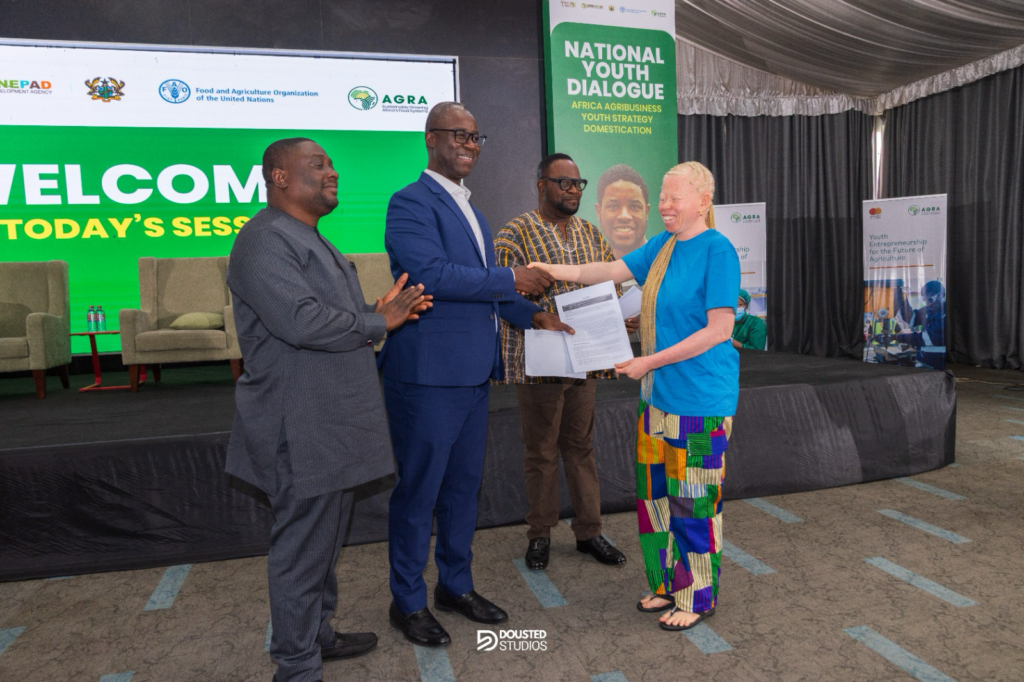
Ghana's youth have issued a clear ultimatum to policymakers: stop mentioning them in agricultural policies and start funding them. At a three-day National Youth Dialogue in Accra, young agribusiness practitioners demanded that the government translate rhetorical commitments into measurable, budgeted action across the country's flagship food systems initiatives.
The dialogue, organised by AGRA, the Mastercard Foundation and the Government of Ghana, brought together over 350 youth practitioners, parliamentarians, and government officials to discuss how Ghana can domesticate the Africa Agribusiness Youth Strategy (AAYS) and Youth in Agrifood Systems Performance Index (YAPI)—continental frameworks designed to drive youth participation in farming and food value chains.
The Core Demand: From Words to Wallets
The youth's message was blunt: Ghana must move beyond mentioning youth in agricultural policy to making youth intentionality a funded, measured and accountable priority. In a communique, they called for urgent, coordinated action to translate AAYS and YAPI commitments into laws, budgets, programmes and measurable results.
The timing is significant. The government has committed roughly GH¢625 billion (approximately $56 billion combined) to two major initiatives: the Feed Ghana Programme (FGP), launched in 2025 to boost domestic food production, and the National Agricultural Investment Program (NAIP). These programmes are expected to generate millions of jobs—the FGP alone projects 2.6 million direct and indirect jobs, while NAIP targets over 900,000 direct and 1.7 million indirect jobs by 2029.
Yet youth say there is no clarity on how many of these jobs will go to them, what "decent work" means, or how youth-led enterprises will access markets. The participants proposed concrete solutions: ring-fenced youth access across farm banks, irrigation schemes, mechanisation services, inputs and advisory services; youth-disaggregated reporting to track outcomes; and every youth commitment should specify who benefits, how many, through which instrument, at what cost, by which institution and how results will be reported.
Why It Matters for Ghana
Agriculture remains central to Ghana's economy and employment, particularly in rural areas where youth unemployment is chronically high. Without deliberate youth-focused investment and accountability, the billions allocated to FGP and NAIP risk reproducing existing patterns where young people are sidelined from profitable segments of agribusiness.
The dialogue also highlighted practical policy gaps. Working groups discussed contract farming legislation, tax exemptions for youth agro-processing enterprises, youth land banks, and vocational training reform—all areas where legislative action could unlock opportunity. Participants called for a dedicated Youth Agrifood Skills and Mentorship Track through farmer service centres, vocational institutions, universities and private agritech mentors.
Critically, the youth demanded formalised representation in policy, planning, budgeting, sector reviews, district delivery and accountability mechanisms. This is not token participation; it is structural power to influence how resources flow and what results are measured.
Parliament and Government Response
A Youth-Parliamentary Dialogue concluded the event, with young people urging parliament to champion youth-responsive legislative reforms in finance, land access, certification, standards, contract farming, tax incentives and market access. They also called on the government to integrate AAYS and YAPI into the FGP, NAIP, the National Youth Policy and relevant trade programmes.
The dialogue reflects a broader shift in how Ghana's development agenda is being scrutinised. Youth are no longer asking for a seat at the table—they are demanding that their participation translates into jobs, assets, skills, voice and resilience, not rhetoric.
Source: MyJoyOnline

Comments (0)
Be the first to comment.