
Ghana's Traffic Cameras Are Already Changing Driver Behaviour — But the Roads and Signs Still Need Work
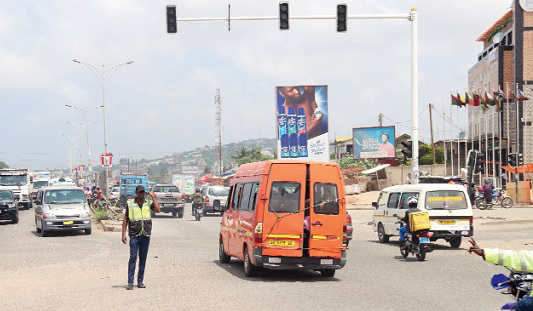

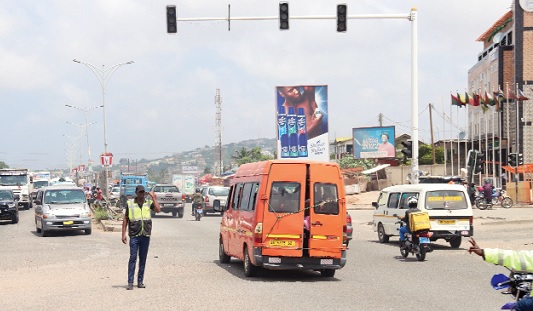
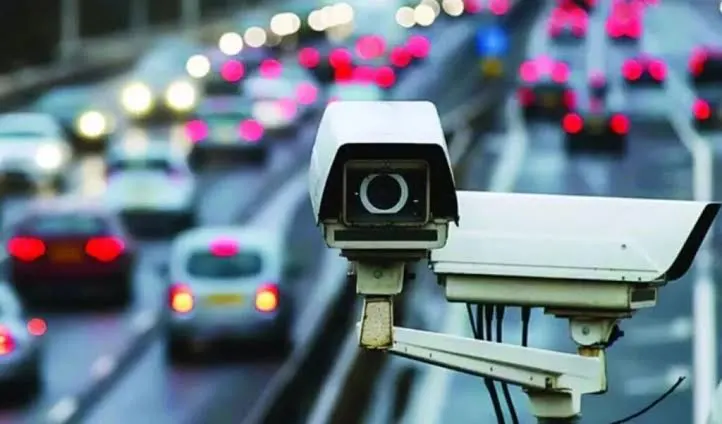
Something unusual happened on Ghana's roads recently. Trotros halted at zebra crossings. Drivers observed lane discipline. The familiar chaos that characterises rush hour in Accra and other cities appeared, at least briefly, to have given way to something resembling order. The apparent cause? Newly installed traffic cameras — and the uncertainty about what, exactly, they might do to those caught misbehaving.
Columnist Egya Tur, writing for The Ghana Report, captured the mood with characteristic wit, observing that the national character had seemingly been improved overnight simply by installing a pole. His central point, however, cuts deeper than satire: Ghanaian drivers are not necessarily lawless by nature — they respond, like most people everywhere, to incentives and consequences. When a police officer stands on the roadside, negotiation is possible. When a camera watches silently, the usual social lubricants are of no use.
What the cameras are testing
Ghana's road traffic fatality rate remains among the highest in West Africa. The National Road Safety Authority has for years pointed to speeding, reckless overtaking and driver indiscipline as the leading causes of crashes. Speed cameras, red-light cameras and similar enforcement technologies have long been discussed as part of a broader road safety strategy. Their actual rollout — and the visible change in driver behaviour that appears to have followed — suggests the technology has real potential to shift habits that decades of public education campaigns and manual enforcement have struggled to alter.
The psychological mechanism at work is straightforward. As Egya Tur notes by invoking the well-known Fante folk tale of the unattended cannon — Egya Tur — people behave cautiously in the presence of something whose consequences they cannot predict or negotiate away. It is not respect for the law per se, but uncertainty about its reach, that prompts compliance. That uncertainty, he argues, is a very old kind of obedience — and a perfectly effective one.
- Traffic cameras appear to have prompted noticeably more orderly driver behaviour on some Ghanaian roads shortly after installation.
- Unlike police officers, cameras cannot be greeted, pleaded with, or offered informal payments — removing a common means of avoiding accountability.
- Commentators argue that camera enforcement must be backed by better road signage and improved road surfaces to be fully effective and fair.
Why it matters for Ghana — and what still needs fixing
The optimism around traffic cameras should not obscure some genuine practical concerns. If the state is capable of photographing a number plate and processing a fine, it should equally be capable of erecting and maintaining legible speed limit signs. In many parts of the country, signs have disappeared — stolen for scrap metal, knocked over and never replaced, or simply never installed. Penalising a driver for exceeding a limit that was never posted is difficult to defend legally or morally.
Then there is the condition of the roads themselves. As the column drily notes, potholes have been enforcing speed limits in Ghana for years, free of charge. On stretches where the road surface is severely degraded, cameras may be unnecessary — and on stretches where they are installed, the state arguably has an obligation to ensure the road is worth the camera's attention. Enforcement infrastructure and physical infrastructure must advance together.
There are also questions about enforcement culture. Technology is only as effective as the systems behind it. If fines generated by cameras are inconsistently processed, easily disputed or quietly shelved, the deterrent effect will erode quickly once the novelty wears off and drivers learn nothing actually happens.
None of this should obscure the core finding: on the morning the cameras were noticed, Ghanaian roads were calmer. That is not nothing. Road crashes kill and injure thousands of Ghanaians every year, devastating families and placing enormous burdens on the health system. If the digital equivalent of Egya Tur — the unattended cannon nobody dares test — can reduce even a fraction of that toll, it deserves to be taken seriously, expanded thoughtfully, and backed with the complementary investment in signs, roads and administrative follow-through that effective enforcement demands.
The camera is watching. The question now is whether everything else is too.
Source: The Ghana Report



Comments (0)
Be the first to comment.