Ghana's Schools Must Prepare for AI Revolution While Protecting Critical Thinking Skills
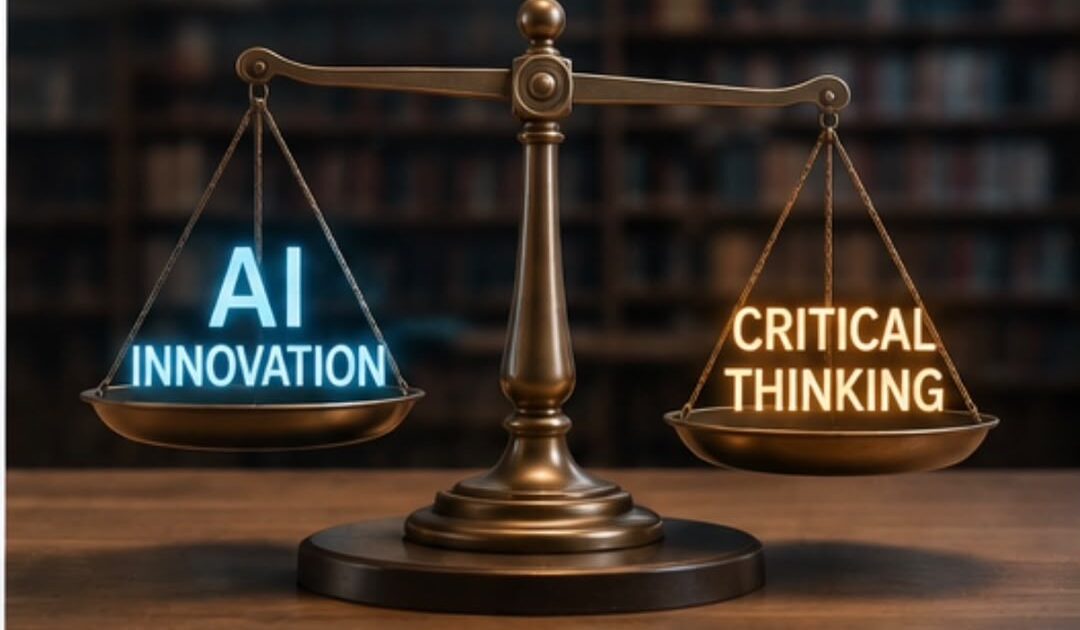
Artificial intelligence is rapidly transforming classrooms worldwide, and Ghana's education system must prepare for this shift. From personalized tutoring systems to automated grading and AI essay-writing tools, technology promises to reshape how students learn and how teachers work. Yet as schools worldwide grapple with this transition, a critical challenge emerges: how can Ghana's education sector harness AI's potential without allowing machines to do the thinking for students?
The promise is real. AI tutors could provide personalized support to students in under-resourced schools. Teachers could spend less time on administrative tasks and more time engaging with pupils. Yet the risks are equally significant, particularly for a nation where critical thinking skills are essential for competing in the global economy and strengthening democratic institutions.
How AI Could Transform Ghanaian Classrooms
For students, AI offers genuine advantages. It can serve as a brainstorming partner, research assistant, and supplementary tutor—particularly valuable in Ghana, where access to qualified teachers varies widely across urban and rural areas. AI-powered tools could help bridge educational gaps, offering students in remote regions exposure to advanced learning resources previously unavailable to them.
For teachers, the benefits are equally compelling. AI could automate lesson planning, create tailored practice exercises, and provide instant feedback to students, freeing educators to focus on mentorship and deeper classroom discussions. In Ghana's context, where teachers often manage large class sizes with limited resources, such support could be transformative.
The Risk: When Machines Replace Thinking
However, the downside is significant. If students can have AI write their essays, solve their mathematics problems, or generate lab reports, they may achieve better grades while learning considerably less. More troubling is the psychological shift: students may become passive consumers of information rather than active thinkers, assuming that because a computer generated an answer, it must be correct.
This risk is particularly acute in Ghana, where developing a generation of critical thinkers is essential for driving innovation, strengthening governance, and addressing complex social challenges. If AI does the thinking for students, they may graduate without the analytical skills needed to question information, identify bias, or solve novel problems.
Students must understand a fundamental truth: AI systems can be wrong. They can reflect biases in their training data, misinterpret ambiguous questions, or provide plausible-sounding but incorrect information. In an age of misinformation and deepfakes, critical thinking is not a luxury—it is essential.
What This Means for Ghana's Education System
Ghana's schools and universities must approach AI integration strategically. Rather than banning AI, educators should teach students to interrogate it. This means asking critical questions: Is this information accurate? What are the sources? Could bias be present? How can I verify this myself?
Assessment methods must also evolve. If traditional essays and problem sets can be generated by AI, schools should diversify evaluation methods. Oral presentations, project-based learning, in-class discussions, and collaborative problem-solving tasks encourage deeper learning and are harder to circumvent with technology. These methods also align with Ghana's rich oral traditions and communal learning approaches.
Teachers should view AI as a tool to enhance their role, not replace it. The human elements—mentorship, inspiration, cultural context, and moral guidance—remain irreplaceable. Ghana's education system should invest in training teachers to use AI effectively whilst maintaining focus on developing reasoning, creativity, and ethical thinking.
As Ghana positions itself as a technological hub in West Africa, the stakes are high. Educational institutions must act now to establish frameworks for responsible AI use, ensuring that innovation serves critical thinking rather than undermining it. The future demands both technological fluency and intellectual independence.
Source: MyJoyOnline



Comments (0)
Be the first to comment.