
Ghana's National Airline Dream: Presidency Claims Viability, But Where Are the Reports?
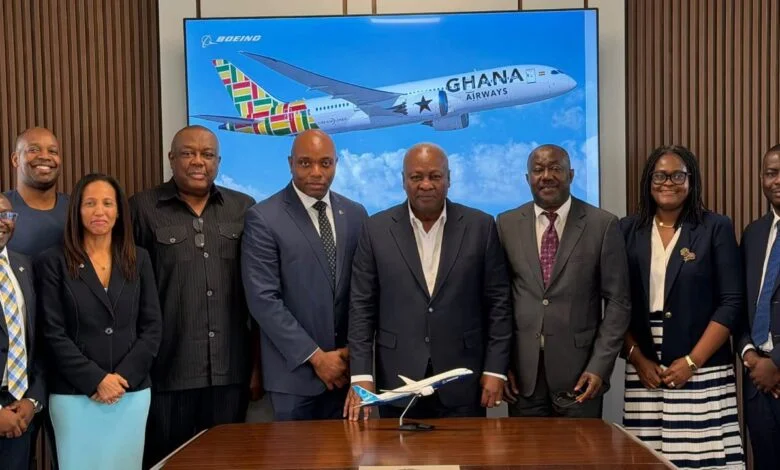

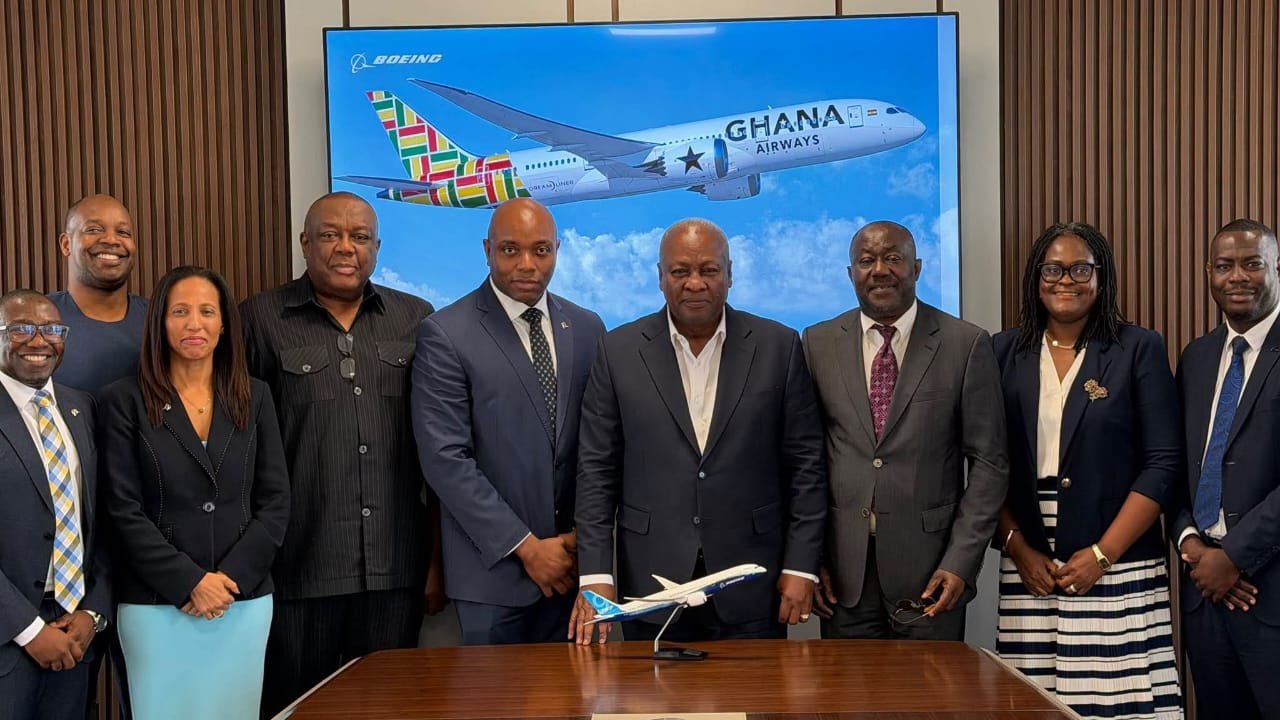
Ghana's Presidency has declared that preliminary studies affirm the viability of a proposed new national airline, following President John Mahama's meeting with officials from American aircraft manufacturer Boeing. The announcement, made in a social media post, confirmed that Boeing is supporting efforts to establish the carrier. However, the studies themselves have not been released to the public, and critical questions about financing, ownership and governance remain unanswered.
What we know so far
The government formally launched its national airline initiative in May 2025, when Transport Minister Joseph Bukari Nikpe inaugurated a 10-member task force charged with developing a sustainable business model for the proposed carrier. Since then, a business model and operational framework report has reportedly been produced to guide engagement with a strategic investor — though this document is also not publicly available.
The agreed roadmap includes identifying strategic and technical partners, obtaining an Air Operator Certificate, selecting suitable aircraft, and settling on a financing structure. The government has indicated it intends to hold a minority shareholding, with the private sector taking the lead in day-to-day operations and management — an arrangement ministers say will strengthen commercial discipline.
However, holding a minority stake does not automatically limit the government's financial exposure. A government can remain a minority shareholder while still guaranteeing loans, underwriting aircraft leases, or agreeing to cover certain operational costs. Without a published viability report, Ghanaians cannot assess the true extent of potential public liability.
Why it matters for Ghana
Ghana's aviation history casts a long shadow over this announcement. Ghana Airways, the country's last national carrier, ceased operations in July 2004 after five consecutive years of losses. A subsequent assessment by the International Monetary Fund identified a combination of weak financial oversight, poor aircraft procurement decisions, excessive borrowing, and the provision of free or heavily discounted tickets to government workers as the key drivers of the airline's crippling debt.
A new airline, regardless of its ownership structure, would need to demonstrate clearly how those same pitfalls would be avoided. That means publishing the studies and explaining:
- How the board and chief executive would be appointed, and by whom
- Who would have authority over borrowing and procurement decisions
- Whether management would have genuine commercial independence over fares, routes and staffing
- What obligations the government would carry beyond its initial equity stake
- How risks, responsibilities and returns would be shared with any strategic partner
A foreign airline brought in as a strategic partner can offer genuine value — investment, technical expertise and access to wider networks. But the partnership agreement must spell out how those benefits translate into a sustainable Ghanaian business, including commitments to train local pilots, engineers and management staff.
The business case must be made publicly
Beyond governance and financing, the fundamental commercial case for the airline needs scrutiny. The Presidency has stated that the project would increase utilisation of Ghana's airport infrastructure and support Accra's ambition to become a leading aviation hub in West Africa — projecting thousands of jobs for pilots, cabin crew, engineers and aviation specialists.
These are worthy goals. But they require answers to basic business questions: Which routes would the airline operate? What level of passenger demand is projected, and on what assumptions? What would the new carrier offer that existing airlines serving Ghana do not? And crucially, how long before the airline could cover its own operating costs without public support?
The Presidency's confidence in the project's viability may well be justified — preliminary studies may genuinely show a strong commercial case. But confidence without evidence is not transparency. Publishing the full reports would not weaken the project; it would strengthen public trust and allow independent scrutiny that could only improve the final outcome.
Ghana has been down this road before. This time, the government owes it to taxpayers to open the books before commitments are made — not after.
Source: MyJoyOnline



Comments (0)
Be the first to comment.