Ghana's National Airline Dream Takes Flight: Boeing Partnership Could Restore Regional Aviation Leadership

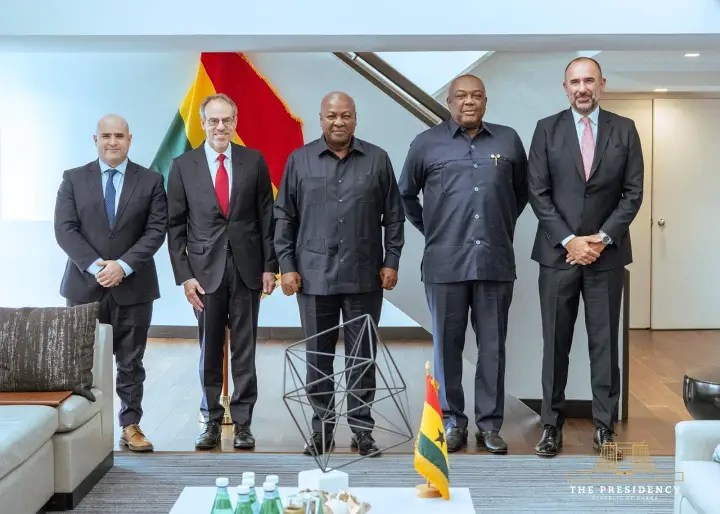
Ghana's decades-long ambition to restore a national airline has moved significantly closer to reality following high-level talks between President John Dramani Mahama and Boeing executives at the United Nations General Assembly in New York. The discussions signal genuine momentum behind a project that extends far beyond simply putting aircraft back in the sky—instead positioning aviation as a cornerstone of Ghana's economic transformation.
The meeting represented the culmination of months of diplomatic groundwork initiated by Ghana's Ambassador to the United States, H.E. Victor Emmanuel Smith, and his team. What emerged was not a simple procurement agreement, but a comprehensive strategic partnership framework that could reshape Ghana's aviation sector for decades to come.
A Broader Vision for Aviation Leadership
President Mahama was explicit about Ghana's ambitions during the New York meeting. The government views Boeing not as a vendor, but as a long-term partner capable of helping Ghana build an entire aviation ecosystem. This distinction matters considerably—instead of importing aircraft and technical expertise indefinitely, Ghana seeks to develop domestic capacity, create high-skilled employment, and establish competitive advantages across the West African region.
The proposed partnership addresses multiple strategic priorities simultaneously. National carrier and fleet development tops the agenda, but discussions also focused on establishing a regional Maintenance, Repair and Overhaul (MRO) hub that could service airlines operating across West Africa and the broader African continent. Such a facility would generate substantial foreign exchange, create technical employment, and position Ghana as an indispensable aviation infrastructure node for the region.
Additional areas under discussion include aviation training programmes, technology transfer arrangements, and skills development initiatives designed to build Ghanaian expertise in aerospace operations. Boeing indicated readiness to support these objectives and suggested that with proper implementation structures, Ghana's target of launching its national carrier within approximately 18 months could be achievable.
Why This Matters for Ghana
Ghana has not operated a national airline since Ghana Airways ceased operations in 2005. That two-decade absence has represented not merely a loss of national pride, but genuine economic opportunity costs. A functioning national carrier, combined with regional MRO capabilities and aviation training infrastructure, could anchor Ghana's position as West Africa's logistics and aviation gateway.
The initiative aligns directly with President Mahama's Reset Ghana Agenda, which prioritises attracting strategic foreign investment, creating sustainable employment for young Ghanaians, and leveraging the country's geographic and infrastructural advantages for regional leadership. Aviation sits at the intersection of these objectives—it requires significant capital investment, demands skilled technical labour, supports tourism and trade connectivity, and projects Ghana's competitive positioning internationally.
Beyond the commercial benefits, restoring Ghana's flag carrier addresses a symbolic aspiration many Ghanaians have held since the nation's original airline ceased operations. However, the Boeing partnership's value lies in avoiding the mistakes that contributed to Ghana Airways' earlier difficulties. By building sustainable technical capacity, establishing revenue-generating services like MRO operations, and developing human capital through formal training, a new national airline could operate on fundamentally sounder foundations.
Implementation Timeline and Next Steps
The 18-month timeline for national carrier launch suggests concrete planning is already underway. Boeing's willingness to provide technical support and guidance indicates the partnership moves beyond general statements of intent. Ghanaian officials will now need to finalise implementation arrangements, secure the necessary financing, and establish the regulatory and operational frameworks required for aviation operations.
Success will depend on sustained commitment across multiple government agencies, transparent procurement processes, and continuous engagement with Boeing and potentially other strategic partners. The aviation sector's technical complexity demands rigorous planning and execution.
Ghana's aviation aspirations reflect the country's broader economic ambitions under the Reset Ghana framework. If implemented effectively, the national airline revival could demonstrate how strategic international partnerships, combined with domestic vision and capability-building, can transform an entire economic sector.
Source: Ameyaw Debrah


Comments (0)
Be the first to comment.