
Ghana's linguistic heritage at critical crossroads: 40 indigenous languages facing extinction

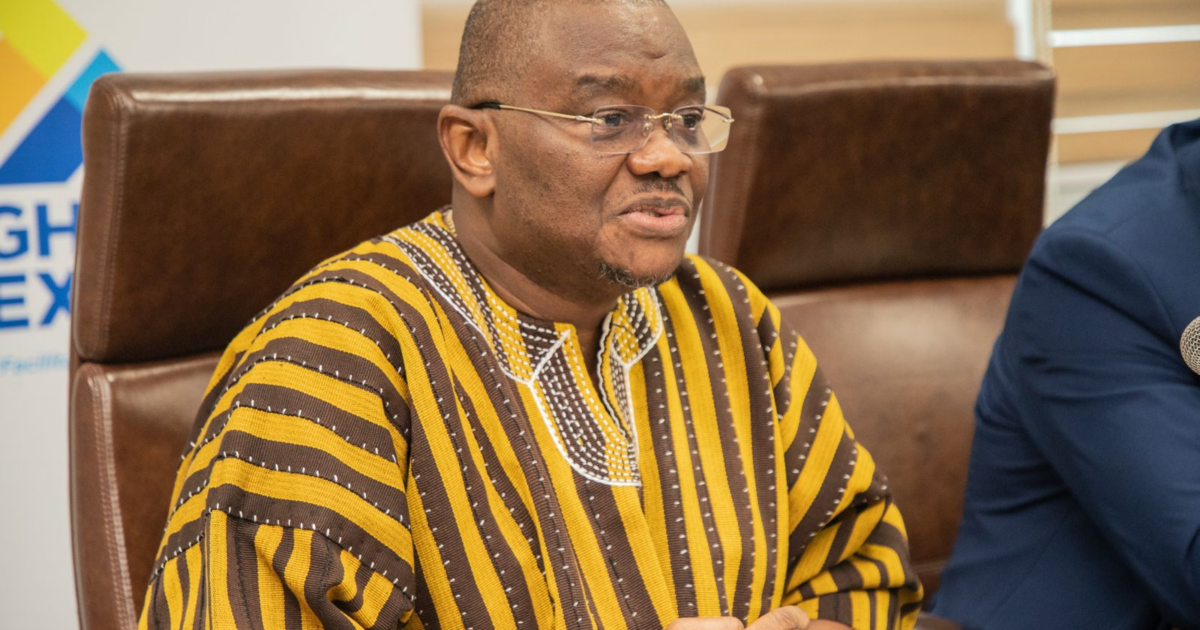
Ghana's cultural fabric is unravelling in a way few Ghanaians fully grasp. According to the Executive Director of the Ghana Library Authority, Alhassan Betintiche Ziblim, as many as 40 indigenous languages are now teetering on the edge of extinction, threatening to erase centuries of cultural memory within a single generation.
The warning arrives not as an abstract concern but as a lived reality. Languages such as Boro, once spoken in the central-eastern regions around Worawora and Tapa, have already vanished almost completely. By the late 1800s, Boro had been reduced to a single elderly speaker; today, only about a dozen words survive in dusty linguistic records. Mprɛ, spoken in Butei between Techiman and Tamale, followed a similar trajectory, with the last living echoes of it heard only in the early 2000s from elderly residents clinging to fragmented memories. Dompo, the language of a hunter-gatherer community in what is now Bono East Region, has also disappeared as its speakers shifted entirely to Akan.
The immediate concern, however, is not the languages already lost but those still hanging by a thread. Nawuri, Tuwuli (also called Bowiri), Chala, and certain dialects of Anufo are all classified as endangered, meaning they could vanish entirely within a generation if young people cease learning and speaking them.
How languages disappear: the silent erosion of heritage
Languages do not die in dramatic moments; they fade gradually, one conversation at a time. Each time a parent chooses not to teach their child their mother tongue, each time a young person decides to speak only English or Twi instead of their ancestral language, another brick in the wall of cultural preservation crumbles. This incremental loss is what claimed Boro, Mprɛ, and Dompo—not conquest or catastrophe, but the slow accumulation of choices to speak something else.
Interestingly, there is disagreement amongst scholars about precisely how many Ghanaian languages have been lost. Ethnologue, a widely-used international language database, is far more conservative in its classifications than local researchers, often listing fewer extinct languages. This discrepancy stems from how strictly "extinction" is defined, particularly when a language survives only in the fragmented memories of a handful of elderly semi-speakers.
Why this matters for Ghana: culture, identity and development
The loss of indigenous languages represents far more than a linguistic problem; it is a cultural catastrophe with profound implications. Each language carries within it unique ways of understanding the world, systems of knowledge developed over centuries, and irreplaceable connections to Ghana's diverse communities. When a language dies, so too does the cultural knowledge, oral histories, and identity markers embedded within it.
The Ghana Library Authority and advocates of the SPEAK LOCAL GH campaign argue that language preservation is an act of cultural sovereignty. When development programmes and governance speak only in English, they risk designing solutions that fail to honour communities as active participants in their own progress rather than passive recipients of top-down interventions. A mother who can access health information in her own language, a farmer who can learn new techniques explained in his ancestral tongue, and a child who grows up fluent in their community's speech all benefit from having their language treated as a living resource, not a relic.
The case of Hausa in Ghana illustrates how languages shape national identity in unexpected ways. Though Hausa originated in what is now northern Nigeria and Niger, centuries of settlement, trade, and migration have woven it deeply into Ghana's social fabric. It is widely spoken in Zongo communities nationwide and serves as one of the most important languages of inter-ethnic communication. Historical factors—including trade routes, migration patterns, and colonial-era recruitment of soldiers from Nigeria—embedded Hausa so thoroughly that its linguistic fingerprints are visible in everyday Ghanaian speech. Words like "donkomi" (from Hausa "rangwame," meaning a reduction) and "kafra" (from Hausa "gaafara," itself borrowed from Arabic) have become naturalised in Ghanaian languages. Even place names such as Kasoa, Adabraka, and Nima carry Hausa and Arabic linguistic echoes, a quiet testament to the cultural currents that have shaped the nation.
What Ghanaians can do now
The Ghana Library Authority and language preservation advocates emphasise that reversing this trend requires deliberate, everyday action from ordinary Ghanaians. Speaking your language at home, teaching it to your children, and using it proudly in markets, streets, churches, and mosques—these are not burdensome duties but acts of preservation. Every conversation in a mother tongue is an investment in cultural continuity.
The SPEAK LOCAL GH campaign encapsulates this philosophy in its call to action: "Speak it, preserve it, pass it on." The message is simple but urgent. Nawuri, Tuwuli, Chala, and dozens of other languages still have time, but only if Ghanaians choose to keep them alive. The alternative—joining Boro, Mprɛ, and Dompo in the graveyard of extinct languages—requires only passivity and the assumption that someone else will bear the responsibility.
Ghana's linguistic diversity is a competitive advantage in a globalised world and a bridge to the nation's past. The choice to preserve it remains, for now, in Ghanaian hands.
Source: MyJoyOnline


-1200x800.webp)

Comments (0)
Be the first to comment.