
Ghana's Hidden Tourism Goldmine: Why Celebrity Visits Are Worth Millions in Free Marketing
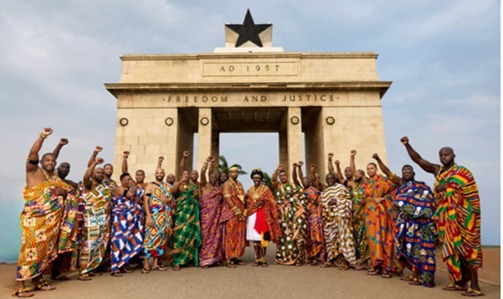

Ghana possesses a tourism marketing asset most countries can only dream of: globally influential celebrities voluntarily choosing to celebrate their Ghanaian heritage on the world's largest platforms. Yet despite decades of this phenomenon, Ghana has failed to strategically harness what amounts to millions of pounds worth of free, authentic destination marketing.
The August 2026 wedding of Ghanaian-American marketing executive and television personality Bozoma Saint John exemplifies this missed opportunity perfectly. Her traditional Ghanaian ceremony in Accra, attended by cast members from the reality television series The Real Housewives of Beverly Hills, was filmed for global audiences. Critically, Ghana did not pay for this exposure—Ghana became the exposure itself.
Why This Moment Matters for Ghana
The distinction between paid advertising and organic celebrity endorsement cannot be overstated. A conventional tourism advertisement might secure Ghana thirty seconds of attention. A reality television storyline featuring internationally recognised personalities embracing Ghanaian culture, wearing modern Kente cloth, and celebrating Ghanaian traditions delivers an entire narrative arc to millions of emotionally invested viewers. Unlike viewers who mentally tune out commercial messages, audiences watching because they care about the personalities absorb the destination messaging naturally.
Bozoma Saint John is not merely another celebrity tourist. She is a Ghanaian citizen, globally recognised marketing professional, and a figure former President Nana Akufo-Addo specifically acknowledged for her diaspora diplomacy work during the Year of Return initiative. Her choice to marry in Ghana sends a powerful signal: successful, wealthy, influential people choose Ghana for life's most important moments.
A Pattern Ghana Has Ignored for Years
The Bozoma wedding should trigger serious reflection about Ghana's broader celebrity magnetism. During the 2019 Year of Return campaign and beyond, Ghana attracted or welcomed an extraordinary roster of international personalities: Idris Elba, Naomi Campbell, Steve Harvey, Michael Jai White, Boris Kodjoe, Ludacris, Rick Ross, Cardi B, Lupita Nyong'o, Samuel L. Jackson, and dozens more. Over forty African-American and international celebrities became associated with Year of Return events and activities.
Government records documented strong growth in international arrivals during 2019, with analyses confirming that celebrity involvement was a primary mechanism driving that attention. Steve Harvey's visit to Cape Coast Castle generated nearly 700,000 video views and reached multiple generations of Black Americans according to academic research on Ghana's social media strategy during that period.
Yet Ghana has not developed a systematic approach to recognising, supporting, or amplifying these visits. There is no coordinated mechanism to ensure maximum media coverage, facilitate journalist access, or connect celebrity visitors with local communities and businesses that could benefit from the attention.
The Strategic Gap
Ghana's government and tourism authority should develop a coherent strategy recognising that diaspora celebrities represent voluntary, authentic brand ambassadors. This involves several practical steps: establishing clear protocols for welcoming high-profile visitors, ensuring media documentation and distribution, connecting visitors with heritage sites and cultural experiences, and creating pathways for longer-term investment and advocacy.
The Bozoma Saint John wedding demonstrates that when influential people experience Ghana authentically, they become powerful advocates. Their audiences trust their testimonies far more than traditional advertising. Ghana receives this marketing dividend almost accidentally, often despite limited government coordination.
Turning this pattern into systematic advantage requires neither large budgets nor questionable incentive schemes. It requires understanding that Ghana's real tourism asset is not its beaches or castles alone—it is the profound emotional connection millions of diaspora members feel toward their ancestral homeland. When these individuals voluntarily choose to celebrate Ghana publicly, that choice carries more persuasive power than any commercial campaign Ghana could purchase.
Source: MyJoyOnline



Comments (0)
Be the first to comment.