
Ghana's First Climate x Culture Summit Puts Sustainability at the Heart of the Events Industry
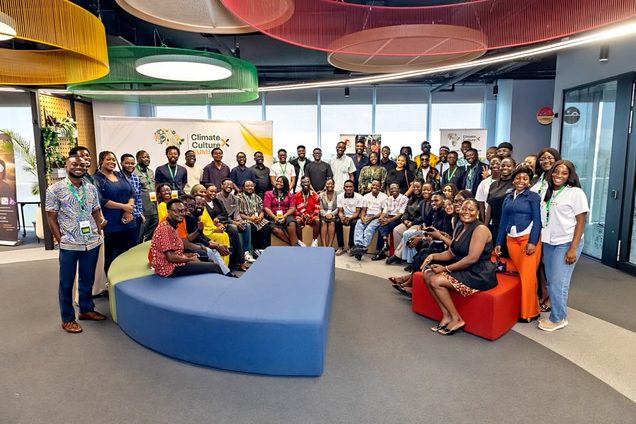

Ghana took a notable step in October when it hosted its inaugural Climate x Culture Summit at the Accra AI Community Centre, housed within Google's offices in the capital. The day-long gathering brought together an unlikely but purposeful mix of musicians, festival directors, climate scientists, financiers, journalists and policy officials to tackle a question that has long been overlooked: can Ghana's entertainment and cultural sector be designed and delivered more sustainably?
The event was not a conference of lofty speeches and empty pledges. Practitioners who have built some of the country's biggest cultural experiences shared hard lessons alongside researchers and financiers working on real solutions. Three clear themes emerged from the day's panels and keynotes.
Culture must be at the centre of climate action, not on the sidelines
Prisilla Adomaah Nsonwaah from the Centre for Scientific Research, West Africa, opened with a provocation that set the tone for the entire summit. She asked delegates to consider whether the next significant climate solution might arrive not in a policy document, but in a song, on a stage, or through the way we produce the events we love.
The argument is straightforward but powerful. Cultural products — music, film, festivals, fashion, games and live experiences — reach audiences that scientific reports and government white papers simply do not. If climate messaging is to shift behaviour at scale, it has to live inside culture rather than lecture from outside it.
The numbers underline just how much is at stake. The United Nations estimates the global creative economy generates more than two trillion dollars in annual revenue and supports close to 50 million jobs worldwide. Yet according to Brookings research, Africa accounted for only 1.5 per cent of that economy in 2023. Ghana's creative sector, already punching above its weight internationally through Afrobeats and a growing festival calendar, sits within an industry that has enormous room to grow — and an equally enormous opportunity to model sustainable practice for the rest of the continent.
Why it matters for Ghana: fragmented effort is undermining real progress
Sustainability efforts within Ghana's festival sector already exist. Many operators have quietly invested in waste management, hired additional waste pickers and introduced greener production practices. But as stakeholders at the summit made clear, these efforts are largely disconnected from one another, and that fragmentation is costing the industry its collective impact.
The waste problem alone illustrates why coordination matters. A major festival drawing 100,000 attendees to a city generates a waste burden that extends far beyond the venue gates. Organisers may leave a clean site, but the refuse still has to move through Ghana's wider waste infrastructure — infrastructure that was not designed to absorb sudden, concentrated loads. During Detty December, Ghana's celebrated end-of-year season of back-to-back concerts and events, the cumulative strain on city waste systems goes largely unmeasured.
Ghana currently generates an estimated 840,000 tonnes of plastic waste annually, of which roughly 9.5 per cent is collected for recycling — though some studies place total plastic waste as high as 1.1 to 1.3 million tonnes per year. One speaker acknowledged the uncertainty in these figures, describing the most-cited projection as a rough estimate built on earlier rough estimates. Without reliable data, policymakers have no solid foundation on which to plan. The summit's call to event organisers was direct: report attendance and waste figures honestly, build shared measurement systems, and ensure that good practice at one venue does not simply displace a problem to another part of the city.
Sustainability planning, delegates heard, must begin long before the first ticket is sold and continue well after the last structure is taken down. That means rethinking waste before it ever enters a venue, exploring how festival waste can generate income for local communities, reducing dependence on diesel generators, and cutting noise pollution — not merely adding more bins to an existing system.
Financing the green transition in Ghana's creative sector
Ambition without funding remains ambition. The summit confronted the uncomfortable reality that a greener event costs more upfront, and Ghana's creative sector remains chronically under-financed. Green financing — whether through development banks, impact investors or blended public-private arrangements — will determine whether any of the sustainability innovations discussed at the summit move beyond pilot projects and good intentions.
The creative economy's proven ability to reach mass audiences gives it a strong case to make to climate funders. The challenge now is for Ghana's event industry to present itself as a credible, data-driven partner — one that can demonstrate measurable environmental outcomes rather than relying on goodwill alone.
The inaugural Climate x Culture Summit did not solve Ghana's event-sector sustainability challenge in a single day. What it did was put the right people in the same room, start building a shared language and signal that the industry is ready to move from individual effort to collective action.
Source: The Ghana Report

-1200x801.webp)

Comments (0)
Be the first to comment.