
Ghana's Family Businesses Hold Key to Economic Growth, IFC Workshop Reveals
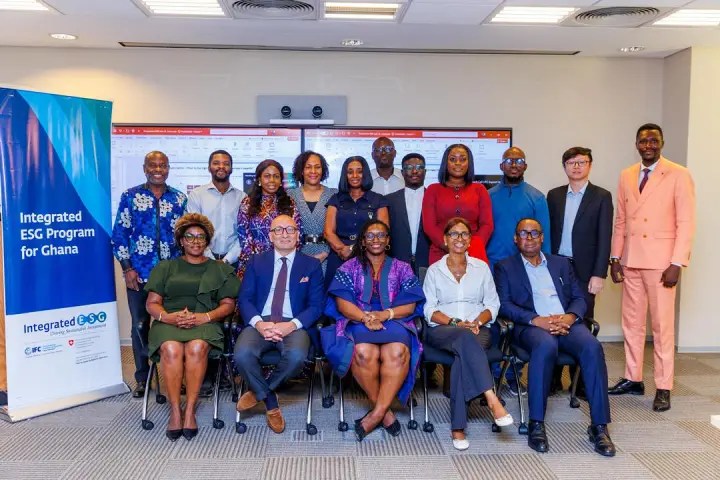
The International Finance Corporation (IFC) has brought together family business leaders and governance experts in Accra to address one of the most pressing challenges facing Ghana's private sector: the smooth transfer of ownership and leadership across generations. The fourth edition of the Family Governance Workshop highlighted how structured succession planning and robust governance frameworks can transform family enterprises from temporary ventures into enduring economic engines that create jobs and build wealth across generations.
Family-owned businesses form the backbone of Ghana's economy, yet many founder-led enterprises struggle to survive their creators. The workshop focused on practical solutions to this critical challenge, equipping business leaders with tools for leadership transition, ownership succession and wealth stewardship. Discussions ranged from next-generation education and family charters to liquidity planning and the role of family councils in maintaining cohesion whilst making sound business decisions.
Why Succession Planning Matters for Ghana
According to IFC's ESG Advisory Lead for Africa, Moez Miaoui, succession represents the single most significant challenge facing family businesses globally. In Ghana, where many enterprises depend on founder vision and personal networks, this challenge is particularly acute. Long founder tenures, inadequate preparation of heirs and founders' reluctance to relinquish control frequently derail transitions and threaten business continuity.
For Ghana's economy, the stakes are high. When family businesses fail to transition successfully, jobs are lost, community investments disappear and decades of accumulated expertise evaporate. By contrast, professionally managed family enterprises can multiply their impact—creating more employment, deepening community engagement and building wealth that serves multiple generations.
IFC Senior Country Officer Yewande Giwa emphasised that family businesses operate with a broader mandate than profit alone. "When you are a family business, you are not just thinking about your bottom line. You are thinking about how do I influence my community, how do I make a difference, how do I create more jobs?" she noted. Yet realising this potential requires moving beyond good intentions to establish proper governance structures.
Building Governance Foundations
The workshop stressed that family councils function as crucial intermediaries between family and business interests. As Miaoui explained, "The family council is for a family what a board of directors is for the business." These councils address issues like next-generation education, family values and philanthropy separately from daily operations, reducing conflict and clarifying decision-making.
Similarly, establishing boards or advisory committees ensures that leadership positions are filled by individuals with requisite skills and experience, not merely family ties. Ms. Giwa reinforced this point: "Even though it's a family business, there must be qualifications in place for the people who are running the business." Family constitutions and structured communication platforms further support transparent decision-making.
IFC Senior Country Manager for Ghana and Liberia, Kyle Kelhofer, underscored the organisation's commitment to helping Ghanaian businesses build these foundations. "The sustainability of family businesses is closely linked to the sustainability of the broader economy," he stated, noting that effective governance, professional management and planned succession processes enable businesses to survive their founders, preserve jobs and create future opportunities.
International Support and Next Steps
The workshop is part of IFC's broader programme to strengthen governance among family-owned businesses and SMEs in Ghana. The initiative receives support from Switzerland's State Secretariat for Economic Affairs (SECO), which has partnered IFC in Ghana for over a decade to promote private sector development and improve the business environment.
For Ghanaian entrepreneurs building the next generation of enterprises, the message is clear: governance is not bureaucracy or constraint, but a pathway to resilience, growth and lasting legacy.
Source: Ameyaw Debrah


-800x450.webp)
Comments (0)
Be the first to comment.