
Ghana's Creative Professionals to Get Dedicated Pension Scheme: What You Need to Know
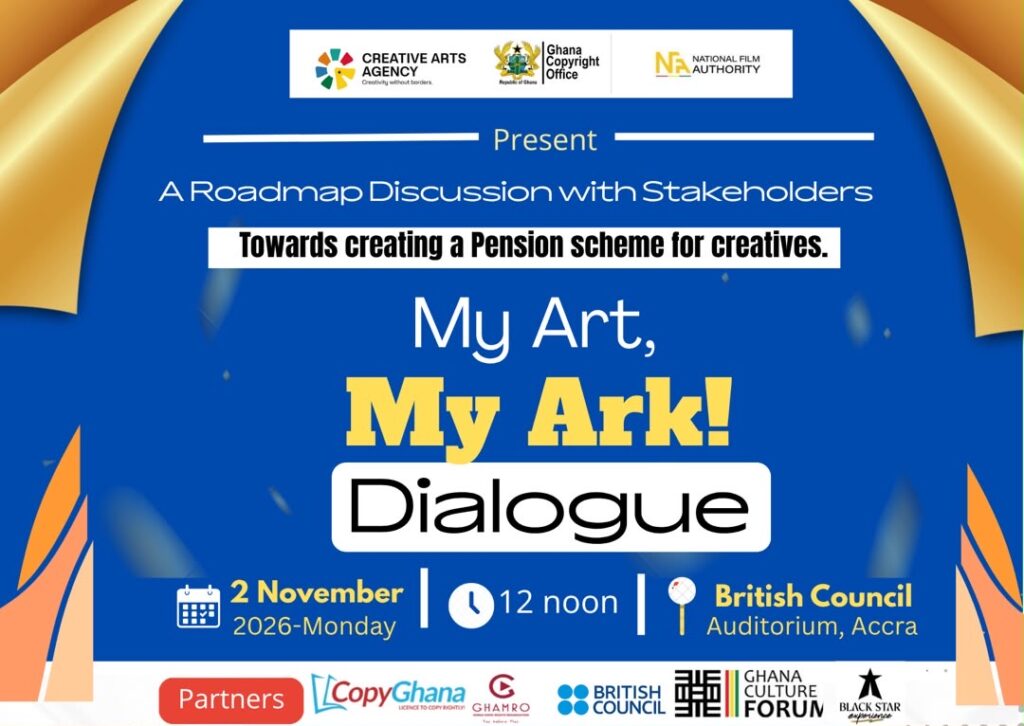

Ghana's creative industries are set to gain a major financial security breakthrough as key institutional players prepare to design a bespoke pension and social security scheme for the country's artists, filmmakers, musicians and other cultural professionals. The Creative Arts Agency (CAA), National Film Authority (NFA) and Copyright Ghana will lead stakeholder consultations on establishing what could become a transformative support system for a workforce that has long operated outside traditional employment structures.
The initiative, branded "My Art, My Ark! Dialogue", will convene on 2 November 2026 at the British Council in Accra, bringing together government agencies, industry bodies, collective management organisations and creative professionals themselves to chart a pathway towards implementation. The dialogue addresses a critical gap in Ghana's social protection landscape: while conventional pension schemes work well for salaried employees, they are largely inaccessible to the estimated hundreds of thousands of creatives who earn through freelance work, project-based contracts, royalties and irregular income streams.
Why the Creative Sector Needs Its Own Pension Solution
Creative professionals in Ghana face distinctive financial challenges that standard pension arrangements do not accommodate. Most operate as independent contractors or move between multiple income sources—performances, commissions, royalties, teaching and project work. This income fragmentation makes it difficult to establish the consistent contribution patterns that conventional schemes require. Without tailored solutions, many creatives reach retirement age with minimal financial security, a reality that undermines both individual welfare and the sector's long-term attractiveness to emerging talent.
The proposed scheme would need to address several practical design questions: how to set flexible contribution levels that reflect variable monthly earnings, whether government or industry should subsidise participation for lower-earning creatives, and which institution should administer the programme. The dialogue will also examine international models, including how other African countries or creative hubs have tackled similar challenges.
The Broader Policy Context
This initiative connects to Ghana's broader policy commitment to strengthen its creative economy as an employment and export engine. The proposed scheme aligns with a Black Star Experience manifesto commitment to establish "career security through legal and financial protection and mass pension schemes" for creatives. Beyond individual security, a robust pension system could encourage formalisation of creative work, improve industry data collection and signal government confidence in the sector's economic significance.
The collaborative structure—involving the CAA, NFA, Copyright Ghana and three collective management organisations (CopyGhana, ARSOG and GHAMRO)—suggests a multi-stakeholder approach that combines regulatory oversight, industry expertise and the voices of professionals themselves. The British Council's support indicates international interest in Ghana's creative sector development.
What Comes Next
The November dialogue is framed as a foundation-setting exercise. Outcomes are expected to feed into a roadmap addressing key implementation hurdles: contribution structures, coverage scope (which creative disciplines will be included), the role of government funding, regulatory frameworks and sustainability mechanisms. Translating the dialogue's conclusions into operational policy will require sustained coordination and likely legislative or regulatory action.
For Ghana's creative workforce—from highlife and hiplife musicians to film producers, visual artists, dancers and digital creatives—this initiative represents a significant shift in how the state and industry recognise their economic and cultural contributions. A well-designed scheme could improve retention of creative talent, reduce brain drain and position Ghana as a more attractive hub for creative work across West Africa.
Source: MyJoyOnline

Comments (0)
Be the first to comment.