
Ghana May Ban Domestic Worker Recruitment to Iraq After Viral Assault Video Sparks Diplomatic Outrage

Ghana's government is seriously considering banning the recruitment of Ghanaian domestic workers to Iraq, following the circulation of a deeply disturbing video showing a Ghanaian woman being violently assaulted by her Iraqi employer. The incident has prompted swift diplomatic action from Accra and reignited long-standing concerns about the safety of Ghanaian migrants working in private households across the Middle East.
What happened to Stephanie Nkrumah
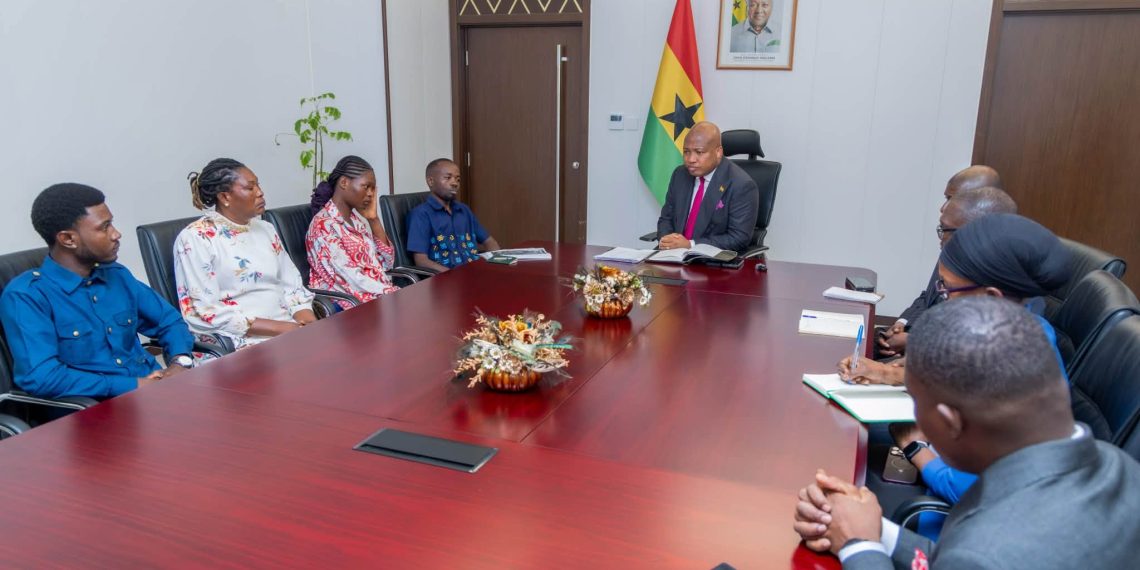
The victim, identified as Stephanie Nkrumah, was subjected to what Foreign Affairs Minister Samuel Okudzeto Ablakwa described as a "violent and dehumanising assault" at the hands of her employer in Iraq. Footage of the attack spread widely on social media, drawing widespread condemnation from Ghanaians both at home and abroad. Ablakwa confirmed that he personally met with Stephanie and members of her family on Monday, 23rd November, after government officials worked to trace and establish contact with her following the video's circulation.
According to the minister, Stephanie had fortunately managed to escape from her abusers and return to Ghana, with the assistance of her family. During their meeting, she narrated her ordeal in detail, and the minister urged her to share information about her abusers and their network to support Ghana's diplomatic push for justice. "We listened carefully to her narrate her ordeal and encouraged her to share with us details of her abusers and their network to assist us in our diplomatic efforts for justice," Ablakwa stated in a Facebook post on Tuesday, 24th November.
Ghana's diplomatic response
The Ghanaian government has formally lodged a diplomatic protest with Iraqi authorities over the assault, demanding that those responsible be identified and held accountable. The protest represents one of the stronger diplomatic responses Ghana has mounted in recent years over the mistreatment of its citizens working abroad as domestic workers. Ablakwa signalled that the government views this case as potentially emblematic of a wider problem, suggesting that Stephanie's experience may not be an isolated incident among Ghanaian workers in Iraq.
In light of this, the government is actively weighing a moratorium — a temporary ban — on the recruitment and deployment of Ghanaian domestic workers to Iraq. Such a measure would be intended to protect vulnerable Ghanaians from similar abuses while diplomatic and regulatory mechanisms are strengthened.
Why it matters for Ghana
The plight of Ghanaian migrants working as domestic workers in the Middle East is not a new concern. Over the years, numerous Ghanaians — predominantly women — have travelled to countries in the region in search of economic opportunities, often through informal or loosely regulated recruitment channels. Many have returned with accounts of exploitation, physical abuse, withheld wages and confiscated travel documents, leaving them trapped in abusive situations with little recourse.
A recruitment moratorium, if implemented, would follow similar steps taken by other African and Asian countries that have restricted or outright banned domestic worker migration to certain Gulf and Middle Eastern states after repeated incidents of abuse. Countries such as the Philippines, Ethiopia and Uganda have at various points imposed bans on worker deployment to specific destinations in response to documented patterns of mistreatment.
For Ghana, the broader issue touches on the need for stronger bilateral labour agreements, more rigorous vetting of foreign employers, and better pre-departure training and legal protection for workers. Civil society groups and migrant rights advocates have long called on successive governments to put in place enforceable frameworks that safeguard Ghanaians who seek work abroad.
- The government's willingness to publicly confront Iraq over this case sends an important signal that the welfare of Ghanaians abroad is a diplomatic priority.
- However, critics will note that a ban alone does not address the underlying economic pressures that push many Ghanaians into seeking informal overseas employment in the first place.
- Until stronger protective systems are in place — including regulated recruitment agencies and enforceable work contracts — Ghanaian domestic workers will remain at risk, whether in Iraq or elsewhere.
The government is expected to make a formal announcement on the proposed moratorium in the coming days as diplomatic engagements with Baghdad continue.
Source: Today GH


Comments (0)
Be the first to comment.