Engineer Calls on Government to Urgently Audit Structural Safety of Accra and Tema High-Rise Buildings
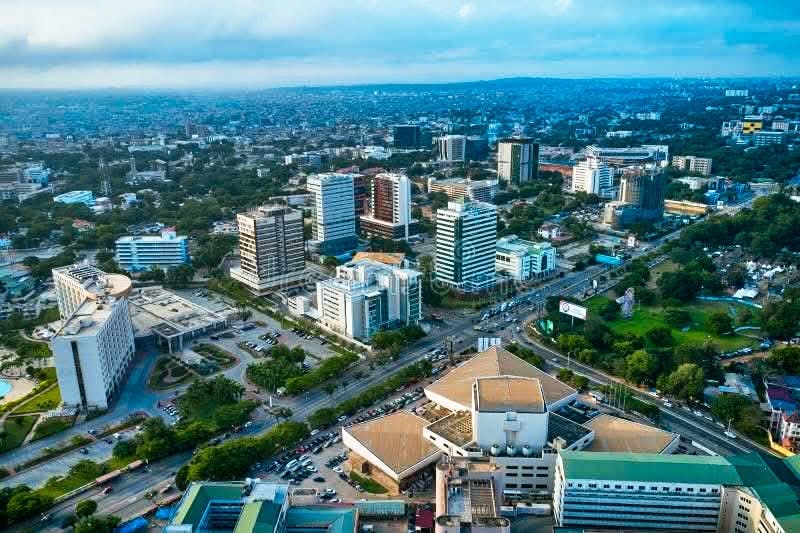
A Ghanaian geotechnical engineer has issued an urgent public appeal to the government, professional regulatory bodies, and civil society organisations, calling for a comprehensive structural and seismic safety audit of recently constructed high-rise buildings across Accra and Tema. The appeal comes from Ing. Wiseborn Owusu Danquah, a Chartered Engineer and member of the Ghana Institution of Engineering, who describes himself as a concerned built-environment professional and citizen.
In his open letter addressed to the President, Vice President, Speaker of Parliament, relevant ministers, and a wide range of professional and civil society bodies, Ing. Danquah warned that rapid high-rise development in areas such as Airport City, Cantonments, East Legon, Osu, Spintex, and Tema is outpacing the quality of engineering oversight, ground investigation, and regulatory enforcement. He stressed that Ghana is not geologically neutral, pointing to the 1939 Accra earthquake and active fault systems — including the Coastal Boundary Fault and the Akwapim Fault Zone — as evidence that seismic risk in southern Ghana is real, even if earthquakes are infrequent.
The engineer cited the recent Venezuela earthquake disaster as a sobering international lesson. Two powerful earthquakes — reported at magnitudes 7.2 and 7.5 — struck near Caracas on 24 June 2026, causing building collapses, casualties, and mass displacement. "Earthquakes expose, within seconds, years of poor planning, weak enforcement, inadequate inspection, compromised materials, and professional negligence," he stated, urging Ghanaian authorities not to wait for a similar tragedy before acting.
Ing. Danquah outlined what such a national audit should cover, including residential towers, hotels, hospitals, schools, shopping centres, places of worship, and government facilities above a defined height threshold. He called for particular attention to buildings constructed on soft soils, reclaimed land, coastal or flood-prone zones, and areas near known geological weaknesses. Building owners, developers, and managing agents, he argued, should be required to submit structural design calculations, geotechnical investigation reports, concrete test records, reinforcement inspection records, as-built drawings, and evidence of compliance with the Ghana Building Code for independent review.
Professional Accountability at the Centre
The engineer proposed that the Engineering Council, Ghana, in collaboration with the Ghana Institution of Engineering and other built-environment bodies, should establish a formal register of qualified professionals — covering structural, geotechnical, civil, electrical, mechanical, and fire engineering disciplines — who are authorised to conduct these audits. He emphasised that no individual or firm should be permitted to certify the safety of high-rise buildings unless properly registered, demonstrably competent, and fully accountable. He framed the call not as a political exercise but as an evidence-led, engineering-led, and public-safety-led national priority.
- The open letter is addressed to the President, Parliament, judiciary, and dozens of professional and civil society bodies.
- Southern Ghana sits near the Coastal Boundary Fault and Akwapim Fault Zone, posing genuine seismic risk.
- The 1939 Accra earthquake remains a historical reminder that the capital is not immune to seismic events.
Source: Ameyaw Debrah


Comments (0)
Be the first to comment.