Diplomats and youth unite to explore Ahanta's colonial forts in landmark heritage tour
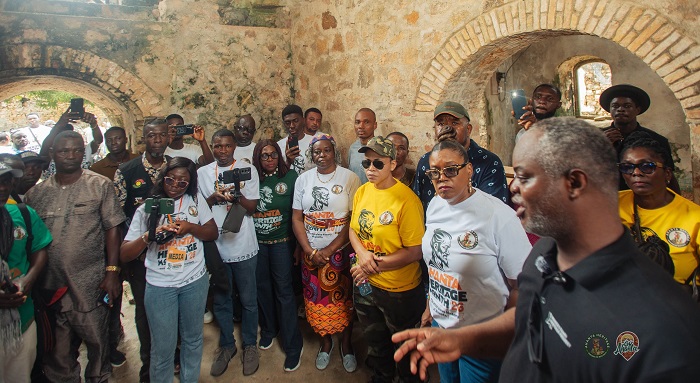
Ghana's south-western coastline played host to a significant gathering of international diplomats, heritage officials and young Ghanaians on Saturday, July 26, 2026, as the Ahanta Heritage Month celebrations reached a highlight with an ambitious tour of the region's most historically important colonial forts and landmarks. The excursion brought together ambassadors from Caribbean nations, UNESCO representatives, local traditional leaders and hundreds of students from across Ahanta West Municipality in an event designed to bridge diplomacy, education and cultural remembrance.
The carefully planned itinerary, organised by Member of Parliament for Ahanta West Mavis Kuukua Bissue, guided participants through three major heritage sites that collectively tell the story of European colonial engagement on Ghana's western coast. The tour began at Fort Gross Friedrichsburg in Princes Town, travelled to Cape Three Points—Ghana's southernmost tip—and concluded at Fort Batenstein in Butre, before a traditional courtesy visit to the Chief of Butre.
Key Heritage Sites Explored
Fort Gross Friedrichsburg stands as one of the most historically distinctive European fortifications on Ghana's coastline. Built in the late seventeenth century by the Brandenburg African Company, it represents a unique chapter in Ghana's colonial past—constructed by a German state rather than the more commonly known Portuguese, Dutch or British powers. Perched above Princes Town with commanding views of the Atlantic Ocean, the fort served as a trading post and witness to centuries of commerce, diplomacy and conflict along the coast.
The delegation's visit to Cape Three Points offered participants a panoramic perspective from the historic lighthouse overlooking the Gulf of Guinea. This dramatic location, with its pristine rainforest and strategic maritime position, shaped centuries of seafaring and trade patterns that defined Ghana's western coastal economy.
Fort Batenstein in Butre carried particular historical weight for participants. As the former administrative headquarters from which Dutch colonial authorities managed their relations with the Ahanta Kingdom, the fort is inextricably linked to a pivotal moment in Ahanta history—the resistance and execution of Otumfuo Nana Badu Bonsu II in 1838, a figure central to Ahanta's struggle against colonial domination.
Diplomatic Significance and International Interest
The international delegation demonstrated growing global engagement with Ghana's historical role in the transatlantic slave trade and contemporary diaspora connections. Distinguished participants included Barbados' High Commissioner to Ghana Juliette Bynoe-Sutherland, Suriname's Ambassador Fidelia Graand-Galon, and UNESCO's Representative Edmond Moukala N'Gouemo. UNESCO's involvement underscores the organisation's ongoing work to preserve Ghana's forts and castles as World Heritage Sites and symbols of shared human history.
The presence of Caribbean diplomats proved particularly significant, reflecting the deep historical ties between Ghana and Caribbean nations whose populations trace ancestral roots to the transatlantic slave trade. This diplomatic engagement strengthens cultural and historical dialogue between Ghana and the diaspora communities.
Why It Matters for Ghana
This heritage initiative addresses several important priorities for Ghana's tourism and cultural sectors. First, it positions Ahanta West as a destination for heritage tourism, complementing better-known sites like Cape Coast Castle and Elmina Castle. Second, the deliberate inclusion of schoolchildren and young people from the municipality ensures that heritage education reaches younger Ghanaians who may have limited exposure to their own historical sites—a critical gap in cultural literacy.
The tour's educational impact extends beyond tourism promotion. By bringing international attention to lesser-known forts like Gross Friedrichsburg and Batenstein, the initiative contributes to a more complete understanding of Ghana's colonial history. It also acknowledges the specific historical significance of Ahanta's resistance to colonialism, particularly through Nana Badu Bonsu II, whose statue was being unveiled the following day at Agona Nkwanta.
For Ghana's cultural diplomacy, hosting such events reinforces the nation's role as a custodian of shared human history and a bridge between Africa and diaspora communities seeking to understand their ancestral heritage. The participation of UNESCO officials also signals potential support for heritage preservation projects and World Heritage Site designations, which carry both cultural and economic benefits.
The Ahanta Heritage Month initiative, spanning throughout July 2026, represents a broader vision of making Ghana's historical narratives more accessible, inclusive and internationally recognised—transforming coastal landmarks from silent witnesses into active sites of education, remembrance and cross-cultural understanding.
Source: The Ghanaian Times




Comments (0)
Be the first to comment.