
Degrees Without Doors: Why Ghana Must Act Now on Graduate Disability Employment


Ghana has made genuine strides in encouraging persons with disability to pursue education — offering scholarships, promoting inclusive schooling and celebrating graduations. Yet a deeply uncomfortable question now demands an answer: what happens after the degree? For a growing number of qualified graduates living with disability, the answer has been unemployment, dependency and the painful experience of fighting for a chance that their qualifications should already have earned them.
A Year of Protests That Should Not Be Ignored
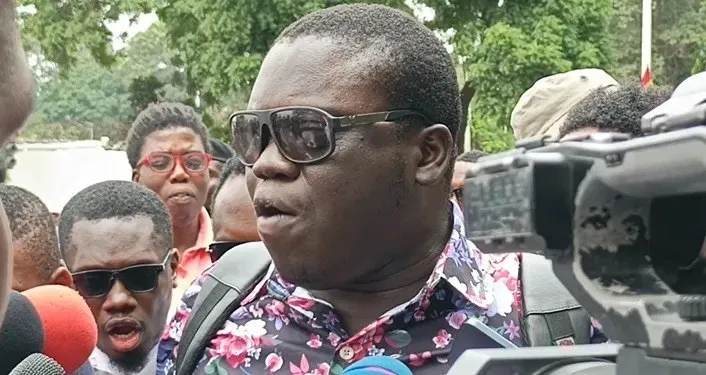
Throughout 2026, the Coalition of Unemployed Graduates with Disability has mounted a series of increasingly urgent actions to draw the government's attention to their situation. In March, coalition members marched peacefully through Accra demanding equal employment opportunities and proper enforcement of inclusive labour policies. By August, they had returned — this time picketing outside Jubilee House, the seat of the presidency — with the same unanswered demands.
In September, the Coalition submitted a petition to Parliament's Minority Leader, Alexander Afenyo-Markin, warning that it would resume demonstrations if the government failed to present a concrete employment plan by mid-month. By November, patience had worn thin entirely: the Coalition issued a two-week ultimatum threatening a three-day continuous sit-in at Jubilee House if qualified members were not absorbed into the public sector.
That these protests have had to be repeated at all — let alone escalated — is itself the story. It points not to individual failure on the part of these graduates, but to a structural failure on the part of the state.
What This Means for Ghana
Ghana is a signatory to the United Nations Convention on the Rights of Persons with Disabilities, and domestically the Disability Act, 2006 (Act 715) provides a legal framework for inclusion. These are not trivial instruments. But as commentator Alex Boateng rightly observes, legislation and international commitments mean very little to the graduate who cannot pay rent and relies on family for survival.
The human cost behind the headlines is significant. Many of these graduates navigated inaccessible lecture halls, unreliable transport, limited assistive technology and financial hardship simply to complete their studies. Some depended on relatives, charitable organisations or strangers to reach graduation day. For persons with disability in Ghana, earning a degree is frequently an act of extraordinary perseverance — not merely academic achievement. To emerge from that journey into a labour market that refuses to recognise their qualifications is a profound injustice.
Ghana cannot credibly champion disability rights while awarding scholarships with one hand and slamming the employment door with the other. A society that teaches someone to dream but refuses to make room for that dream has not empowered them — it has set them up for a crueller disappointment than if they had never been encouraged at all.
What is now needed is a legally enforceable affirmative-action framework — one with clear quotas or targets for the employment of qualified persons with disability in the public sector, transparent monitoring mechanisms and genuine consequences for non-compliance. Critically, employment must not be treated as the finish line. Workplaces themselves must be made accessible: ramps, adapted equipment, flexible arrangements and assistive technologies must be provided so that an appointment letter translates into a genuinely functional working life.
The Path Forward
The private sector, too, has a role to play. While government is the most immediate target of the Coalition's demands, Ghana's broader economy will not achieve its inclusive growth potential if a skilled segment of the workforce is systematically locked out. Businesses that proactively hire and accommodate persons with disability access a wider talent pool and demonstrate the kind of social responsibility that increasingly matters to consumers, investors and international partners.
- Parliament should fast-track amendments to Act 715 to include enforceable employment quotas with clear timelines.
- The Ministry of Employment should publish annual data on the number of persons with disability hired across public institutions.
- The Ghana Employers Association should be formally engaged to develop private-sector inclusion commitments with measurable targets.
These graduates did not give up when lecture halls were inaccessible. They did not give up when transport failed them or funding ran out. The least Ghana can do — the very least — is ensure that the society they struggled to contribute to is finally ready to receive them.
Source: MyJoyOnline


Comments (0)
Be the first to comment.