Central Region Minister calls on chiefs to demand accountability from local officials
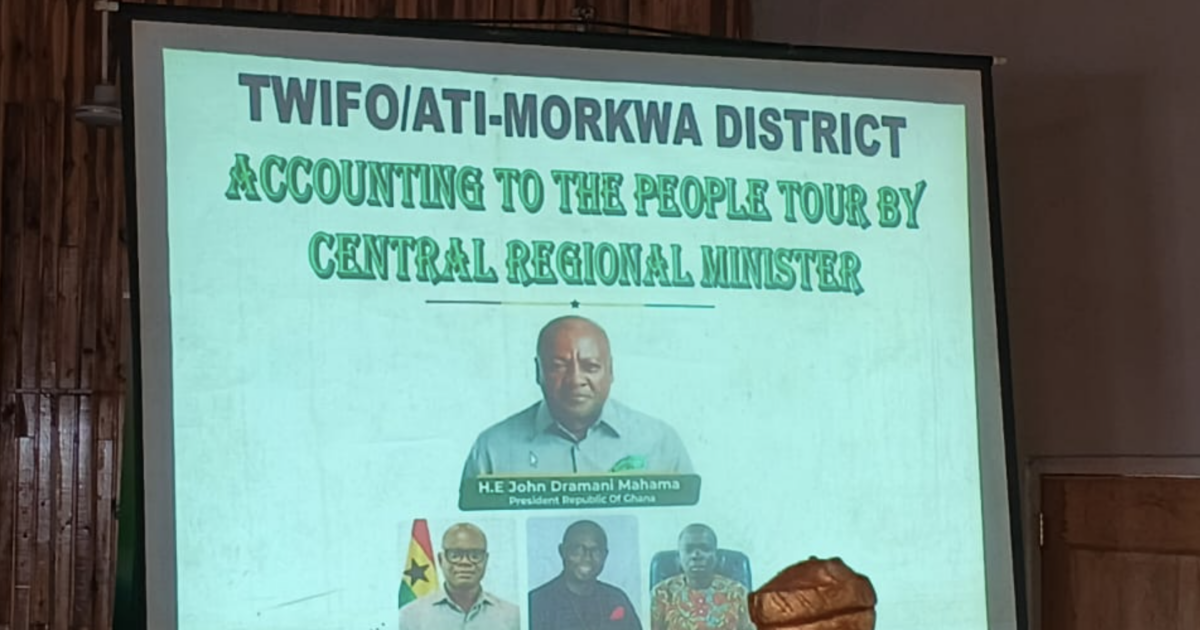
Ghana's Central Regional Minister, Ekow Panyin Okyere Eduamoah, has called on traditional leaders to become active watchdogs in their communities, demanding that Metropolitan, Municipal and District Chief Executives (MMDCEs) deliver on development promises and remain accountable to residents.
Speaking at a People's Accountability Forum in Twifo Mampong, Twifo Atti-Morkwa District, Mr Eduamoah emphasised that chiefs and traditional authorities occupy a unique position of trust and should leverage that influence to ensure public officials prioritise community needs. He encouraged regular engagement between traditional leadership and MMDCEs, with chiefs pushing for transparent updates on ongoing development initiatives and project timelines.
The Minister's remarks reflect a broader strategy to strengthen accountability mechanisms at the district and municipal level, where many development projects directly impact ordinary Ghanaians. By enlisting traditional leaders—who command significant respect in their communities—as accountability partners, the government aims to close gaps between policy implementation and citizen satisfaction.
Development projects and infrastructure push in Twifo Atti-Morkwa
During the forum, Mr Eduamoah commissioned 48 lockable market stores at Twifo Old Market, a facility expected to improve trading conditions and revenue generation for local vendors. The minister also distributed student furniture and sanitary pads through the District Education Directorate to schools across the constituency, addressing longstanding challenges in educational infrastructure and menstrual health management.
These projects underscore efforts to tackle practical governance issues affecting residents. Market infrastructure improvements directly support informal traders who form a significant portion of the economy in rural and semi-urban districts, whilst educational support addresses both classroom capacity and the persistent issue of period poverty affecting school attendance among girls.
Twifo Atti-Morkwa District Chief Executive Isaac Yawson echoed calls for non-partisan cooperation, urging residents to transcend political divisions and unite around shared development goals. He specifically highlighted infrastructure, education and other critical sectors as priorities requiring collective effort and sustained focus.
Why it matters for Ghana
Traditional leadership remains a cornerstone of Ghanaian governance and community life, particularly in rural areas where chieftaincy institutions command deep cultural authority. By mobilising chiefs as accountability actors, the government taps into an existing governance structure that many citizens trust and respect—potentially more effective than top-down oversight mechanisms alone.
This approach also reflects recognition that development cannot succeed without community buy-in. When traditional leaders demand transparency and results from local officials, it creates downward accountability that complements formal government structures. For residents, it offers a culturally grounded pathway to voice concerns and track whether their taxes and resources translate into tangible improvements.
However, the model's success depends on whether chiefs can act independently of political pressure. Ghana's history shows that traditional authority can be compromised by partisan interests, so sustained training and institutional safeguards will be crucial. The People's Accountability Forum initiative represents an experiment in bridging traditional governance and modern accountability standards—a balance many African countries struggle to achieve.
Source: MyJoyOnline


Comments (0)
Be the first to comment.