Campus safety crisis: POS Foundation exposes sexual harassment and cohabitation risks at Ghana's top universities
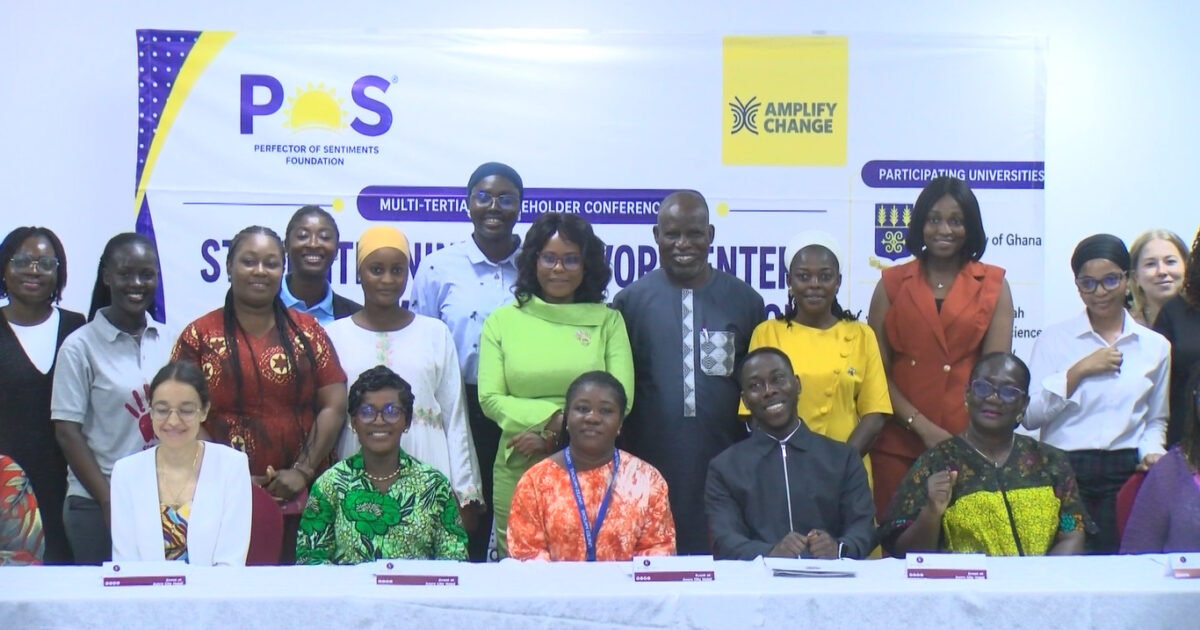
A damning report from the POS Foundation has exposed serious safety gaps across Ghana's public university system, revealing that student cohabitation and sexual harassment pose significant threats to campus wellbeing. The human rights organisation conducted a detailed investigation into the Safe Campus and Sexual Harassment Prevention Project, examining conditions at the University of Ghana, University of Education Winneba, University of Cape Coast, Kwame Nkrumah University of Science and Technology (KNUST), and the University for Development Studies.
The findings paint a troubling picture of institutional vulnerability. Founder Jonathan Osei Owusu highlighted that cohabitation among students—where young people share accommodation with romantic partners while ostensibly focusing on their studies—creates environments ripe for domestic conflict and abuse. The practice appears particularly entrenched at the University of Education Winneba and University of Cape Coast, though harassment concerns surface across all five institutions surveyed.
The awareness gap undermining campus safety
Perhaps most alarming is the discovery that despite all five universities maintaining formal sexual harassment policies, fewer than 30% of students have actually read them. This knowledge deficit leaves the majority of the student population vulnerable and unaware of their rights or reporting mechanisms. Gender specialist Mercy Catherine Adjabeng pointed out that this low awareness significantly weakens policy effectiveness, as students cannot protect themselves or seek help if they do not understand what constitutes harassment or where to report it.
The normalisation of harassment within broader Ghanaian society compounds the problem. Victims often remain silent because incidents are trivialised or treated as inevitable rather than unacceptable. Adjabeng stressed that meaningful change requires placing consent at the centre of all discussions—a principle that appears poorly understood or communicated across campuses.
Why it matters for Ghana
Ghana's universities serve as crucial incubators for the nation's future leaders, professionals and citizens. When these institutions fail to provide safe learning environments, the consequences ripple far beyond campus gates. Sexual harassment undermines academic performance, damages mental health, and perpetuates harmful attitudes that students carry into workplaces and communities.
The POS Foundation's findings align with official data: between 2016 and 2021, the Domestic Violence and Victim Support Unit (DOVVSU) of the Ghana Police Service recorded 131 sexual harassment cases. Yet this statistic likely represents only the tip of the iceberg, as underreporting remains endemic due to fear, shame and lack of trust in institutional responses.
The student cohabitation issue reflects deeper economic pressures. Many families scrimp to afford university fees, yet their children face unexpected accommodation costs. This financial squeeze may drive students toward informal living arrangements that inadvertently expose them to relationship dynamics that can turn abusive—a cycle universities must acknowledge and address through comprehensive support services.
Roadmap for institutional change
The POS Foundation is calling for urgent action: universities must intensify education on harassment policies, ensuring every student receives clear information during orientation and throughout their studies. Reporting mechanisms must be transparent, accessible and trustworthy, with genuine protection for whistleblowers against retaliation and stigma. Crucially, enforcement of policies must be swift and consistent, sending a clear message that harassment will not be tolerated.
Beyond policies, cultural change is essential. Campus leadership should champion respect and consent as foundational values. Student organisations, resident advisors and peer educators can amplify these messages in ways that resonate with young people. Support services—counselling, medical care, safe accommodation—must be readily available for survivors.
The challenge is substantial, but Ghana's universities have the opportunity to become models of safety and dignity across the continent. The POS Foundation has provided the data; the question now is whether institutional leaders will act with the urgency the crisis demands.
Source: MyJoyOnline




Comments (0)
Be the first to comment.