Beyond the Politics: What Ghana's School Placement Crisis Really Reveals About Parents, Expectations and Our Education System
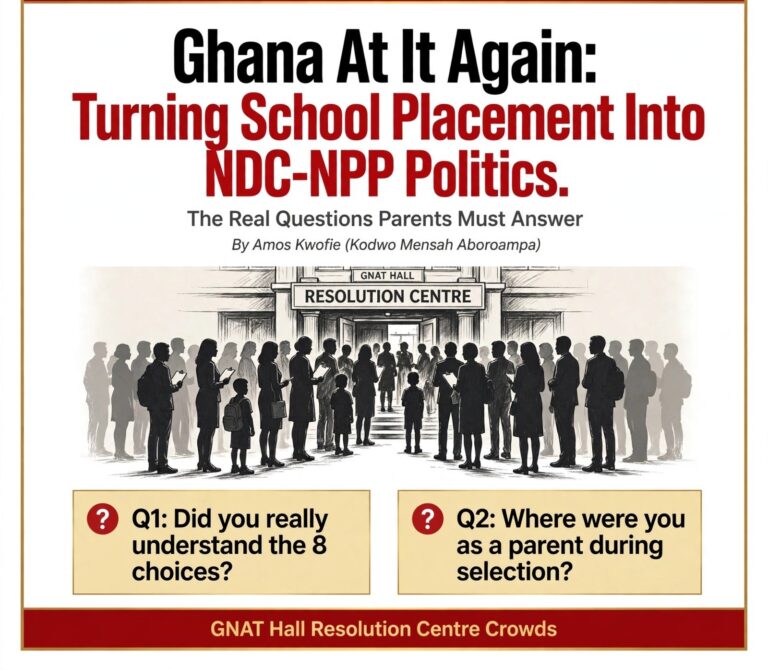
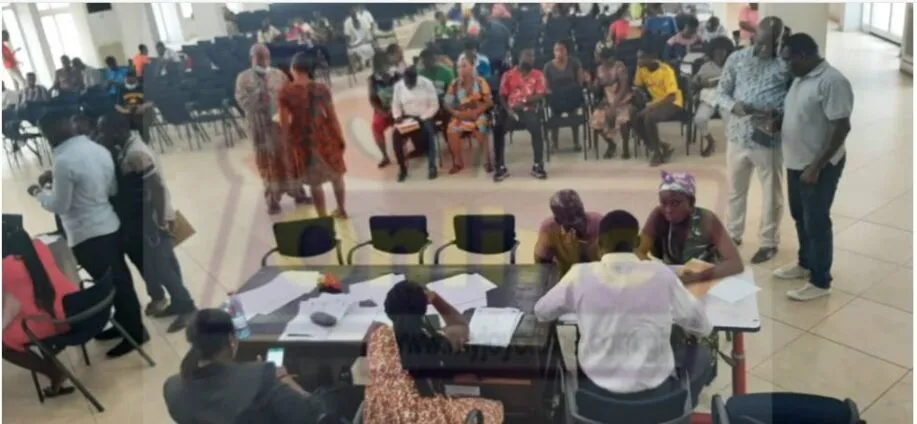
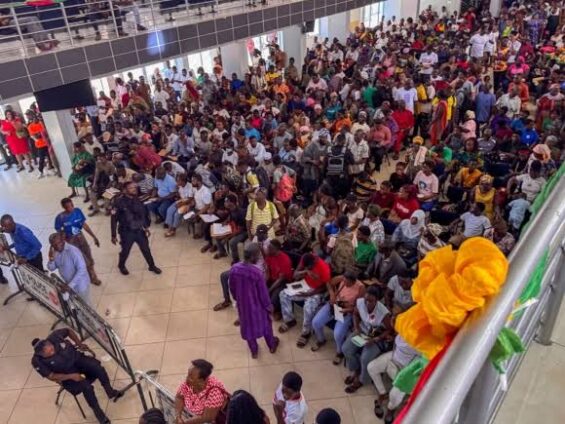
Every year, Ghana's Senior High School placement results trigger the same predictable cycle: disappointed parents, long queues at resolution centres, and immediate finger-pointing between NDC and NPP supporters. But this year's scenes at the CSSPS Resolution Centre at GNAT Hall in Accra—where parents and students have endured lengthy waits, repeated visits, and in some cases overnight stays—suggest a deeper problem that has little to do with partisan politics and everything to do with how Ghanaians approach secondary education.
The frustrations are real. Reports document genuine concerns about school choices, unsuccessful placements, and confusion over boarding versus day status. Parents are calling for more resolution centres and additional staff. Yet amid the legitimate systemic issues lies an uncomfortable truth: not every disappointing placement is evidence of political manipulation, and not every failure belongs solely to the government.
The Mathematics of Disappointment
Ghana's school placement crisis is fundamentally a problem of supply and demand. The most popular schools—PRESEC, Achimota, Wesley Girls, Mfantsipim, St Augustine's, and Opoku Ware—cannot accommodate every child who wants to attend them. When thousands of parents believe their well-performing child deserves one of these handful of institutions, disappointment becomes inevitable rather than evidence of corruption.
The current system requires candidates to list eight choices across different categories, with specific limits: up to two Category A schools, up to three Category B schools, and the remainder Category C. Yet many parents appear to approach this list as though all eight selections carry equal weight. They do not. A Category A choice is significantly more competitive than a Category C choice, and no child is guaranteed admission to any school simply because it appears on their preference list.
Where Parents Must Look in the Mirror
Ghana's obsession with a small cluster of prestigious schools obscures a harder conversation: did parents meaningfully engage in the selection process before results were announced?
- Did you examine your child's actual performance against the competitiveness of chosen schools?
- Did you consider whether the child could realistically attend a school as a day student, factoring in distance and transport?
- Did you include schools where your child had a genuine chance of securing a place, or did the list become a collection of famous names without strategy?
- Were you involved in the selection process before submission, or only after the placement disappointed you?
These questions matter because selection is too important to outsource entirely to a 14-year-old. Yet many parents become deeply engaged only after placement results arrive, then arrive at GNAT Hall demanding answers about why their child did not secure their preferred school.
Why It Matters for Ghana
Ghana's education system faces genuine challenges: inadequate infrastructure, teacher shortages, and unequal resource distribution between rural and urban areas. These require serious policy attention. But the annual school placement cycle has become a rehearsal for something different—a national exercise in deflecting personal responsibility onto political opponents.
More concerning is what this reveals about Ghanaian attitudes toward secondary education. A school's name is not a child's destiny. A brilliant student can thrive in a well-managed Category B or C institution, whilst a child in a prestigious school may struggle without the right support. The qualities that matter—good teachers, functional facilities, strong peer environments, and appropriate programmes—exist across Ghana's school system, not merely in the six or seven institutions that dominate national conversation.
Until parents stop treating Category A schools as the sole pathway to success, until we stop using placement disputes as political theatre, and until we ask ourselves what role we played in our children's disappointing results, Ghana will continue cycling through this annual ritual. The resolution centres will remain crowded. The accusations will fly. And somewhere in the middle, teenagers will wonder why their education became a battleground for adult grievances.
Source: The Ghana Report


Comments (0)
Be the first to comment.