
Bank of Ghana Sets the Record Straight on the Face Behind the GH¢50 Note


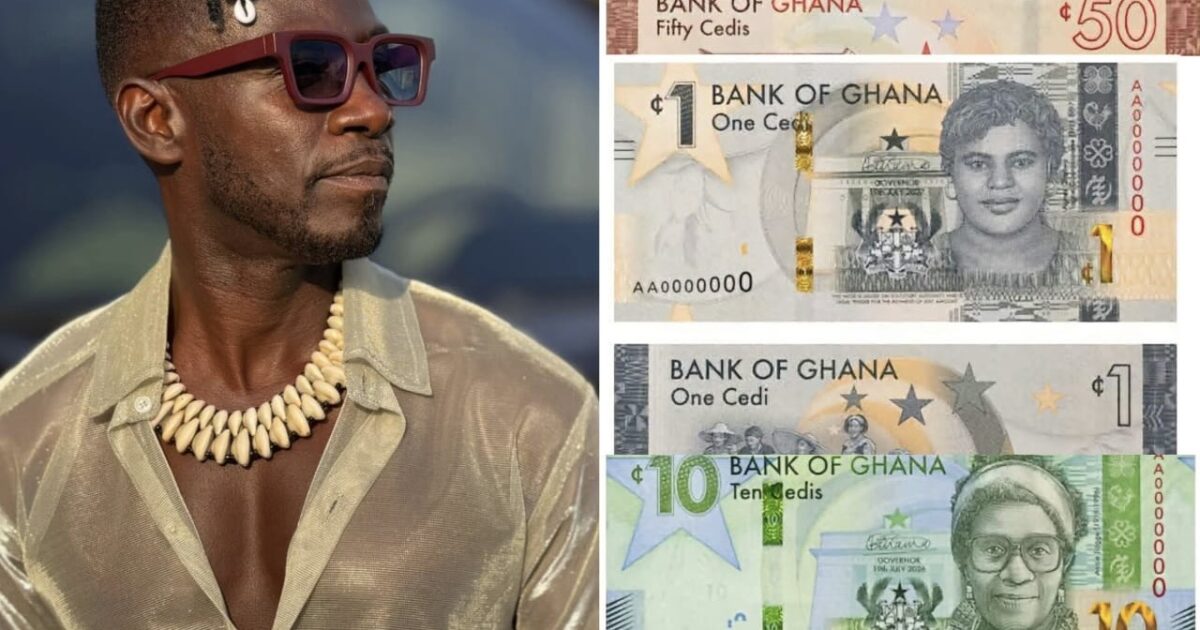
The Bank of Ghana has moved to clear up public confusion surrounding the new GH¢50 banknote, confirming in an official press release that the portrait featured on the currency is indeed that of Theodosia Okoh — the celebrated Ghanaian artist who designed the national flag — and not her sister, as had been widely suggested on social media and in public discourse.
In the statement issued on Friday, 13th November, the central bank explained that the portrait was carefully developed using several different photographs of Mrs Okoh, a creative process intended to produce a composite and representative likeness of the iconic Ghanaian figure. The Bank of Ghana was categorical: the image is not derived from any photograph of Dr Obeng, Mrs Okoh's sister, and any such claims are without foundation.
Who is Theodosia Okoh?
Theodosia Okoh holds a revered place in Ghana's national story. She is the gifted artist credited with designing Ghana's distinctive national flag — the bold tricolour of red, gold and green, bisected by the iconic black star — which was adopted at independence in 1957. The black star at the centre of the flag remains one of the most recognisable symbols of African liberation and Ghanaian pride to this day.
Beyond her contribution to the flag, Theodosia Okoh was also a distinguished hockey player who represented Ghana at the international level, making her one of the country's most multi-talented personalities of her era. Her decision to honour her on the GH¢50 note was widely praised as a long-overdue recognition of a woman whose contributions to Ghana's identity have sometimes been overshadowed in public memory.
Why it matters for Ghana
The clarification from the Bank of Ghana is significant for several reasons. Currency portraiture is a matter of national heritage — the faces chosen to appear on banknotes represent a country's values, its history and the individuals it holds in highest esteem. Getting the identity of the portrait right is therefore not a trivial concern; it speaks directly to how Ghana honours and remembers its icons.
The confusion, which spread rapidly online, also highlights the broader challenge of public awareness around Ghana's historical figures. Many Ghanaians are familiar with Theodosia Okoh's legacy in broad terms, but detailed knowledge of her life — including what she looked like — is not always widespread. This episode presents an opportunity for schools, media organisations and cultural institutions to deepen public education about the men and women who shaped modern Ghana.
Additionally, the incident underscores the importance of official communication from institutions like the Bank of Ghana. In an era of fast-moving misinformation, prompt and clear press statements such as this one play a vital role in anchoring public understanding to verified facts.
The new GH¢50 note in context
The updated GH¢50 note is part of the Bank of Ghana's broader efforts to modernise Ghana's currency and incorporate enhanced security features to combat counterfeiting. The choice to feature Theodosia Okoh on a prominent denomination was seen as a meaningful tribute, and the central bank's swift clarification suggests it is keen to ensure the integrity of that tribute is not undermined by misinformation.
Members of the public with further questions about Ghana's banknotes are encouraged to consult official communications from the Bank of Ghana directly, rather than relying on unverified claims circulating on social media platforms.
Source: 3News

Comments (0)
Be the first to comment.