
Okyeame Kwame Celebrates Bank of Ghana's Tribute to Ghana's Female Icons With New Music
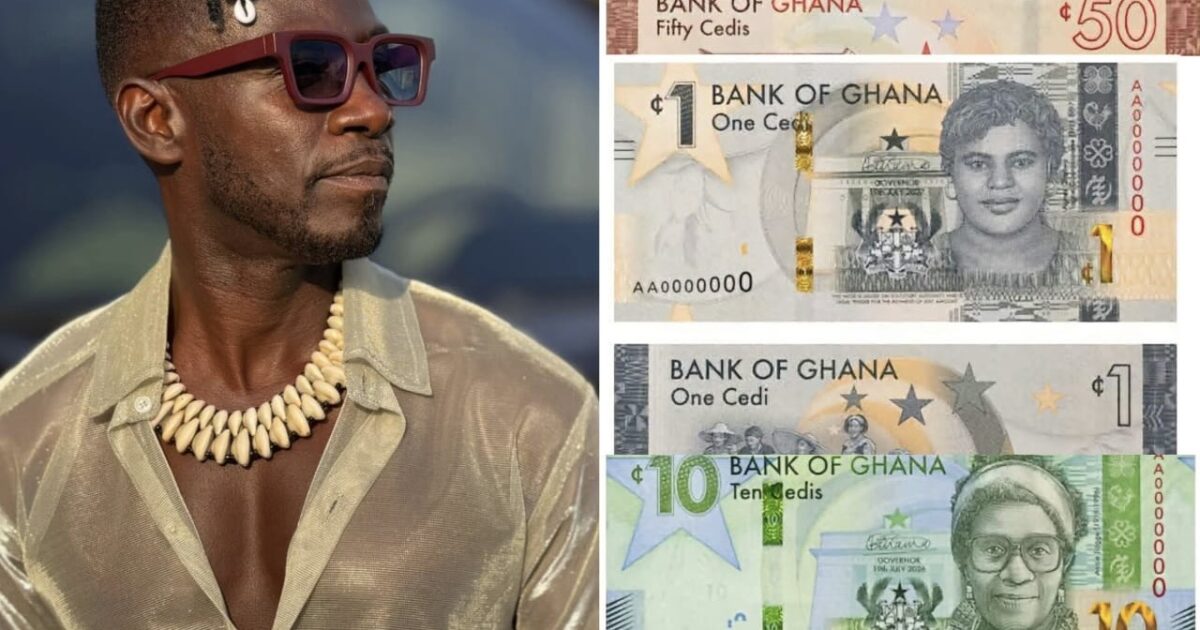

Veteran Ghanaian rapper Okyeame Kwame has expressed deep satisfaction following the Bank of Ghana's historic decision to place the faces of three distinguished Ghanaian women on newly redesigned cedi notes — a move he says validates years of advocating for the recognition of national heroes and heroines. The musician, long regarded as one of Ghana's most culturally conscious artists, believes a country that fails to honour its trailblazers risks losing the inspiration needed to produce the next generation of great citizens.
Three Women Who Shaped a Nation
The new cedi notes shine a deserved spotlight on women whose contributions to Ghana's history have often been underappreciated in mainstream public discourse. The GH¢1 note now carries the image of Agnes Oforiwa Tagoe-Quarcoopome, a pioneering textile trader and market queen from Accra's iconic Makola Market. Her influence extended well beyond commerce — she helped instil confidence in formal banking among ordinary Ghanaians, particularly women traders, at a time when such institutions were largely unfamiliar territory.
The GH¢10 note honours Justice Annie Ruth Jiagge, who in 1961 became Ghana's first female High Court judge — a landmark achievement in a profession then almost entirely dominated by men. She later served as President of the Court of Appeal and carried Ghana's voice onto the global stage, playing a significant role in drafting the United Nations Declaration on the Elimination of Discrimination Against Women.
The GH¢50 note pays tribute to Theodosia Okoh, the creative force behind Ghana's national flag — a symbol recognised across the world. Her artistic contribution is literally flown with pride at every state occasion, yet her name has not always received the recognition it deserves.
What This Means for Ghana's Cultural Memory
Okyeame Kwame has consistently argued that national recognition is not merely symbolic — it is a practical tool for building a culture of excellence. When young Ghanaians see role models celebrated on everyday items such as currency, it sends a powerful message about whose stories matter. The Bank of Ghana's decision aligns with a broader, growing conversation across Africa about how institutions can actively affirm indigenous heroes, particularly women, whose contributions have historically been overshadowed.
For Okyeame Kwame personally, the timing feels significant. Earlier this year, he released Clap, a family-friendly reggae track urging listeners to appreciate others. He has since followed it with Ayekoo (Big Up), dropped on 21 September — a date that also marks the birthday of Ghana's founding president, Kwame Nkrumah. Produced by the acclaimed Gomez Beats, the dancehall-influenced track is a lyrical tribute to Ghanaians who have shaped the nation across politics, sports, entertainment and traditional leadership.
The song features Jah Lead — the Afro-dancehall artist celebrated for his hit Lonely — on a catchy chorus built around the call-and-response dynamic of the Akan word ayekoo, meaning congratulations. Among those celebrated in the lyrics are independence-era figures including Naa Dedei Aryeetey, Mabel Dove Danquah, Susanna Al-Hassan, Ama Nkrumah and Theodosia Okoh — women whose roles in Ghana's liberation struggle deserve far wider acknowledgement.
Music as Advocacy
What distinguishes Okyeame Kwame's approach is the deliberate fusion of entertainment and civic education. The release of an augmented reality video alongside Ayekoo suggests an artist thinking carefully about how to reach audiences in modern, immersive ways while keeping Ghanaian culture at the centre. His advocacy is not confined to social media posts or interviews — it is embedded in the music itself, reaching fans who might otherwise never encounter these historical names.
Together, the Bank of Ghana's redesigned notes and Okyeame Kwame's latest musical project reflect a moment in which Ghana's institutions and its cultural voices appear, perhaps unusually, to be moving in the same direction: towards a fuller, more inclusive telling of the national story.
Source: MyJoyOnline

Comments (0)
Be the first to comment.