Attorney General's Sedina Tamakloe Appeal Unlikely to Succeed, Says Governance Expert

A prominent governance analyst has cast serious doubt on the Attorney General's prospects of overturning a recent court ruling in the Sedina Tamakloe case, arguing that such appeals face an uphill battle when government institutions appear to shield their own officials from accountability.
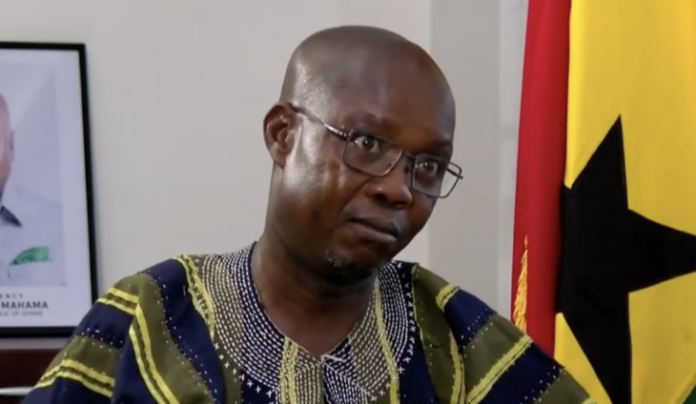
Ato Forson Bentil, speaking on the broader implications of the case, suggested that the appeal lacks substantive legal grounds and reflects a troubling pattern where government agencies fail to pursue corruption cases against their appointees with the vigour demonstrated against ordinary citizens.
The Sedina Tamakloe Case and Its Significance
Sedina Tamakloe, a public official, has been at the centre of a legal dispute that has drawn attention to questions of accountability and due process within Ghana's government structures. The ruling that prompted the Attorney General's appeal appears to have set an unfavourable precedent for the state, though details of the specific case remain contested in legal circles.
Bentil's commentary suggests that rather than focusing on technical legal arguments, observers should examine the broader context: how government responds when its own officials face scrutiny for alleged misconduct.
Why It Matters for Ghana
Bentil's remarks highlight a critical governance challenge facing Ghana. Public trust in anti-corruption efforts depends significantly on whether institutions apply the law consistently across all citizens, regardless of political affiliation or government position. When citizens perceive that government officials receive preferential treatment—or that the state expends resources defending them rather than investigating them—faith in the justice system erodes.
This case arrives at a time when Ghana continues grappling with its international standing on corruption indices. International observers and development partners closely monitor whether Ghana's institutions genuinely enforce anti-corruption measures or merely perform them selectively. The government's choice to appeal court decisions against its officials sends a message about its commitment to accountability.
For ordinary Ghanaians, the perception matters equally. If major corruption cases against government appointees are vigorously defended by state resources whilst cases against private citizens or opposition figures proceed without such vigorous defence, it undermines the rule of law and suggests a two-tiered justice system.
The Broader Pattern of Selective Accountability
Bentil's implicit argument—that fighting corruption becomes impossible when government clears its own people—reflects concerns raised by civil society organisations, transparency advocates, and international watchdogs repeatedly over the years. Ghana has strong anti-corruption laws on paper, but enforcement often appears inconsistent.
The Attorney General's office holds a unique position: it simultaneously represents the state in legal matters and serves as the chief law officer. This dual role can create conflicts of interest when defending government officials against allegations that might better serve the public interest if prosecuted rather than defended.
Legal observers suggest that for appeals to succeed, they must rest on solid legal grounds—not merely on the state's desire to protect its officials. If Bentil's assessment proves accurate, then the appeal may fail precisely because the underlying legal case is weak, not because of procedural matters.
The outcome of this case will likely influence how Ghanaians view their government's commitment to genuine accountability, and whether the state remains willing to prioritise institutional loyalty over transparent justice.
Source: 3News



Comments (0)
Be the first to comment.