Asiedu Nketia challenges Ghana to honour Nkrumah with same recognition as rest of world
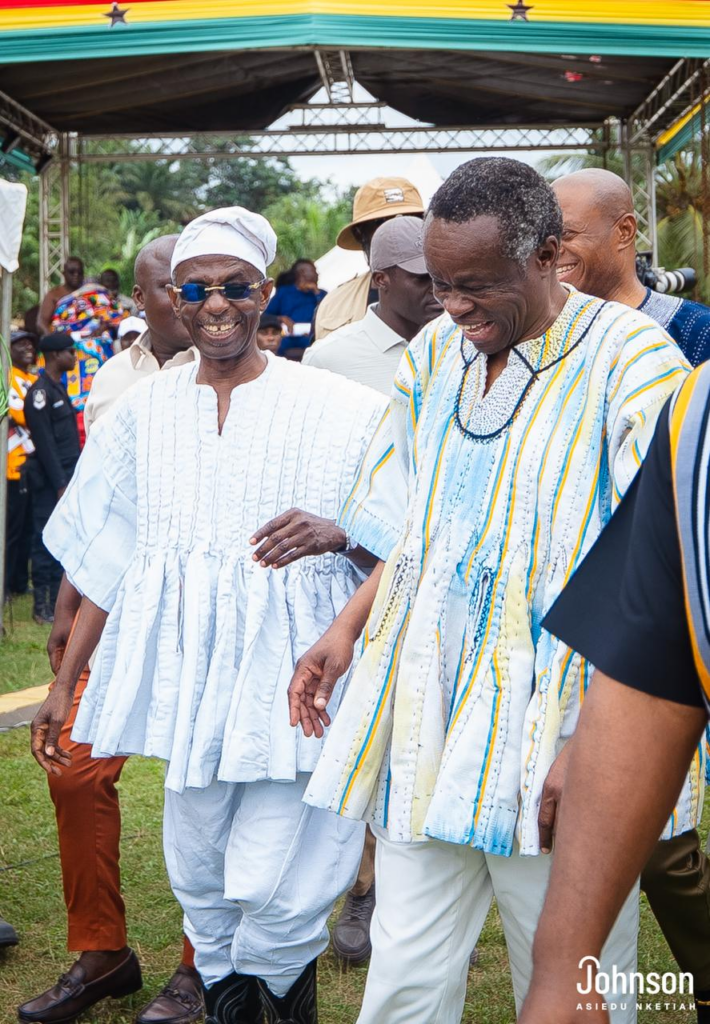
Ghana's National Democratic Congress chairman Johnson Asiedu Nketia has called on the country to elevate its recognition of Osagyefo Dr Kwame Nkrumah to match the esteem in which he is held internationally, arguing that the founding father deserves nothing less than the nation's fullest honour.
Speaking at NkrumahFest 2026 in Nkroful, Western Region—a celebration marking Nkrumah's 117th birthday—Asiedu Nketia expressed frustration at what he sees as persistent attempts to diminish Nkrumah's towering contribution to Ghana's existence. "If the world and Africa have honoured him as the 'Man of the Millennium', why are we not doing that as Ghanaians?" he posed, highlighting the apparent disconnect between global and domestic recognition of the pan-African icon.
Why Nkrumah stands alone in Ghana's history
Asiedu Nketia's argument rests on a fundamental historical point: Ghana as a unified nation would not exist without Nkrumah's political vision and determination. Before independence in 1957, the territory that became Ghana comprised distinct, separate entities—the Gold Coast Colony, the Ashanti Kingdom, the Northern Territories, and Trans-Volta Togoland—each with its own political arrangements and governance structures.
"Before Nkrumah came to the scene, there was nothing like Ghana," the NDC chairman stated emphatically. He distinguished Nkrumah's role from earlier nationalist figures by noting that their struggles were largely confined to the Gold Coast Colony, whereas Nkrumah's political leadership achieved the unprecedented consolidation of these disparate territories into a single nation-state. This foundational act of nation-building, Asiedu Nketia argued, places Nkrumah in a category entirely his own: "No other politician or nationalist can compare themselves to Dr Kwame Nkrumah."
The background: Nkrumah's legacy and contemporary debate
Nkrumah's legacy remains contested terrain in Ghanaian public discourse. Though universally acknowledged as Ghana's first president and independence leader, subsequent governments have at times downplayed or criticised aspects of his rule, particularly his authoritarian turn in the 1960s. However, his role in unifying disparate colonial and traditional territories into a cohesive nation-state is historically incontrovertible.
The international community has long recognised this contribution. His designation as the "Man of the Millennium" by African and world bodies reflects global acknowledgement of his outsized impact on African independence movements and nation-building. Yet, as Asiedu Nketia points out, such recognition often outshines domestic commemoration in Ghana itself.
What this means for national identity and memory
The debate over how Ghana honours Nkrumah touches on deeper questions about national identity and historical memory. The NDC chairman framed NkrumahFest as an effort to "purge" Ghana of the "shame" of undervaluing Nkrumah's legacy—language suggesting that inadequate recognition is seen as a form of national self-harm.
Whether this perspective resonates across Ghanaian society may depend on generational and political lines, but the underlying historical claim—that Nkrumah's unification of Ghana's territories was a singular, irreplaceable achievement—remains difficult to dispute. The annual celebration, championed by figures including Emmanuel Armah-Kofi Buah, a former Roads Minister and Ellembelle MP, continues to push for renewed appreciation of the founding father's contributions to the nation's existence.
Source: MyJoyOnline

-800x600.webp)
Comments (0)
Be the first to comment.