
Ashanti Regional Minister Calls for NAIMOS Overhaul After Manso Keniago Deaths as 23 Suspects Arrested


Ashanti Regional Minister Frank Amoakohene has publicly called on the National Intelligence and Military Operations Support (NAIMOS) unit to undertake a thorough review of its operational procedures, following the controversial deaths that occurred at Manso Keniago. The call comes even as the security unit announced the arrest of 23 individuals during operations conducted across the Western regions of Ghana.
What happened at Manso Keniago?
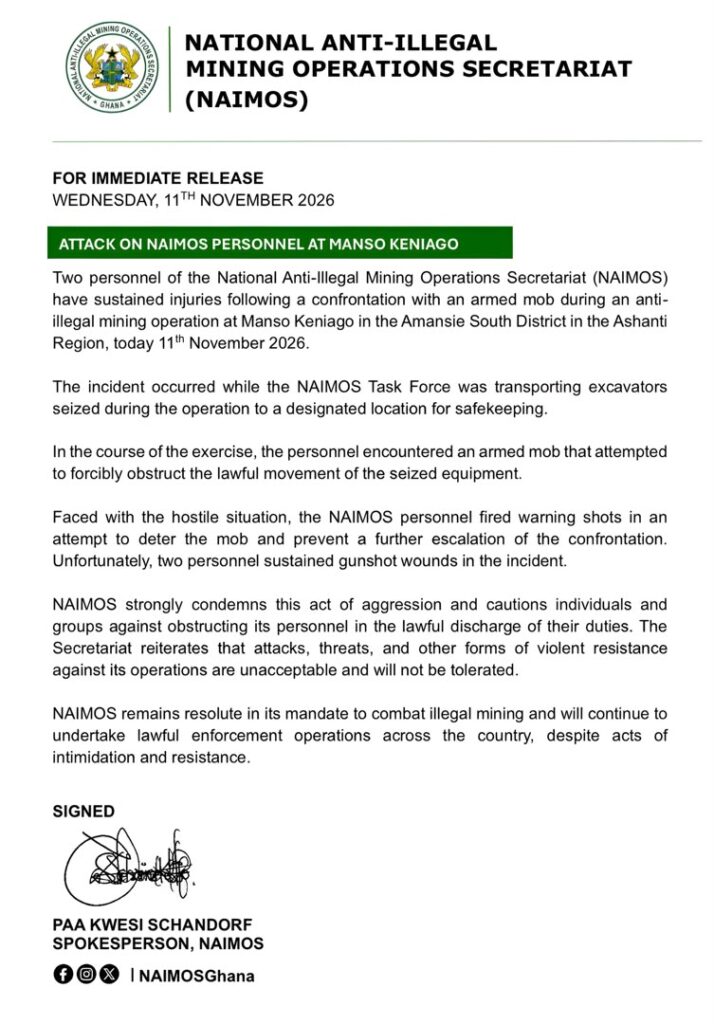
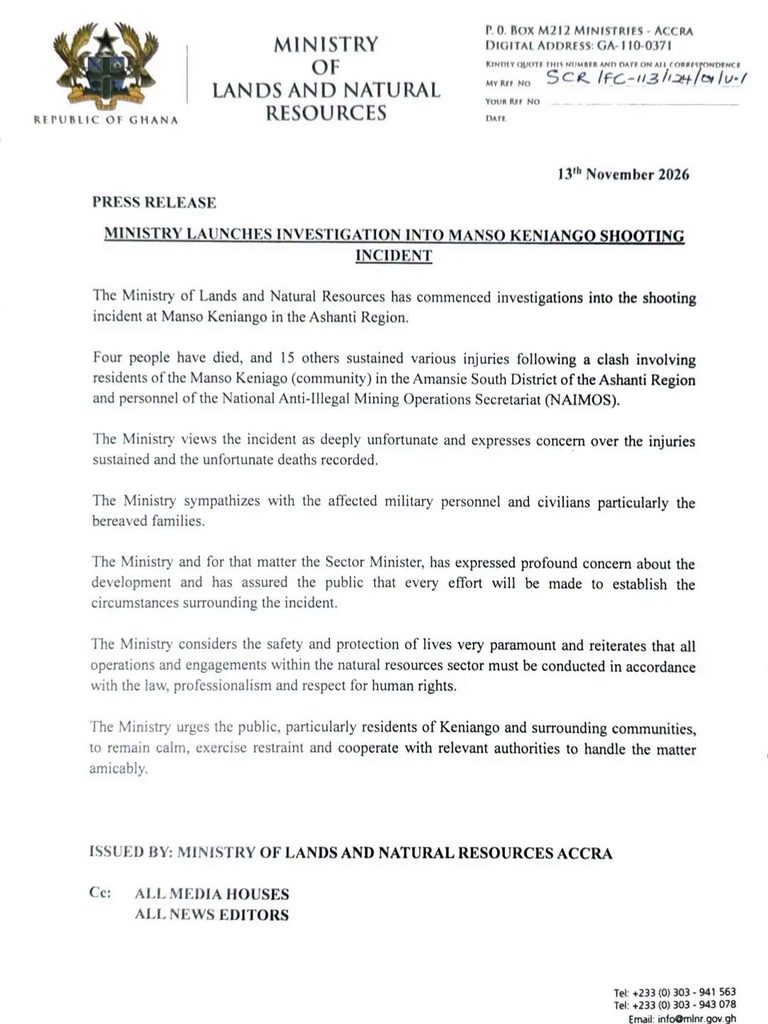
The Manso Keniago incident has drawn significant public attention and raised serious questions about the conduct of security operations in Ghana's mining communities. Manso Keniago, located in the Ashanti Region, is an area that has long been associated with illegal small-scale mining, commonly known as galamsey. Security operations targeting such communities have intensified in recent years as the government pursues its anti-galamsey agenda, but incidents involving loss of life inevitably invite scrutiny of how these operations are planned and executed.
Minister Amoakohene, whose regional authority covers the area where the deaths occurred, did not shy away from addressing the matter directly. His call for a review signals an acknowledgement that, whatever the operational objectives, the circumstances surrounding the Manso Keniago deaths cannot simply be overlooked. While he stopped short of condemning the unit outright, the minister's position reflects growing pressure on security agencies to operate within clearly defined and accountable frameworks.
23 arrests across Western regions
Simultaneously, NAIMOS confirmed the arrest of 23 individuals in operations carried out across the Western regions. The Western and Western North regions remain at the heart of Ghana's galamsey crisis, home to some of the country's most significant gold deposits and, consequently, some of the most intense illegal mining activity. Authorities have repeatedly deployed joint security task forces to these areas in an effort to clamp down on operations that devastate river bodies, destroy forest cover and undermine legitimate mining activity.
The 23 arrests represent the latest in a series of enforcement actions by NAIMOS, which was established to coordinate military and intelligence resources in support of anti-galamsey efforts. The unit has been both praised for its role in disrupting illegal mining networks and criticised for the manner in which some of its operations have been carried out.
Why it matters for Ghana
The tension between firm enforcement and human rights accountability sits at the very centre of Ghana's galamsey debate. For years, successive governments have struggled to curb illegal mining despite deploying considerable security resources. The destruction of water bodies — including parts of the Pra and Offin rivers — has become a national crisis, with millions of Ghanaians affected by deteriorating water quality.
Yet incidents like the one at Manso Keniago remind the public that the methods used in this fight carry their own risks and consequences. Civil society groups and legal advocates have consistently argued that security operations must be proportionate, transparent and subject to independent oversight. Minister Amoakohene's call for an operational review could, if acted upon, contribute to exactly that kind of accountability.
- A review of NAIMOS procedures could strengthen public trust in anti-galamsey enforcement going forward.
- The Western regions remain the epicentre of illegal mining activity, making sustained and lawful operations there critical.
- Balancing effective enforcement with respect for human rights continues to be one of the most difficult challenges in Ghana's galamsey fight.
As Ghana continues to grapple with the long-term consequences of illegal mining, the Manso Keniago deaths serve as a sobering reminder that the costs of this battle are not only environmental — they are deeply human as well.
Source: 3News


Comments (0)
Be the first to comment.