
ANC's Worst Election Defeat in 30 Years Signals a New Political Era for South Africa
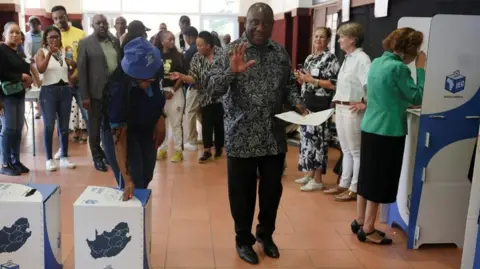

South Africa's African National Congress has suffered its most devastating electoral defeat since the end of apartheid, winning barely 30% of the vote in the country's latest local government elections — a collapse that analysts say marks the end of the liberation movement's grip on power and signals a fundamentally new chapter in South African politics.
The ANC, which once commanded more than 64% of the national vote two decades ago, took just 30.76% in these local elections — a dramatic fall from the 46% it secured in the 2021 local polls. Party secretary-general Fikile Mbalula did not mince his words, describing the result as a "catastrophic outcome" and blaming soaring living costs and middle-class disillusionment for the scale of the losses.
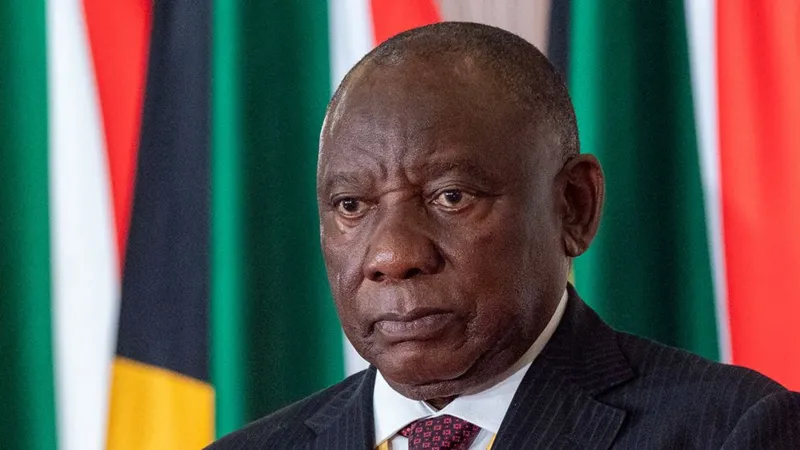
President Cyril Ramaphosa, who leads both the country and the ANC, acknowledged the verdict with rare candour. "We accept the will of the people however concerning it might be," he said. "It is a decline that is concerning — that is how I characterise it."
A Party Losing Its Strongholds
The scale of the decline becomes even clearer at the provincial and city level. The ANC won a majority in only one of South Africa's nine provinces — Limpopo — compared with six provinces in 2021. It also topped the vote in just two of the country's eight major cities, down from six at the last local elections.
The Democratic Alliance (DA) finished second nationally with 24.64%, retaining firm control of Cape Town. Former president Jacob Zuma's uMkhonto we Sizwe (MK) party came third with 9.76% and notably unseated the ANC in Durban, while the Economic Freedom Fighters (EFF) of Julius Malema came fourth with 6.22%.
Voter turnout rose to 52.29%, up from 45.9% in 2021 when elections took place amid the Covid-19 pandemic, suggesting that more South Africans felt compelled to register their frustration at the ballot box.
Political analyst Susan Booysen described the result as a "devastating message" to the ruling party, pointing to deep failures in service delivery — from electricity and water supply to sanitation — as the primary drivers of voter anger. "These are huge problems and have really been affecting the lives of ordinary people, in the suburbs, in the townships, and in very dramatic ways," she said.
Why It Matters for Ghana and West Africa
South Africa's political evolution carries significant implications beyond its own borders. As Africa's most industrialised economy and a leading voice in multilateral bodies — including the African Union and BRICS — a weakened or unstable ANC government could affect the continent's diplomatic and economic direction.
For Ghana and other West African nations with close trade and solidarity ties to South Africa, the emergence of coalition governance in Pretoria introduces new uncertainties. South Africa has historically been a bulwark of African-led diplomacy and a model often referenced in debates about democratic consolidation on the continent.
Analysts also note a broader lesson: the ANC's decline mirrors patterns seen across Africa where long-dominant liberation or independence parties — which came to power promising transformation — have struggled to retain popular trust in the face of poor governance, unemployment and inequality. Ghana's own political landscape, where voter dissatisfaction has periodically produced dramatic power shifts between the NPP and NDC, reflects similar underlying pressures.
Political analyst William Gumede suggested the results signal "the end of the liberation movement era in South Africa," warning the ANC could become the second-largest party by the 2029 national elections and risk a prolonged period of internal conflict.
Coalition Talks Begin
South Africa now enters a critical period of coalition negotiations, with parties having 14 days from the announcement of results to reach governing agreements at the local level. The country's economic heartland, Gauteng province — home to Johannesburg and Pretoria — is under particular scrutiny, with the ANC potentially being shut out of governing both cities entirely.
Gumede characterised the mood of voters bluntly: "The ANC has dominated the last three decades; they didn't use their power to change society for the good. We actually want coalitions. We want people to work together."
With a new ANC leader to be elected next year and national elections not due until 2029, South Africa's governing landscape looks set to remain fractured and fiercely competitive — a reality the continent will be watching closely.
Source: MyJoyOnline




Comments (0)
Be the first to comment.