Accra's Rush Hour Gets a Fix: Government Launches Ayalolo Bus Lanes to Beat Traffic
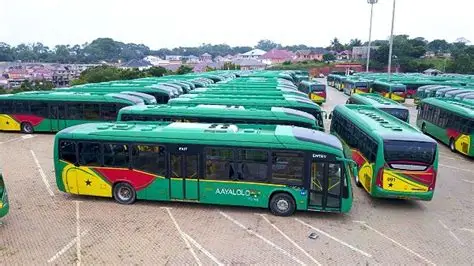
Ghana's government is taking a direct shot at Accra's notorious traffic gridlock by giving Ayalolo Bus Rapid Transit (BRT) services their own dedicated lanes during peak commute times. Starting Tuesday, 29 September 2026, buses on three critical corridors feeding into the city centre will be permitted to travel against normal traffic flow, a move designed to speed up journeys and encourage more commuters to ditch private cars.
The contra-flow arrangement will operate on the Amasaman–Accra, Adenta–Accra and Kasoa–Accra routes—three of the city's busiest commuter arteries. Service hours are tightly defined: 6 am to 9 am mornings and 4 pm to 8 pm evenings, the periods when thousands of workers flood into and out of Accra's Central Business District. Only authorised Ayalolo buses will use the designated lanes; private vehicles, taxis, trotros and other commercial transport are explicitly prohibited.
How It Works on the Ground
The Ministry of Local Government, Chieftaincy and Religious Affairs will oversee the scheme in partnership with the Motor Traffic and Transport Department (MTTD), the Greater Accra Passenger Transport Executive (GAPTE) and the Department of Urban Roads. Traffic officers will be stationed at strategic points and major intersections to enforce compliance and manage the transition between normal and contra-flow sections.
The government's stated goals are straightforward: improve Ayalolo punctuality, cut journey times and reduce the gridlock that strangles access to the CBD. By giving buses priority, officials hope to make mass transit a genuinely attractive option, reducing the number of private vehicles clogging the roads during rush hours.
Why It Matters for Ghana
This initiative reflects a broader reality for Accra: the city's traffic crisis is becoming unsustainable. Commute times have ballooned, air quality suffers from vehicle emissions, and productivity losses from congestion cost the economy heavily. For many Ghanaians, the daily grind to and from work has become a source of frustration and lost hours.
The contra-flow scheme is part of a longer-term push to strengthen mass transit as a viable alternative. Ayalolo itself was introduced to provide faster, more organised bus services than the traditional tro-tro system. However, buses stuck in the same traffic as everyone else defeats the purpose. By carving out priority lanes, the government is trying to create a tangible speed advantage that might persuade commuters—especially those in formal employment—to shift from private vehicles.
The success of this arrangement will likely determine future transport policy. If it reduces journey times significantly and attracts more riders, it could pave the way for expansion to other routes. If enforcement proves weak or the impact minimal, it may reinforce the view that Accra's transport problems require deeper infrastructure investment, not just operational tweaks.
The government is urging full cooperation from motorists, transport operators, pedestrians and residents. That cooperation will be essential: drivers accustomed to certain road layouts must adjust, and enforcement must be consistent to prevent the lanes being misused.
Source: Today GH




Comments (0)
Be the first to comment.