Upper West Region sees new school infrastructure as Nandom Assembly commissions trio of education projects

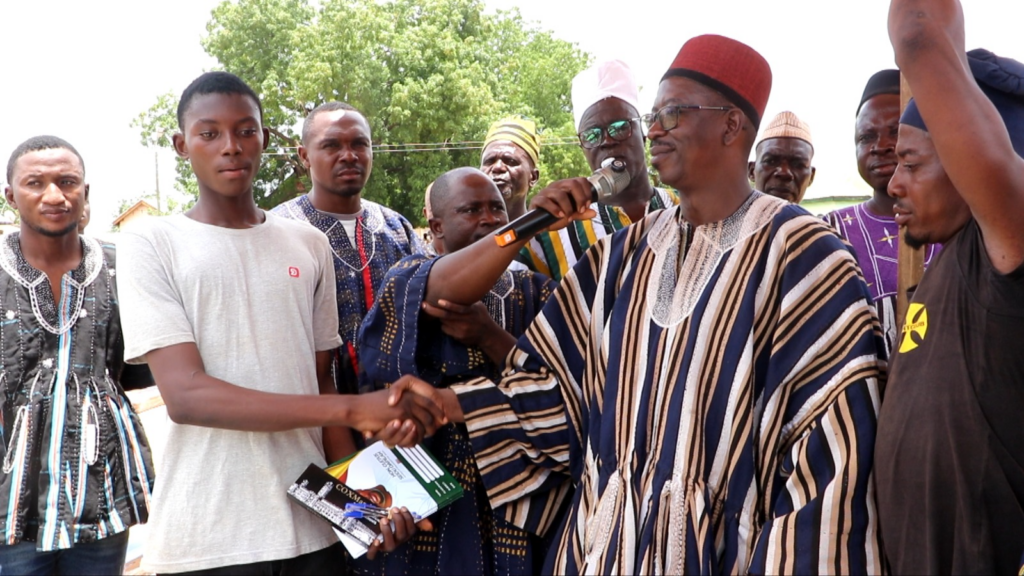
The Nandom Municipal Assembly has marked a significant milestone in its drive to expand educational infrastructure across the region, commissioning three newly completed school projects within a single year. The trio of facilities—a Junior High School block at Monyupelle and two Kindergarten blocks at Zimuopare and Bukong—represent a concrete investment in early childhood and basic education across the municipality.
The swift completion of all three projects within twelve months demonstrates improved project management and budget execution at the local government level, a challenge that has historically plagued infrastructure development in Ghana's northern regions.
Addressing Ghana's education infrastructure gap
These commissions come at a time when Ghana continues to grapple with significant disparities in educational infrastructure, particularly between urban and rural areas. The Upper West Region, one of the nation's less densely populated areas, has historically faced challenges in attracting and retaining quality educational facilities. The Nandom projects directly address this gap by expanding access to formal early childhood education and secondary-level schooling.
The two kindergarten blocks are particularly noteworthy, as early childhood development remains a priority area under Ghana's education sector policy. Quality pre-primary education has been shown to improve learning outcomes and school completion rates, especially in rural communities where such facilities are often limited or absent.
What this means for the region and beyond
For families in Monyupelle, Zimuopare, and Bukong, these facilities eliminate the need for lengthy daily commutes to access education, a practical barrier that often discourages school attendance in sparsely populated areas. The JHS block in Monyupelle in particular expands secondary education options for junior high graduates who might otherwise struggle to access further schooling.
The projects also signal the importance of effective local governance in delivering tangible service improvements. Municipal assemblies across Ghana are increasingly expected to execute capital projects despite limited internally generated funds, making this timeline noteworthy. If sustained, such delivery rates could serve as a benchmark for other municipalities in the region and beyond.
The broader context
Ghana's education sector continues to experience infrastructure strain, with classroom backlogs and inadequate facilities reported across multiple regions. The Free SHS policy introduced in 2017 has increased enrolment but also placed pressure on existing infrastructure. State-led initiatives to expand facilities, combined with assembly-level projects like those in Nandom, are part of the multi-pronged approach needed to meet rising demand.
The Upper West Region's development trajectory has been a policy focus in recent years, with several initiatives aimed at bridging the development gap between northern and southern Ghana. Educational infrastructure expansion is seen as foundational to human capital development and long-term economic growth in the region.
With these three projects now operational, the Nandom Assembly will need to focus on ensuring adequate staffing, learning materials, and maintenance regimes to maximise the benefit of the new facilities. Community involvement and parental engagement will also be critical to translating infrastructure into improved educational outcomes for learners across the three communities.
Source: 3News


Comments (0)
Be the first to comment.