
TOR's New Boss Blames Revolving Door Leadership for Refinery's Decline — Seven MDs in Eight Years Left Deep Scars
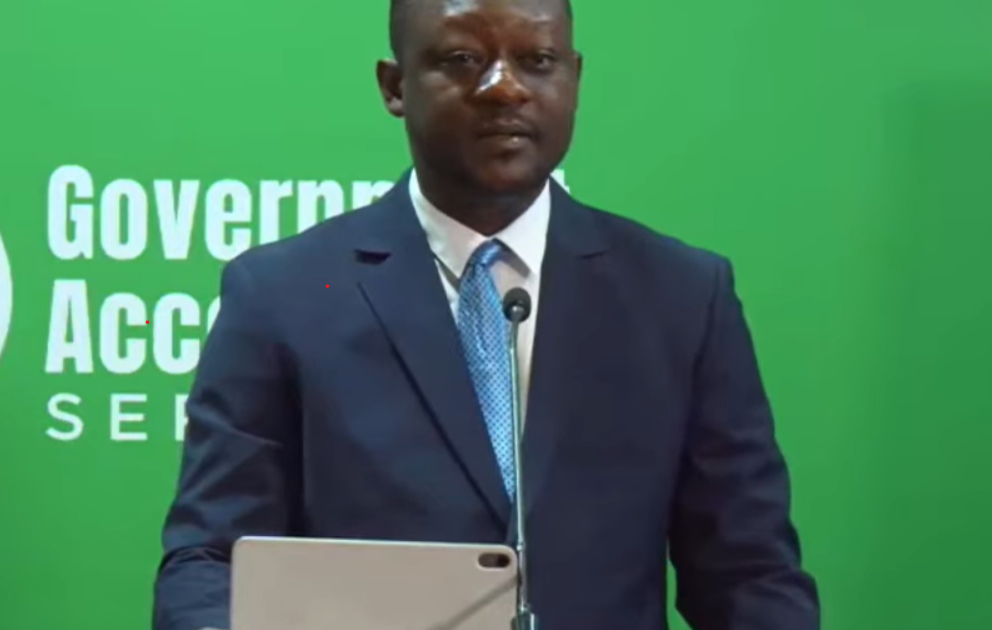

The Tema Oil Refinery (TOR) suffered years of avoidable setbacks because leadership changed too frequently, too fast, and with too little time for any single management team to make a meaningful difference, according to the facility's current Managing Director, Edmond Kombat. Speaking on Channel One TV, Mr Kombat said the rotation of approximately seven different leaders — including an interim management committee — across the eight years of the previous administration left TOR in a cycle of instability that compounded its already serious operational and financial troubles.
A Revolving Door at the Top
Mr Kombat was blunt in his assessment: six managing directors and an interim management committee of three personnel in eight years amounted to a leadership crisis that no large industrial facility could easily survive. With each change of guard, incoming teams had to find their footing before they could begin addressing complex technical and financial problems — only to be replaced before meaningful progress could be made.
"In eight years, they had six managing directors, including an interim management committee. And an IMC of three personnel. So let's say roughly seven MDs. You see that the turnover was very short," he said. "They were not refining, and I think they had an instability in leadership."
Beyond the leadership churn, Mr Kombat pointed to a serious governance gap: TOR had failed to produce independently audited financial statements for several years running. Instead, the refinery operated on management accounts — internal records that lacked the scrutiny and credibility of independent audits. This made it almost impossible for successive management teams, lenders, or government officials to get an accurate picture of TOR's true financial position.
He confirmed that the current management has since worked with the Ghana Audit Service to clear the backlog, completing audits covering a seven-year period. An annual general meeting was also convened to consider accounts spanning 2017 to 2025 — a significant governance milestone for a facility that had let such obligations lapse.
What This Means for Ghana's Energy Ambitions
TOR is not just a struggling state enterprise — it is a potential cornerstone of Ghana's energy security and economic independence. The refinery has a processing capacity of 45,000 barrels of crude oil per stream day and boasts storage capacity of one million metric tonnes, which Mr Kombat noted is approximately three times that of the Bulk Oil Storage and Transportation Company (BOST). These are assets of genuine national strategic value.
Ghana currently imports the bulk of its refined petroleum products, exposing consumers to global price fluctuations and exchange rate pressures. A fully operational TOR could reduce that import dependency, create skilled jobs in Tema, and generate downstream economic activity. The fact that the refinery has not been actively processing crude oil is therefore not merely a corporate failure — it is a missed opportunity for the broader Ghanaian economy.
Mr Kombat also revealed that during the previous administration, some officials within the Ministry of Energy had reportedly questioned whether TOR was commercially viable at all, with discussions reportedly touching on converting the facility into a tank farm or handing it over for entirely different purposes. Such a move would have effectively ended TOR's refining future. Mr Kombat firmly pushed back against that view, insisting the refinery remains a valuable national asset that deserves sustained investment and consistent leadership rather than abandonment.
The Road Ahead
The current managing director acknowledged that reversing years of drift will not happen overnight. His immediate priority appears to be consolidating governance — clearing audit backlogs, restoring credibility with stakeholders, and establishing a stable management platform from which longer-term operational recovery can be built.
Critically, Mr Kombat stressed that future administrations must resist the temptation to change leadership at TOR for political or administrative reasons. Turning around a refinery with deep-seated technical and financial challenges, he argued, demands consistent leadership over a sustained period — not a fresh start every year or two.
- TOR had approximately seven different leaders in eight years under the previous administration.
- The refinery failed to produce independently audited accounts for several years, a major governance lapse.
- TOR has a crude processing capacity of 45,000 barrels per day and storage three times that of BOST.
Source: MyJoyOnline





Comments (0)
Be the first to comment.