
TOR Battles GH¢10bn Losses as New Management Charts Recovery Path


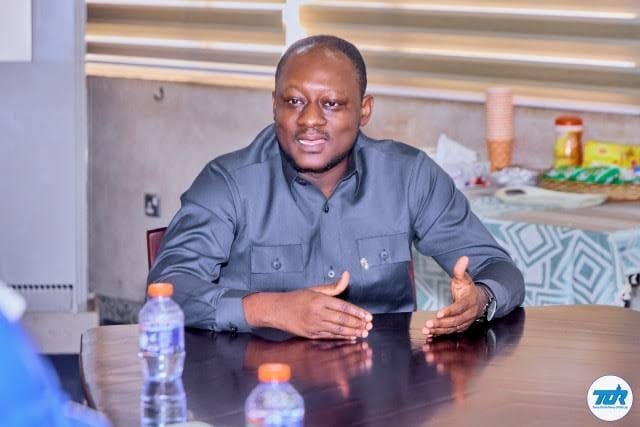
Ghana's Tema Oil Refinery (TOR) has revealed the scale of financial ruin it faced when current management stepped in last year, disclosing accumulated losses of approximately GH¢10 billion and external debt of about US$517 million as of May 2025. Managing Director Edmond Kombat laid out the grim picture at the Government Accountability Series at Jubilee House on Monday, October 26, 2026, painting a portrait of institutional decay that had unfolded over years of neglect and operational paralysis.
The refinery's balance sheet deteriorated so severely that by the end of 2024, TOR had recorded negative equity of GH¢7.6 billion—a position that rendered the state-owned enterprise technically insolvent. Beyond the headline figures, the company's operational capacity had withered to almost nothing: the Crude Distillation Unit (CDU) had sat idle since April 2021, whilst the Residual Fluid Catalytic Cracker (RFCC) unit had been dormant since 2019. Instead of refining crude oil—its core mandate—TOR had been reduced to renting out storage space to survive.
The financial crisis extended into nearly every corner of the organisation. TOR owed approximately GH¢200 million to the Ghana Revenue Authority and GH¢20 million to the Social Security and National Insurance Trust (SSNIT), whilst utilities including the Electricity Company of Ghana and Ghana Water Company remained unpaid. Most troublingly, the company had accumulated roughly GH¢190 million in outstanding obligations to staff provident funds, retirees and former employees—a debt that reflected years of deferred obligations to workers.
Perhaps most damaging to credibility, TOR had failed to file audited financial statements for six consecutive years, from 2019 to 2024, creating an information vacuum that obscured the true extent of the deterioration.
New Management's First-Year Turnaround
Despite inheriting this wreckage, the new management team initiated several immediate interventions aimed at stabilising the refinery. Kombat outlined a financial restructuring programme that included commissioning an independent assessment of all liabilities, engaging creditors on sustainable repayment arrangements, and pursuing outstanding receivables. Critically, the team completed all outstanding audited accounts for 2019 to 2024 and the 2025 accounts—restoring financial transparency after a six-year blackout.
The early results suggest momentum is shifting. TOR recorded a profit before tax of GH¢1.24 billion in 2025, according to the State Interest and Governance Authority (SIGA). Trade and other payables fell from GH¢7.1 billion to GH¢5 billion within a single year—a significant reduction in liabilities. The Ministry of Finance is separately exploring whether to write off or convert US$120 million in legacy government debt into equity, a potential relief measure that could substantially improve TOR's capital position.
Why It Matters for Ghana
TOR's near-collapse has profound implications for Ghana's energy security and fiscal health. The refinery is critical infrastructure that processes crude oil into fuel products needed across the economy. A non-functional TOR has forced Ghana to depend entirely on imported refined products, draining foreign exchange reserves and making domestic fuel prices vulnerable to global market swings.
The refinery's financial catastrophe also illustrates the cost of institutional neglect. The contrast with January 2017—when the previous NDC administration handed over a refinery with debt reduced from US$650 million to US$300 million, backed by the Energy Sector Levies Act—demonstrates how quickly state enterprises can deteriorate under poor stewardship. Restoring TOR to operational status and financial health will require sustained investment and management discipline; early signs are encouraging, but the refinery remains burdened with significant obligations and must rebuild operational capacity.
For ordinary Ghanaians, a functional TOR could stabilise fuel prices and reduce the country's reliance on import costs, whilst recovery of the institution demonstrates whether current leadership can salvage critical state assets.
Source: MyJoyOnline



Comments (0)
Be the first to comment.